Opioid-settlement dollars are legally restricted public-health funds; when a town books those dollars to police SUVs and automated license-plate readers, it collides with both the letter and the spirit of how this money is supposed to save lives.
The Short Version
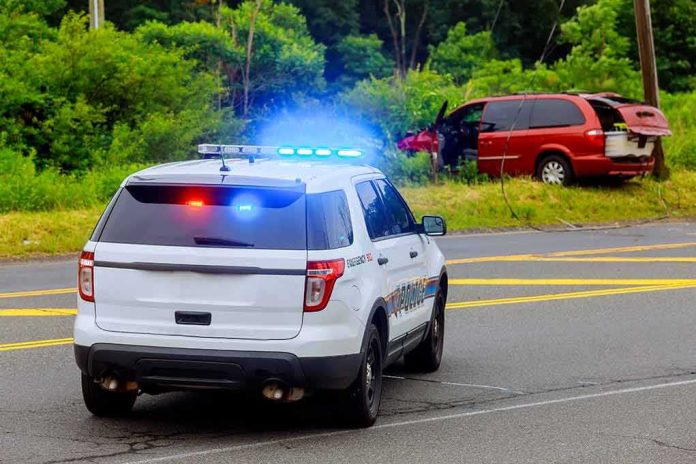
- Municipal records reviewed by reporters and an outside audit show Washington Township (Gloucester County, NJ) drew on its opioid-settlement account to buy two Chevrolet Tahoe police SUVs and a network of Flock license-plate cameras, totaling roughly $268,000 across 2024–2026.
- Line items tie multiple Flock purchases and renewals directly to the dedicated opioid account; vehicles were purchased for the police department.
- New Jersey’s guidance says opioid funds must be spent on prevention, treatment, recovery, and other evidence-based opioid remediation—“not for other purposes”.
- Township certifications to the state reportedly described $170,446.70 as “school-based narcotics and education” while matching that figure to the SUVs and initial camera buys to the penny.
What the town bought with opioid-settlement money
According to published reporting and an external review of municipal bill lists, Washington Township charged two 2024 Chevrolet Tahoe SUVs and a growing Flock camera network to its opioid-settlement account over three budget years. The reported camera purchases appear as discrete payments: $35,000 for 10 readers in April 2025, $7,020 for two cameras in February 2026, and $17,634.99 for five more, alongside renewals, data retention, and related support. Those entries identify Flock Group Inc. as the vendor and place the costs squarely in the opioid fund ledger. Vehicle acquisitions were likewise recorded as police-department purchases, bringing the combined total for SUVs and readers near $268,000 across 2024–2026.
One detail has drawn particular scrutiny: the township’s expenditure certification to state overseers reportedly listed $170,446.70 for a “school-based narcotics and education program” and “drug education,” while municipal payment records tallied an identical $170,446.70—down to the cent—for the Tahoes and the first 15 Flock readers. That numerical mirror does not, on its own, establish illegality; it does, however, crystallize the central question: were these purchases part of a bona fide, qualifying opioid program, or were they general policing assets paid for with restricted settlement dollars?
What the rules actually require in New Jersey
New Jersey’s statewide guidance is blunt about purpose: opioid-settlement proceeds must be used for opioid remediation—prevention, treatment, harm reduction, recovery support, and other evidence-based or evidence-informed strategies—and “may not be used for other purposes”. The Office of the State Comptroller underscores the same premise in its compliance materials and emphasizes transparency, segregation of funds, and demonstrable alignment with approved uses. In practice, this creates a two-part test for any debated purchase. First, is there a legitimate, documented program tied to opioid-use disorder (OUD) outcomes? Second, is the spending necessary and proportionate to that program’s execution, rather than a convenient subsidy for general municipal or police needs?
Some law-enforcement activities can qualify—pre-arrest diversion, co-responder models, overdose response, transportation to treatment, and officer training aligned with evidence-based strategies are routinely cited in state and national guidance. The category is not carte blanche, however; equipment that primarily serves ordinary patrol or broad surveillance is difficult to justify unless the town can prove its centrality to a defined OUD intervention with measurable public-health objectives.
Why Flock cameras and police SUVs sit on the fault line
Automated license-plate readers (ALPRs) are designed for vehicle identification, time-and-location logging, and investigative queries—capabilities rooted in public safety and surveillance. As a public-health matter, their causal pathway to reduced opioid mortality is, at best, indirect. That is why subject-matter experts describe standard Flock deployments as law-enforcement infrastructure, not an “evidence-based public health intervention for addressing opioid use or preventing overdose deaths”. Police vehicles sit in the same gray zone. If a Tahoe is the platform for a co-responder unit that transports individuals to treatment and conducts overdose follow-up with peer navigators, it can be plausibly charged to an opioid program; if it spends most of its duty cycle on routine patrol or non-OUD enforcement, the justification erodes quickly.
Washington Township’s own framing—at a council session the chief reportedly said cameras would help “break the cycle of addiction-related crime”—reflects a policing lens on the opioid crisis: crime suppression around theft, burglary, and drug distribution as an adjunct to public health. That lens is not inherently illegitimate, but New Jersey’s requirements prioritize direct opioid remediation. Bridging the gap requires documented program design, not post hoc rationale: which interventions, which partners, which performance measures, and which specific role the equipment plays in achieving OUD outcomes.
The certification puzzle and the burden of proof
The precision match between the $170,446.70 certification and the Tahoes-plus-readers ledger complicates the town’s position. Describing the spending as “school-based narcotics and education” implies curricula, facilitators, schedules, and participants—elements that can be documented. By contrast, ALPRs and patrol SUVs are capital and subscription costs. If the town can produce a program file that shows how those assets were integrated into a defined school-based prevention initiative—with evidence that the vehicles and cameras were necessary to deliver it—the spending might thread the compliance needle. If not, the description risks looking like a label detached from the underlying transactions.
State oversight architecture is built for exactly this gap. Funds must be tracked in a separate account; uses must align with approved categories; and municipalities are accountable for accurate reporting and documentation. The Comptroller has signaled a readiness to review and, where appropriate, refer misuse for corrective action, drawing on precedents where non-remediation events and purchases were flagged for repayment or remediation planning.
How this local fight echoes a national pattern
Disputes over “eligible use” are not unique to one New Jersey township. Across the country, the sheer breadth of settlement categories—along with real-world pressure to shore up public safety and emergency response—has pushed many jurisdictions toward the boundary between opioid remediation and general government spending. A national legislative analysis estimated that by 2024, about 41% of reported settlement spending fell into an “other” bucket that frequently includes law enforcement and mixed-purpose programs, a taxonomy that invites confusion and controversy when equipment or subscriptions serve multiple ends. States have responded unevenly; some have tightened guidance, others have carved out explicit law-enforcement allowances tied to OUD strategies, and oversight ranges from robust audits to light-touch reporting.
New Jersey’s approach is closer to the strict end: prioritize OUD prevention, treatment, recovery, and harm reduction; document program intent and results; and avoid using the funds as a backdoor capital budget. That clarity is why camera networks and patrol SUVs, absent a clearly structured opioid program, so often trigger objections from public-health advocates and watchdogs.
Washington Township spent opioid settlement funds on license plate cams, police SUVs, according to https://t.co/L0lJyHE8sK investigation https://t.co/AO2ZKFFDkz pic.twitter.com/OC2gEhc4PC
— The Philadelphia Inquirer (@PhillyInquirer) October 9, 2026
What compliance looks like from here
The standard for resolving a case like Washington Township’s is straightforward. First, the town should make public the programmatic basis for each opioid-funded purchase: the plan, partners, and performance measures tying equipment to OUD outcomes. Second, it should disclose the full contracting and accounting trail—resolutions, purchase orders, invoices, fund codes, and certification narratives—to show consistency from intent to execution. Third, it should explain how assets are deployed in practice: unit assignments, dispatch roles, overdose follow-ups, diversion referrals, and any school-linked activities relevant to the certified descriptions. If the documentation supports an eligible intervention, the controversy fades. If not, the appropriate remedy is course correction—redirecting funds to qualifying services and aligning future spending with the settlement’s public-health mandate.
Sources:
nypost.com, inquirer.com, nj.com, hoodline.com, opioidaudit.com, reddit.com, nj.gov