The Federal Reserve’s decision to raise its benchmark rate rests on a wager as old as central banking itself: that inflation left to run is more dangerous than the growth it costs to stop it.
Key Points
- The FOMC voted 12-0 on September 16, 2026 to raise the federal funds rate a quarter point, to a target range of 3.75%-4.00% — the first hike since 2023.
- Fed Chair Kevin Warsh tied the move directly to inflation that has stayed above the Committee’s 2% goal for more than five years, even as growth and employment held up.
- Updated projections point to at least one more increase before year-end, with the median 2026 rate estimate near 4.1%.
- The decision drew immediate criticism from President Trump and from some economists who argue rate hikes cannot fix inflation driven by energy and supply shocks.
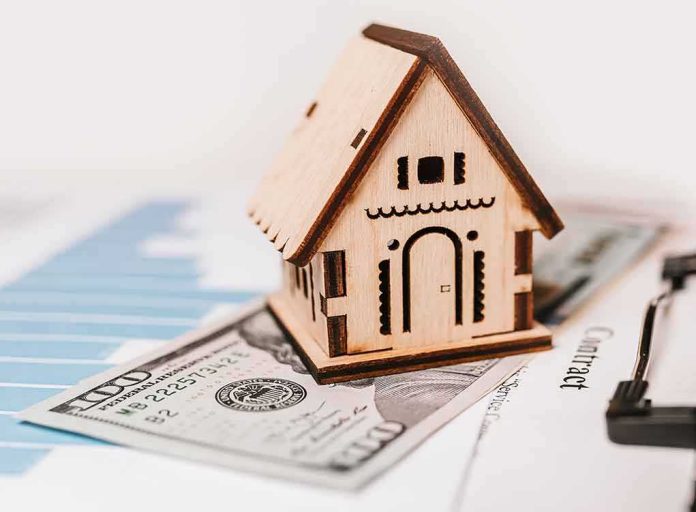
- Borrowing costs — mortgages, auto loans, credit cards — rise in tandem, making the policy’s short-term pain visible well before its long-term benefit.
What the Fed Actually Did
On September 16, 2026, the Federal Open Market Committee closed its two-day meeting by lifting the target range for the federal funds rate a quarter of a percentage point, to 3.75%-4.00%. The vote was unanimous, 12-0, a detail that matters more than it might seem: it signals that a committee often split between hawks worried about prices and doves worried about jobs found no daylight between them this time. The Committee’s own language was blunt. “Inflation remains elevated,” the statement read, and “today’s policy action will support a timelier return to the Committee’s 2 percent goal”.
This was the first rate increase since July 2023, ending a stretch in which the Fed had held steady while waiting to see whether inflation would cool on its own. It didn’t, at least not enough. Contemporaneous data cited around the meeting showed total PCE inflation running near 3.6%, core PCE near 3.2%, and CPI near 2.4% — all still above the 2% target the Fed has chased for half a decade. The Committee described an economy that, on paper, looks healthy: solid spending, strong productivity, robust capital investment, and a labor market still adding jobs in step with the workforce. That combination — firm growth alongside sticky inflation — is precisely the condition under which a central bank feels licensed to tighten rather than wait.
The Mechanism and the Argument Behind It
Raising the federal funds rate makes borrowing more expensive across the economy — for banks lending to each other overnight, and by extension for mortgages, auto loans, credit cards, and business credit lines. The theoretical chain runs from higher rates to slower borrowing and spending, to cooler demand, to less upward pressure on prices. Fed Chair Kevin Warsh, in his post-meeting remarks, was explicit that the Committee is not trying to move any single price directly. Energy costs, driven in this cycle by Middle East conflict and shipping disruptions in the Red Sea, sit outside the Fed’s reach. What the Fed says it can do is prevent an isolated supply shock from broadening into generalized inflation — the second- and third-order effects where rising energy costs bleed into wages, rents, and everything else. Warsh called this the Fed staying in its lane, adding pointedly that “independence is a two-way street,” a rebuttal aimed at President Trump’s public pressure for lower rates.
Warsh also declined to offer forward guidance beyond the Committee’s projections, which nonetheless point toward at least one further increase this year, with the median federal funds projection near 4.1%. That reticence is itself a policy choice: central banks that promise too much about the future risk having markets front-run their next move, which is exactly the “hall of mirrors” dynamic that some administration economists have criticized as counterproductive.
Where the Real Disagreement Lies
The hike is not without serious critics, and their case deserves to be stated on its own terms rather than dismissed. Steve Forbes has argued publicly that raising rates does nothing to address inflation rooted in geopolitical supply shocks — Houthi attacks on Saudi oil infrastructure, in his framing — and that the Fed is treating a currency and supply problem as if it were a demand problem. The Council of Economic Advisers made a related but distinct argument before the meeting: that recent inflation readings were already trending down across CPI, core CPI, PCE, and core PCE, and that tightening now, having declined to do so when inflation ran hotter three months earlier, is difficult to square logically.
Both critiques are coherent, and neither has been refuted point-by-point in the public record. But they argue past each other on the Fed’s own stated rationale, which is not that rate hikes can lower oil prices — Warsh conceded outright that the Fed “cannot affect any individual price” — but that they can stop an energy shock from generalizing into broader inflation expectations. Whether that containment strategy works is an empirical question the Fed itself frames as a multi-year project; the Committee’s own projections show the return to 2% inflation stretching out for years, not months, which is less a contradiction than an admission of how slow monetary policy’s transmission actually is.
The Historical Pattern and Its Warning
Every tightening cycle carries a documented risk, and this one is no exception. A widely cited research review of sixteen tightening episodes since 1950 across the U.S., Canada, and Germany found that a clean “immaculate disinflation” — taming inflation without triggering a recession or a meaningful slowdown — has essentially never happened. Historical essays on the Fed’s postwar tightening cycles make a similar point: nearly every episode of raising rates into elevated inflation, from the 1970s through the 2000s, has ended in either recession or a sharp deceleration. That doesn’t make this hike wrong — inflation left unaddressed carries its own well-documented costs, including eroded real wages for exactly the lower-income households who hold no financial assets to hedge against it, a point Warsh made directly in defending the decision. It does mean the Committee is making a bet with odds history has not been kind to, and it is doing so with eyes open.
In the latest episode of PBS News Hour, the Federal Reserve announced its first interest rate hike in three years, a move aimed at curbing surging energy costs. The program also covers rising diplomatic tensions between the United States and Cuba, including recent threats .
— Secretary Kennedy Jr (@SeckennedyQ) September 17, 2026
What It Means Going Forward
The immediate, tangible effect lands on borrowers before it lands on inflation. Thirty-year mortgage rates had already climbed to roughly 7.2% in anticipation of the move, up from about 6% at the start of the year, pricing prospective buyers out of markets in real time. Savers, conversely, gain from higher yields on deposits — a redistribution the Fed does not dwell on publicly but that shapes household reaction to the policy far more than any statement language does. Internationally, sharp U.S. tightening has historically pulled capital out of emerging markets and pressured other currencies, a spillover effect documented across past hiking cycles. With the Committee’s own projections pointing toward further tightening this year, the practical question for households and businesses is not whether this was the last increase, but how many more the data will force before the Fed judges inflation’s fever finally broken.
Sources:
feedpress.me, kiplinger.com, federalreserve.gov, yardeni.com, qz.com, jbmaccountingfirm.com