Nonprofits and activist networks are increasingly where modern foreign influence campaigns seek cover; the hard problem for policymakers is separating protected civic advocacy from covert, directed operations that turn U.S. organizations into de facto agents of a foreign principal.
At a Glance
- Congress is intensifying scrutiny of nonprofit and advocacy networks as potential “Trojan horses” for Beijing, Tehran, and Havana.
- The legal line isn’t foreign money per se; it’s direction or control by a foreign principal that can trigger FARA and related obligations.
- Denials from targeted organizations and funders are unequivocal, and many have not been charged with crimes.
- Ambiguities in FARA’s definitions and exemptions both justify oversight and risk politicized overreach.
Why Congress Is Focused on “Trojan Horses” Now
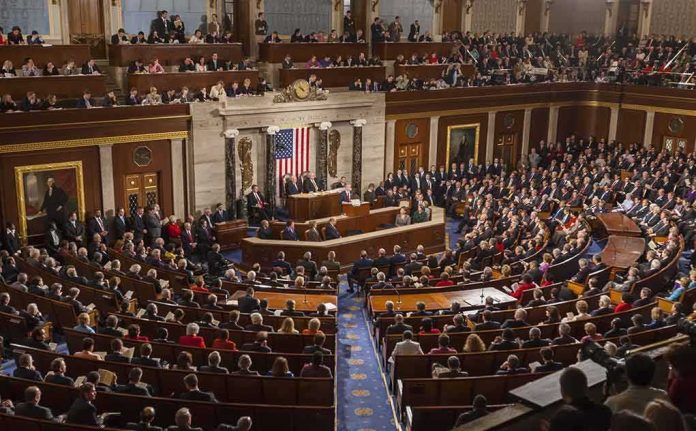
Capitol Hill’s renewed focus on foreign influence through civil society is not a passing spasm; it reflects a decade-long evolution in how adversaries project power and how the United States polices civic space. House and Senate committees have convened a series of hearings examining malign influence from China, Iran, and Cuba, and, crucially, the role U.S.-based nonprofits can play when messaging and money move through opaque networks. One House subcommittee explicitly framed an open hearing around “Trojan Horses,” signaling a view that adversaries exploit the credibility of American civil society to shape narratives and policy debates from the inside. Parallel lines of oversight have targeted Cuba-based intelligence collection and the broader architecture of the People’s Republic of China’s overseas influence, underscoring why lawmakers lump these topics together: the boundary between espionage, propaganda, and political mobilization has blurred in practice.
The Ways and Means Committee added muscle by probing the nonprofit sector’s susceptibility to foreign entanglements, highlighting alleged pathways—donor-advised funds, interlocking 501(c)(3)/(c)(4) structures—that can obscure origin, intent, and coordination. Its public-facing summary amplified claims that foreign donors have used complex networks to mask sponsorship and steer domestic activism, a scenario tailor-made for FARA questions when direction or control is present.
How Foreign Influence Actually Works Through Civil Society
Foreign influence in the nonprofit arena rarely looks like a wire transfer labeled “propaganda.” It’s subtler: aligned narratives, overlapping personnel, and money that transits through legally permissible vehicles until the provenance is difficult to reconstruct. From a legal standpoint, however, this is only half the story. The Foreign Agents Registration Act (FARA) requires registration not for receiving foreign money in the abstract, but for acting “as an agent” of a foreign principal—engaging in political activities at the order, request, direction, or control of that principal. The Department of Justice has affirmed in advisory opinions that direct foreign government funding for U.S. initiatives can trigger registration when paired with political activities; conversely, the statute’s exemptions and definitions preserve significant room for independent advocacy, even when foreign-linked support exists.
That architecture explains the recurring friction. Lawmakers and national-security practitioners emphasize that sophisticated adversaries exploit gray zones—routing money through transnational philanthropy and theme-aligned NGOs, then cultivating message discipline that looks coordinated. Civil society advocates, lawyers, and scholars counter that FARA’s breadth and ambiguity, especially around “political activities” and exemptions such as 613(d)(2) (“other activities”), invite selective enforcement and chill legitimate speech and association. Both points can be true: vigilance is justified, and so is caution about overreach.
The Neville Roy Singham Dispute as a Case Study
One focal point in current oversight is the funding footprint associated with Neville Roy Singham. House investigators and committee materials have asserted that Singham channeled significant sums into a multi-organization ecosystem whose messaging often aligns with Beijing’s interests, alleging the use of structures designed to obfuscate origin and coordination. That concern fits the pattern lawmakers describe: philanthropy and activism that, intentionally or not, amplifies narratives congenial to foreign adversaries.
The counter-case is blunt. Singham has categorically denied taking orders from any government or political party, stating he does not control the organizations at issue and acts solely on long-held personal beliefs; several recipients similarly reject claims of foreign direction and note they have not been charged with crimes. CodePink’s leadership, for example, has publicly denied receiving Chinese government funds. Other funders named on the periphery have stated their grants were for unrelated issues and dispute any insinuation of coordinated foreign agency. In evidence terms, the denials are specific and on the record; the congressional claims emphasize patterns, flows, and alignments. The unresolved hinge remains proof of direction or control—the legal threshold FARA is built around.
FARA’s Moving Parts: Where Oversight and Overreach Collide
Three structural features of FARA drive these fights. First, the statute’s definition of “foreign principal” is capacious, capturing foreign governments, parties, entities organized abroad, and individuals outside the United States; that breadth ensures coverage but drastically widens the field of potential “agency” relationships that investigators may examine. Second, “political activities” sweeps in attempts to influence the U.S. public or policymakers on domestic or foreign policy—ordinary fare for issue-advocacy nonprofits. Third, exemptions, notably 613(d)(2)’s “other activities,” can shelter work that is not principally directed by a foreign principal in a political sense, but DOJ’s evolving interpretation—reflected across recent and sometimes retracted advisory opinions—has complicated compliance planning for good-faith actors.
In recent years, congressional attention to foreign influence through nonprofits has accelerated, with investigative letters, hearings, and draft legislation that would restrict foreign nationals from certain nonprofit board roles or mandate disclosures for funds connected to “countries of concern.” Such proposals reflect a policy judgment that transparency and governance guardrails should tighten in the nonprofit sector when foreign touchpoints exist, even if traditional FARA triggers are not met.
What Counts as Evidence: Patterns, Principals, and Proof
Experts separate three layers of evidence. Layer one is pattern evidence—shared narratives, synchronized campaigns, or staff overlaps. It can justify inquiries but does not, by itself, establish agency. Layer two is provenance evidence—documented financial flows from a foreign principal or its proxies to U.S. entities engaged in political activities. This raises the temperature substantially and may require registration if direction or control is present. Layer three is command evidence—communications, contracts, or instructions tying activities to the foreign principal’s request or direction. That is the decisive line for FARA liability and the one that courts, the DOJ FARA Unit, and seasoned practitioners treat as dispositive.
Congressional hearings can surface all three, but they are not adjudications. When committees allege “Trojan horses,” they typically spotlight pattern and provenance evidence; when targets answer, they emphasize the absence of command evidence. In the Singham matters and adjacent networks, both sides are following that script. To date, many organizations under scrutiny highlight the lack of charges as an indicator that agency has not been established; investigators answer that subpoenas, testimony, and audits are precisely how command evidence is found or ruled out.
Practical Implications for Policy, Philanthropy, and Advocacy
For policymakers, the mandate is twofold: raise the cost of covert foreign direction without criminalizing or chilling independent advocacy. That means clearer statutory definitions, safe harbors for good-faith due diligence, and process transparency around advisory opinions so nonprofits can rely on stable guidance. For donors and boards, governance must catch up to risk—conduct counterparty diligence on foreign-linked funders, adopt disclosure norms that exceed legal minima where feasible, and document independence in program design and messaging. For advocacy groups, the operational playbook is straightforward: written firewalls on content autonomy, conflict-of-interest policies that address foreign affiliations, and periodic FARA risk assessments keyed to campaigns that touch U.S. public opinion or policy.
Bottom Line
The “Trojan horse” metaphor captures a genuine risk: foreign principals can and do seek to launder influence through trusted civic intermediaries. It also tempts overreach. The law, properly applied, turns on agency—direction or control—not ideological alignment or the mere presence of transnational money. Congress is right to probe; targets are right to demand evidence. Durable policy will come from tightening transparency and governance where risks are highest while preserving the independence and vigor of American civil society that adversaries, ironically, seek to exploit.
Sources:
foxnews.com, congress.gov, noticias.foxnews.com, waysandmeans.house.gov, cotton.senate.gov, govinfo.gov, extremism.gwu.edu, icnl.org, bricker.com, cov.com, charityandsecurity.org