

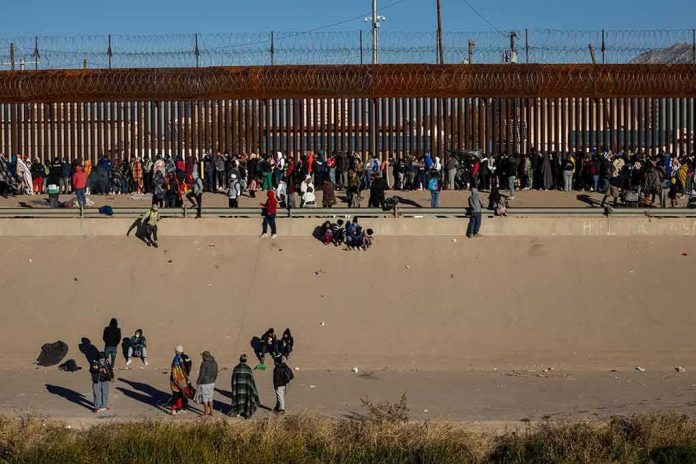
Border crises don’t just strain infrastructure; they reorder local politics and moral priorities. Ceuta’s beach encampment shows, in microcosm, how overwhelmed reception systems, legal bottlenecks, and neighborhood fear can fuse into vigilantism unless authorities rapidly replace improvised camps with orderly, safe reception.
The Short Version
- Ceuta’s reception capacity collapsed after an unprecedented influx, pushing thousands into an open-air beach camp with thin aid and severe protection gaps.
- Women and girls were at particular risk, with reports of harassment and sleeplessness in public spaces where privacy and sanitation were scarce.
- Resident anger over insecurity and public-space occupation culminated in crowds dismantling parts of the camp and confronting aid delivery.
- Spanish authorities belatedly opened temporary reception sites and began relocations, but the lag let humanitarian need turn into confrontation.
How a beach became a camp, and why it unraveled
Ceuta’s crisis followed a familiar pattern in Spain’s North African enclaves. A sudden mass arrival far outstripped formal reception capacity, leaving thousands outside the official centers. City leaders described the system as collapsed; the adult and minor facilities were saturated, with several thousand people still present in the enclave and no quick pathway indoors. Claims of “overflow” are not rhetoric here; they are descriptive of a structural shortfall that forced people to sleep on beaches, in parking lots, and hillside clearings while authorities scrambled for options.
Life on El Trampolín beach was makeshift and precarious. Migrants described sleeping on sand near the sea, enduring cold, bad smells, and the constant fatigue of nights without shelter. Humanitarian groups and reporters chronicled scarce sanitation, erratic access to toilets, and an ad hoc aid pipeline that could not supply safety, privacy, or rest—especially for women and minors. These are the predictable contours of a capacity crash: once formal intake jams, informal camps appear, and vulnerabilities multiply in the open.
Protection gaps: why women and girls bore the brunt
In any crowded, unsupervised outdoor camp, protection is the first service to fail. Women described fear of assault, constant vigilance to guard belongings, and the impossibility of sleep under the gaze of hundreds of strangers. Rights organizations warned that prolonged exposure to public spaces without controlled access, locks, or lighting compounds risk and deters reporting. In Ceuta, the reports aligned with that script: nights outdoors, no reliable privacy, and elevated vulnerability to harassment—conditions that would be unacceptable in any planned reception facility but are near-inevitable on a beach.
Authorities did begin to move, but not quickly enough to prevent tensions from hardening. As the days stretched on, the state announced temporary reception spaces and logistics for water, toilets, and psychosocial support—basic elements of safety and dignity that the beach could never guarantee. The plan included roughly 1,800 immediate places and the prospect of further expansion as larger sites were prepared. In policy terms, that is the right architecture; the problem was timing. By the time the scaffolding rose, fear and frustration on both sides had calcified.
From protest to vigilantism: when public order fills a humanitarian vacuum
Resident complaints clustered around two themes: insecurity and the occupation of public spaces. Ceuta is only 18 square kilometers; a sprawling, unsupervised encampment on a popular beach is not an abstraction for locals—it is their daily promenade turned into a crowded aid line. Demonstrations began as pressure on authorities to “restore normality” but tipped into direct action when groups moved on the encampment, blocked aid deliveries, and tore down makeshift shelters. This was not a debate about whether the camp was safe; it was a rejection of the camp’s existence on civic grounds, inflamed by a sense of official delay.
The state then found itself policing a fault line it had not closed swiftly enough—shielding migrants and aid workers while trying to stand up alternative sites. This sequence is classic in border emergencies: without rapid, visible relocation to managed facilities, the social contract frays, and some residents substitute their own enforcement for municipal order. It is costly and corrosive; once people mobilize against a camp, moving them back to confidence in state management is far harder than building shelter in the first place.
Mechanism and missteps: what a functioning response requires
Effective crisis reception has four moving parts: surge capacity, triage with protection first, legal processing that matches arrival tempo, and visible timelines that the public can see. Ceuta had the least fungible element go missing—beds—and everything else followed. With no doors to close behind new arrivals, triage became a beach, protection became wishful thinking, and legal queues lengthened in plain view of a frustrated city. When authorities finally announced temporary structures with sanitation, tables, water, and psychosocial support, they were articulating the minimum viable standard of care that should have preceded the camp, not followed it.
Speed matters because perception is a policy instrument. Residents will tolerate emergency measures if they see a credible arc—from unmanaged chaos to bounded order—executed in days, not weeks. Likewise, migrants are less likely to cluster in public spaces when there is a clear, safe alternative indoors. In Ceuta, the weeks-long window between influx and relocation allowed a humanitarian failure to metastasize into a policing challenge and then into crowd confrontation. The result was predictable, which is precisely why it was preventable.
The spark that has pushed Ceuta to the brink of social explosion was ignited on Friday, literally, as a group of residents set fire to a migrant camp on Benítez beach #Ceuta #invasion https://t.co/2ZVjyE48s5
— Spain Updates (@SpainUpdatesCom) August 29, 2026
Where the genuine disagreement lies—and what the evidence supports
There is no serious factual dispute that conditions on the beach were inadequate. First-person accounts, on-the-ground reporting, and rights-group statements converge on the basics: people sleeping outdoors with scant sanitation and women facing heightened risks. Nor is there dispute that residents were angry about public-space use and perceived disorder; their demonstrations, slogans, and direct actions speak plainly to that. The contested space is normative: should the encampment have been tolerated longer, dismantled earlier, or transformed rapidly into supervised reception? On the record we have, the strongest evidence favors rapid replacement with formal facilities; once those were offered at scale—1,800 places with core services—the humanitarian logic and public-order logic aligned.
The durable lesson: build the bridge before the flood
Ceuta will see future surges; so will other border nodes with limited land and finite municipal services. The lesson isn’t abstract. Pre-negotiated surge sites on military or municipal land, modular sanitation and lighting kits staged inside the enclave, and a rehearsed intake workflow can prevent beaches from becoming default camps. Pair that with transparent public briefings—daily headcounts, relocation targets, and service-level indicators—and the window for vigilantism narrows. Protection for women and minors is not a downstream add-on; it is the first variable to solve for, operationally and politically.
Sources:
youtube.com, russpain.com, theguardian.com, reuters.com, dw.com, en.ara.cat, english.elpais.com, knowafrika.com