
When a university becomes the stage for a politically charged remembrance, the practical question—what is booked, where, and when—often gets lost; here, the facts are clear: Turning Point USA scheduled a memorial event at Utah Valley University’s UCCU Center on September 10, the anniversary of Charlie Kirk’s assassination on that campus, with the university confirming the private booking while keeping its broader day-of reflection framework intact.
The Short Version
- Turning Point USA announced a memorial, “Freedom Built to Last, Honoring Charlie Kirk,” at UVU’s UCCU Center on September 10 at 6:30 p.m.
- UVU confirmed TPUSA engaged the UCCU Center for a private event that day; the campus otherwise remains closed to regular operations.
- Sept. 10 is framed by UVU as a day for reflection, service, and connection—separate from, but concurrent with, the TPUSA-hosted memorial.
- The venue and date deliberately return to the site and anniversary of Kirk’s killing, consistent with prior on-campus mourning and UVU’s memorial planning steps.
What is set to happen and where the facts come from
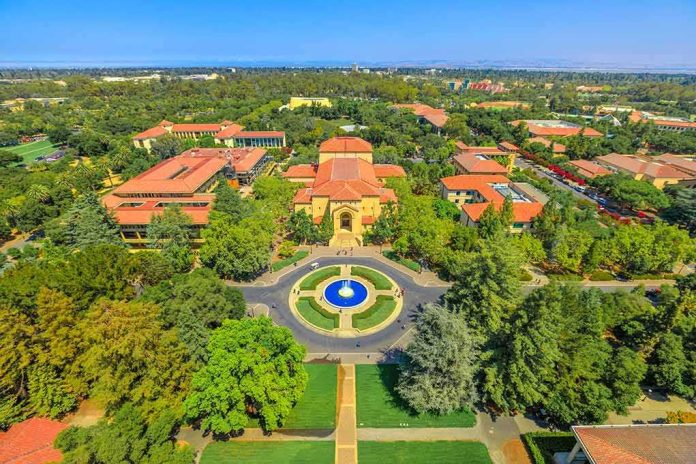
Turning Point USA publicly set a memorial event—titled “Freedom Built to Last, Honoring Charlie Kirk”—for September 10 at 6:30 p.m. in the UCCU Center at Utah Valley University, returning to the same campus where Kirk was killed. Local outlets reported the title, date, and venue based on TPUSA’s announcement, with Utah Valley University confirming that TPUSA had engaged the UCCU Center for a private event that evening. A UVU statement quoted in coverage reads: “Turning Point USA has engaged Utah Valley University to use the UCCU Center on September 10 for a private event.” Those are load-bearing details: they fix the event’s ownership (TPUSA), its locus (UCCU Center), and its intent (memorial), and they come from named institutional statements rather than rumor.
UVU’s parallel decision to close normal campus operations on September 10—and to emphasize time for reflection, service, and connection—sits alongside the private booking, not in conflict with it. University communications outlined the closure and the day’s healing posture and made an exception for the privately organized memorial in the arena-scale venue. That dual framing is consistent with how public universities balance facility access with institutional tone-setting in moments of grief or controversy.
How we arrived here: the year between a campus trauma and a planned remembrance
In the immediate aftermath of the killing, UVU organized a campus vigil and community gathering. Nine days after Kirk’s death, the university announced and then hosted a “Vigil for Unity” at the UCCU Center, explicitly linking the attack to the values at stake on a modern campus—free expression, civil discourse, and inquiry. That same venue choice matters: it demonstrated the UCCU Center’s role as UVU’s civic hall, capable of holding contested emotions and public ceremony in one space. The following week, university leaders signaled a longer horizon, creating a formal committee to develop a memorial—an institutional step that acknowledges commemorative responsibilities beyond a single service.
By the first anniversary, UVU’s posture reflected two tracks running in parallel. Track one: a university-managed, campus-wide day dedicated to reflection and community service while normal operations paused. Track two: a private memorial event organized by TPUSA in the arena on that same day, with the university treating it as a facility use by an external sponsor under standard protocols. The result is not unusual in higher education: an institution marks an anniversary in its own voice while renting space to a group with its own remembrance idiom.
Mechanics of memorials on public campuses: access, neutrality, and risk
Public universities are landlords, conveners, and stewards—three roles that can pull in different directions when politics and grief meet. As landlords, they apply viewpoint-neutral facility-use policies: if a space is rentable for comparable events, they generally cannot deny it based on a group’s viewpoint. As conveners, they set their own institutional ceremonies and rhetoric—often healing-focused and inclusive rather than partisan. As stewards, they manage safety, reputational exposure, and legal posture, especially where a criminal case exists or large crowds are expected. Policies at peer institutions codify these obligations: major non-departmental events trigger enhanced security coordination and operational planning due to expected attendance and campus impact. In that frame, a private remembrance in a large arena alongside a university day of reflection is a textbook compromise between access and stewardship.
Memorials also carry symbolism that stakeholders interpret differently. For TPUSA, returning to the precise campus on the precise anniversary underscores continuity and resolve. For the university, housing a private event while orienting campus-wide programming toward service and reflection balances community needs with neutrality. Neither posture negates the other; both are operating within the boundaries of a public institution’s mission and a national advocacy group’s commemorative goals.
🚨 BREAKING: A Charlie Kirk memorial has been announced by Turning Point USA at Utah Valley University — the same campus where Kirk was shot.
The decision is already sparking backlash from BOTH sides: some UVU students are furious the memorial is being held on campus, while… pic.twitter.com/9YCLOwsPP3
— Unfuck America Tour (@unfamericatour) August 21, 2026
What the venue and timing signify—and what they do not
The UCCU Center is not incidental. It is where the university has held large-scale gatherings, including the “Vigil for Unity” following Kirk’s death; it is also designed for external rentals under controlled conditions. Choosing it again ensures security, ingress and egress management, and predictable crowd handling—advantages that do not exist in ad hoc outdoor sites. Pairing the booking with a campus closure to ordinary operations reduces friction points and simplifies safety planning. That is sound event mechanics, not a hidden message.
The anniversary timing is likewise typical in memorial culture, especially when an institution and a sponsor want remembrance to be legible to participants across states and years. Universities routinely hold anniversary reflections even when parallel legal matters persist. UVU’s stated approach—healing, reflection, and service—fits that long practice, and the private memorial aligns with previous on- and off-campus commemorations of Kirk’s life led by allied organizations and chapters elsewhere.
The bottom line for readers and stakeholders
On the anniversary of a killing that shook a campus, two things will be true at once: Utah Valley University will spend the day oriented toward reflection and service with normal operations paused, and Turning Point USA will host an evening memorial for Charlie Kirk in the UCCU Center under a private booking the university confirmed. Those facts rest on institutional statements and mainstream local reporting, not conjecture. Additional program details—speaker lists, run of show—belong to the private organizer and may surface closer to the event; they are not prerequisites for understanding the essentials of what is planned and why these choices fit the well-established playbook for public-campus memorials.
Sources:
thegatewaypundit.com, yahoo.com, kutv.com, deseret.com, uvu.edu, theblaze.com, thecougarchronicle.com