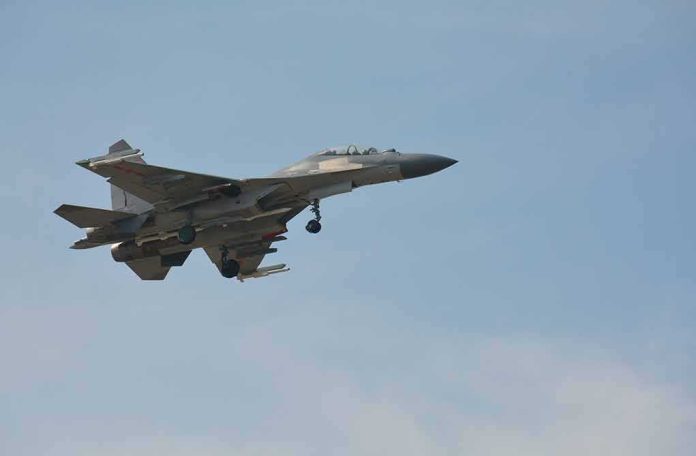
In military aviation, survival often hinges on a sequence of split-second systems working as designed; the Marine F/A-18 mishap near Mount Rainier underscores that truth, and the quiet professionalism of pilots, first responders, and investigators who turn a bad day in the air into a survivable one on the ground.
The Short Version
- A Marine Corps F/A-18 Hornet crashed near Mount Rainier during routine training; the pilot ejected and survived with minor injuries, and the incident sparked a wildfire that was contained.
- Marine officials characterized it as a non-fatal aviation mishap; the cause is under investigation, as is standard in U.S. military aviation.
- Body-worn camera footage from local authorities captured the pilot post-ejection, aligning with reports of rapid recovery and treatment.
- This event fits a longstanding pattern: tactical jet training produces a disproportionate share of mishaps, and formal causal findings follow weeks or months later through safety and legal investigations.
What happened: a survivable mishap in difficult terrain
During a routine training flight over Washington state, a Marine Corps F/A-18 Hornet went down near Mount Rainier. The 3rd Marine Aircraft Wing described the event as a non-fatal aviation mishap; the pilot executed a successful ejection, was recovered by local authorities, and transported for evaluation with minor injuries. Local reporting noted a wildfire ignited by the crash, which firefighting teams contained after aerial suppression efforts. The Marine Corps limited details pending the mishap investigation, a standard practice designed to preserve both the integrity of the process and high-quality safety learning.
Task and Purpose subsequently published body-worn camera footage from first responders encountering the pilot after he landed under parachute—evidence consistent with the immediate accounts of a safe ejection and quick recovery. Early public statements around such incidents are narrow by design: confirm the facts that matter for safety and community impact—where, when, injuries, fires—and defer causes until investigators can reconstruct the chain of events with rigor.
How a modern ejection saves a life
When a legacy-model F/A-18 pilot pulls the ejection handle, a tightly choreographed sequence begins. The canopy fractures or jettisons; the ejection seat’s rocket catapult propels pilot and seat clear of the airframe; a drogue deploys to stabilize; then, depending on altitude and speed, a barometric or time-delay mechanism triggers the main parachute. Throughout, restraints and survival gear—oxygen, personal locator beacon, radio, flares—keep the aviator conscious and findable. In older fleets like the Hornet, survivability has steadily improved through seat upgrades and better restraints; still, the margin is slim. Analyses of F/A-18 mishaps across decades show that milliseconds and angles matter: a good seat, a conscious pilot, and sufficient altitude convert catastrophe into a walkaway.
Once under canopy, the next determinants are terrain, weather, and rescue coordination. The Mount Rainier area features steep, forested slopes and variable winds—challenging for both parachute landings and ground teams. Here the system worked end to end: safe ejection, rapid local recovery, and transfer to medical care, while fire crews contained the secondary effect of a crash in dry conditions.
Why training flights carry real risk
Most catastrophic aviation losses do not occur in combat but in training, test, and routine operations where exposure is constant and margins are deliberately explored. The F/A-18 community—spanning Navy and Marine Corps variants—has historically carried a significant share of Class A mishaps (the most severe category), reflecting high sortie rates and demanding flight envelopes. A U.S. Naval Institute analysis, citing Naval Safety Center data, documented 193 Class A mishaps in the F/A-18 community since 1985, with the loss of 185 aircraft and 86 aircrew in that 31-year window. More recently, Pentagon data highlighted rising Class A rates from 2020 to 2024 across services, with the Marine Corps posting the highest average rate in that period, underscoring systemic pressures on readiness, maintenance, and training pipelines.
Mountains, low-level routes, and dynamic weather compound those risks. Tactical training emphasizes time-on-target precision, formation discipline, and maneuvering at speeds where small errors can outpace reaction time. Add night vision work, electronic warfare emissions checks, or simulated system failures, and the routine becomes unforgiving. That is why, when a pilot emerges with minor injuries, the story is not luck alone; it is training layered over engineered safeguards and coordinated response.
How investigations proceed—and why answers take time
Military aviation uses two complementary investigative frameworks after a mishap. The safety investigation is privileged, often non-punitive, and focused purely on understanding causal factors to prevent recurrence; findings are protected to encourage candor. A separate legal or command investigation establishes accountability and public-facing facts. Both draw on the same raw materials—maintenance records, pilot interviews, flight data, debris analysis, meteorology—but serve different ends, and they cannot simply be commingled. This structural separation is why early official statements confirm only essentials and often defer “why” until boards finish their work.
Methodologically, modern boards integrate human factors analysis with systems engineering. They map events into a causal chain: hardware failures, software logic, maintenance practices, training syllabi, checklists, supervision, and organizational pressures. The objective is root cause and contributory factors, not scapegoats. Across services, doctrine requires formal root-cause analysis and documentation of how evidence supports or eliminates plausible mechanisms—because a wrong lesson can be as dangerous as no lesson at all.
The body-cam clip and the public’s window into a closed system
In a tightly controlled mishap process, public artifacts are rare; body-worn camera footage from first responders fills an understandable appetite for confirmation. In this case, the video corroborates the Marine Corps’ early, limited description: a pilot under canopy, alive, lucid, and ambulatory shortly after ejection, then handed off for treatment. It does not—and cannot—answer causation. That division of labor is intentional: safety boards synthesize cockpit voice and flight data, maintenance histories, and simulator reconstructions; a few minutes of ground footage validates the outcome but not the mechanism.
For communities beneath busy military airspace, the wildfire was the more immediate concern. Local and federal responders contained the blaze with helicopter drops and ground crews, a reminder that aviation mishaps are whole-of-community events: a military emergency can quickly become a civilian wildfire problem and an airspace management exercise for the FAA and regional controllers.
‘As close as it gets’: Bodycam footage shows Marine pilot walking away from crashed F/A-18 Hornet https://t.co/YC6JNebVCd
— Just call me Gunny (@JRM58506966) August 19, 2026
What this event means for Marine aviation
One mishap is a data point; the portfolio is the story. Marine aviation has been working through aging platforms, high operational tempo, and complex transition plans between aircraft generations. Class A rates moving upward from 2020 through 2024 concentrated policymakers’ attention on readiness, parts supply, and training hours. Senatorial oversight summarized that trend with hard numbers, pressing the Department of Defense for reforms tied to maintenance manning, simulator fidelity, and syllabus design. The F/A-18—still flying alongside newer types—sits at the convergence of those issues.
The practical implications are incremental but real. Investigations that identify a defective component yield technical directives and fleet-wide inspections. If human-system integration is at fault—checklist design, cockpit ergonomics, or habit patterns—training changes follow. Where organizational factors surface—compressed timelines, deferred maintenance—leaders get marching orders. Over decades, that process has made ejections more survivable, fires less likely to spread, and pilots more skilled at recognizing the moment to separate from an unrecoverable jet. The Mount Rainier mishap fits that arc: systems worked, the pilot lived, the community impact was contained, and the analysis now moves behind closed doors to sharpen the next prevention step.
Reading the signals: confidence without speculation
The right posture for the public—and for serious observers of military safety—is disciplined patience. Early facts here are solid: a Marine F/A-18 crashed during training; the pilot ejected and survived with minor injuries; a wildfire ignited and was contained; an investigation is underway. The absence of causal detail at this stage is not hedging; it is the machinery of a safety system designed to trade speed for accuracy and learning. History says that process yields durable fixes precisely because it resists instant conclusions, even when a vivid video clip tempts us to fill in the blanks.
Sources:
taskandpurpose.com, seattletimes.com, uniindia.com, usni.org, everycrsreport.com, navalsafetycommand.navy.mil, media.defense.gov