

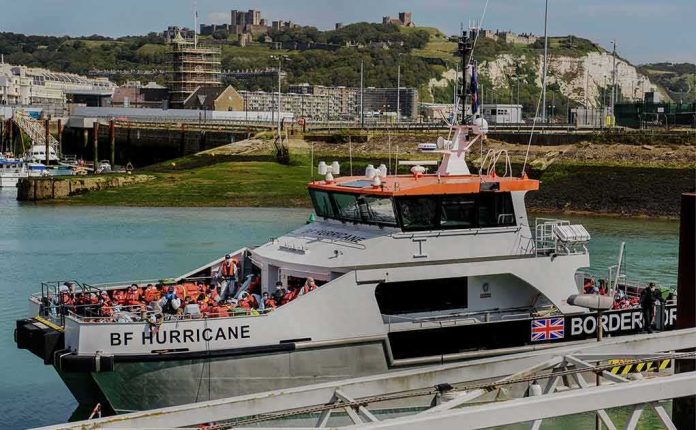
A war that began over centrifuges and missile sites in Iran has, in the space of five months, found its way to a gas terminal on the Egyptian coast — proof that in modern conflict there is no such thing as a contained front once drones and shipping lanes become the weapons of choice.
Key Points
- Egyptian authorities confirmed a drone strike caused a fire on two vessels, including a U.S.-operated gas storage tanker, at the Mediterranean port of Damietta.
- The strike marks the first time Egyptian infrastructure has been hit since the U.S.-Iran war began in February 2026.
- No group has claimed responsibility, and the drone’s origin remains formally unconfirmed even as it occurred amid an intensifying pattern of Iran-linked regional strikes.
- The incident followed IRGC missile attacks on U.S. positions in Jordan and coincided with fresh U.S. and Saudi retaliatory strikes on Iranian and Iran-backed targets.
- The episode underscores how energy infrastructure and shipping chokepoints have become the war’s most consequential battleground.
What Happened at Damietta
On July 29, 2026, explosions and fire broke out on two vessels docked at Egypt’s Damietta port, a Mediterranean gas hub roughly 200 kilometers north of Cairo. One was a Greek-owned, Bermuda-flagged tanker; the other a U.S.-operated floating storage and regasification unit. The British maritime security firms Ambrey and Inchcape identified a drone as the likely cause within hours, and Egypt’s cabinet followed with an official confirmation that an unidentified drone had triggered the blaze. Firefighters extinguished the flames, tugboats pulled the damaged gas vessel out to idle in open water, and Egyptian officials reported no casualties — a detail that, in a war otherwise measured in lives, is itself notable.
What makes Damietta significant is not the scale of the damage but the geography. Egypt had, until that Wednesday, remained outside the conflict’s physical footprint despite five months of strikes across Iran, the Gulf, Jordan, and the Red Sea corridor. The Wall Street Journal was blunt about the implication, framing the episode as Egypt’s “first drone attack,” a marker event widening the war’s map rather than merely adding to its tally.
How a Regional War Reached the Mediterranean
To understand why a Mediterranean port became a target, it helps to trace the war’s arc. The conflict traces to Operation Epic Fury, the joint U.S.-Israeli campaign that opened on February 28, 2026, and killed Iran’s Supreme Leader in its opening strikes before a ceasefire briefly held in early May. That truce never fully took. By June, U.S. Central Command was striking Iranian coastal radar and drone sites after Tehran launched drones toward the Strait of Hormuz; by July, CENTCOM described “heavy waves” of strikes against dozens of IRGC targets — command centers, missile and drone facilities, maritime assets — in direct retaliation for Iranian attacks on U.S. forces. Iran, in turn, struck U.S.-linked sites in Bahrain, Kuwait, and Jordan, and its navy moved to assert control over tanker traffic through the Strait of Hormuz. The pattern by midsummer was unmistakable: strike, retaliation, brief lull, repeat, with each cycle reaching slightly further afield than the last. Egypt’s turn came days after the IRGC claimed a ballistic missile strike on a U.S. airbase and command center in Jordan, and after U.S. and Saudi forces conducted joint strikes against Iran-aligned militias in Iraq — the first such joint action since Washington had briefly suspended its bombing campaign against Iran the week before. Within that same 72-hour window, U.S. officials said more than thirty IRGC-directed drone attacks had been attempted against American forces and Saudi energy infrastructure. Damietta fits that sequence as one incident among many, not an isolated anomaly.
Why Attribution Remains Formally Open — and Why That Doesn’t Change the Picture
No group publicly claimed the Damietta strike, and Egyptian officials stopped short of naming Iran or an Iranian proxy as the author. That caution is standard practice in maritime warfare, where private security firms often supply the first read on an incident — flight paths, munition debris, timing against known threat patterns — well before any government commits to a formal attribution. Two Iranian officials, speaking anonymously, told the New York Times the strike was intended as a warning that Tehran could inflict far greater damage on global shipping and energy supply if the war escalated further — a signal, if accurate, that reads as tacit acknowledgment even without an official claim. The absence of a named perpetrator is a genuine gap in the record; it is not, however, evidence that points elsewhere. It occurred in the immediate aftermath of Iranian strikes on Jordan and amid a documented pattern of Iran-linked drone activity against shipping and energy targets stretching back through the Strait of Hormuz and the Red Sea.
7.30.26
GEOPOLITICS & ENERGY
– Middle East Infrastructure Attacks: The US struck dozens of IRGC targets in Iran. Concurrently, a drone attack on Egypt's Damietta Port—a critical LNG hub—caused a fire, marking the first targeting of Egypt during the current conflict. Despite the…— Naive Research (@naive_research) July 30, 2026
Why Ports and Tankers Have Become the War’s Real Battleground
Damietta matters strategically because of what it handles, not merely where it sits. The port is a natural gas export and storage hub feeding Mediterranean and European markets, and its exposure alongside the Strait of Hormuz and the Bab el-Mandeb Strait means three of the world’s most consequential energy corridors are now simultaneously under threat from the same conflict. Iran’s navy has already moved to intercept tankers defying its warnings in Hormuz, asserting what one IRGC statement called full control of that waterway. Houthi forces aligned with Tehran have signaled they would escalate against Bab el-Mandeb traffic if the wider war resumes at full intensity — a threat that, if executed, would touch nearly all maritime trade transiting between Asia and Europe, not merely oil bound for Western buyers.
What It Means Going Forward
Egypt, notably, has not responded militarily and may choose not to — a restraint that analysts tracking the conflict describe as deliberate, aimed at avoiding a second active front while Cairo’s economy remains tied to Suez Canal transit fees and gas exports. But restraint from one government does not contain a war built on drones, proxies, and maritime chokepoints; it merely delays the next flashpoint. Every actor in this conflict — Washington, Tehran, Riyadh, and the militias and Houthi forces operating in their shadow — now has demonstrated reach into commercial shipping lanes far from any battlefield in the conventional sense. That is the durable lesson of Damietta: modern proxy warfare no longer needs a front line, only a port, a tanker, and a drone.
Sources:
wsj.com, npr.org, youtube.com, en.wikipedia.org, jpost.com, reuters.com, thestar.com.my, i24news.tv