Anthony Fauci’s Senate appearance turned into a public standoff after he repeatedly invoked the Fifth Amendment and refused to answer questions.
Quick Take
- Fauci appeared under subpoena before the Senate Homeland Security and Governmental Affairs Committee.
- He declined to answer and said he was acting on advice of counsel under the Fifth Amendment.
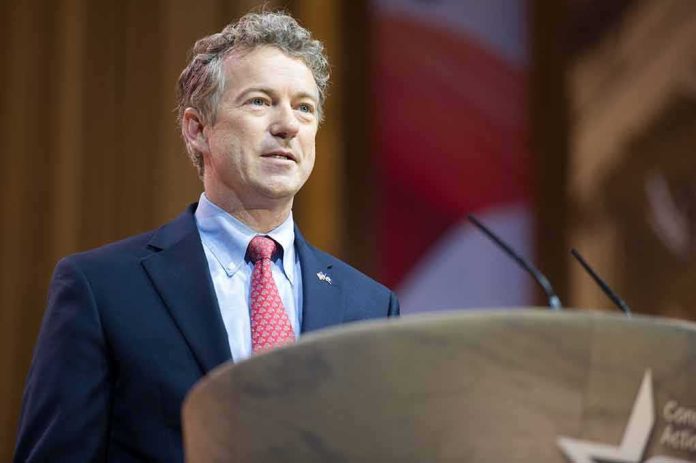
- Senator Rand Paul moved to schedule a contempt vote after the hearing.
- The dispute sits inside a larger fight over COVID-19 origins, records, and public trust.
What Happened At The Hearing
Fauci’s hearing became a sharp partisan clash as Senator Rand Paul pressed him on COVID-19 origins, federal records, and past statements. Reuters reported that Fauci was appearing under subpoena and that Paul has spent years accusing him of lying about pandemic-related issues. During questioning, Fauci repeated that he was declining to answer on advice of counsel, using his rights under the Fifth Amendment.
The refusal was the center of the drama, but the legal meaning matters. The Fifth Amendment protects a witness from being forced to give testimony that could be used against him in a criminal case. That is why Fauci’s silence is not, by itself, proof of wrongdoing. It does, however, show that the hearing was hostile enough to trigger a constitutional shield instead of a normal exchange.
Why Republicans Say The Record Matters
Paul and his allies framed the hearing as a chance to revisit possible record deletion and misleading statements. The committee’s public material says it found new evidence about deleted official records and called Fauci to testify. PBS reported that Paul told Fauci the committee was preparing a contempt vote and that the questions focused on whether he destroyed federal records during the period covered by a presidential pardon.
House Oversight Republicans have also argued that Fauci’s prior testimony was misleading, especially on Wuhan research and COVID-19 origins. Their hearing wrap-up said he had “confirmed previous, concerning testimony” and pointed to “clearly misleading statements” and “gross mismanagement” of the National Institute of Allergy and Infectious Diseases. Those are serious accusations, but the supplied record does not include a court ruling or criminal finding that settles them.
What Fauci And His Defenders Say
Fauci has denied the core accusations and said he has testified truthfully before Congress. Reuters reported that he denied the claims tied to the hearing and said he had answered Congress multiple times on these issues. NBC News quoted Fauci saying he invoked the Fifth because he feared Republicans would try to use his testimony to prosecute him for perjury, and that Paul’s repeated attacks made the setting unfair.
Anthony Fauci declined to answer more than 100 questions during a Senate hearing, invoking the Fifth Amendment throughout testimony on the COVID 19 pandemic. pic.twitter.com/yJuMygsLvk
— Ticker (@tickercotweets) July 30, 2026
That defense does not erase the political damage. A Fifth Amendment invocation is lawful, but it also leaves a vacuum that critics can fill with suspicion. The public sees a famous health official refusing answers in a room full of cameras, while Republicans point to diaries, emails, and old testimony as proof that something was hidden. Supporters respond that the evidence still falls short of proving a crime.
The Bigger Political Meaning
This fight fits a familiar pattern in Washington. A high-profile official faces harsh accusations, the official invokes constitutional rights, and each side declares victory. In this case, the deeper issue is not only Fauci’s conduct. It is the widening gap between public institutions and the people they are supposed to answer to. That gap grows wider when committees look like political weapons instead of neutral fact-finding bodies.
The case also shows how fast public trust can break down when records, diaries, and old testimony become political fuel. On one side, critics see a cover-up and a protected elite. On the other, defenders see a lawful use of rights and another round of partisan theater. The hearing did not resolve those claims. It did, however, show how little faith many Americans still have in the federal government’s honesty.
Sources:
youtube.com, foxnews.com, npr.org, nytimes.com, pbs.org