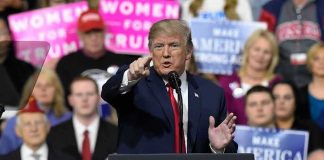


The core significance of Trump’s homelessness policy is not that it invents civil commitment, but that it tries to normalize it as a federal answer to street homelessness; that is a major legal and administrative shift, because it moves the debate from voluntary services toward coercive treatment backed by federal funding priorities and pressure on state law.
Intro Header
- The policy’s center of gravity is civil commitment, institutional treatment, and the weakening of Housing First, not a narrow public-order intervention.
- Its practical effect depends on state implementation, because commitment standards are set largely by state law even when Washington tries to steer them.
- Critics are not guessing when they call it coercive; the executive order’s text explicitly favors broader commitment standards and funding preferences for jurisdictions that police encampments and public drug use.
- The unresolved question is not whether the order is punitive in tone; it is whether coercion can outperform housing-first and voluntary treatment on safety, stability, and survival.
What the policy actually does
Trump’s executive order directs federal officials to help states and localities adopt “maximally flexible civil commitment, institutional treatment, and ‘step-down’ treatment standards” for people with mental illness who are dangerous to themselves or others, or who are “living on the streets and cannot care for themselves.” That language matters. It does not merely endorse more beds or more services; it asks the federal government to assist in broadening the legal pathways by which an unhoused person can be compelled into treatment and, in some cases, kept there for an extended period.
The order also uses the grant-making machinery of the executive branch. KFF reports that it instructs DOJ, HHS, HUD, and other agencies to review discretionary grants and prioritize jurisdictions that ban public drug use and urban camping, and that use civil commitment or other legal actions to move unhoused people into treatment. In plain terms, the policy tries to change behavior not by rewriting state commitment statutes directly, but by making federal support more favorable to states that move in the same coercive direction. That is a classic Washington technique: incentives first, formal compulsion second.
Why Housing First is the real point of conflict
This order is best understood as a rejection of the policy architecture that has dominated federal homelessness strategy for decades. KFF says the directive pushes states to broaden involuntary civil commitments and shift away from deinstitutionalization-era assumptions; Harvard’s public summary is blunter, describing it as a punitive approach that moves away from Housing First. The White House order itself supports that reading because it prioritizes commitment, institutional care, and “step-down” treatment while ending support for Housing First policies.
Housing First is not a slogan; it is a program design that places stable housing before treatment compliance as the foundation for recovery. The Trump approach reverses that logic. It treats housing as something to be earned after behavior changes, or after a court decides that the person is unable to care for themselves. Supporters call that realism. Critics call it a return to the old asylum logic dressed up in modern bureaucratic language. The disagreement is not about whether homelessness is serious. It is about whether stability comes from voluntary housing or from compelled treatment.
Why supporters think coercion is justified
The strongest case for the policy is intuitive and politically durable: some people living unsheltered are severely mentally ill, addicted, or so disorganized that they cannot reliably seek care on their own, and public systems have often failed them. NPR’s reporting on the order captures the administration’s position that the policy applies to people who pose a danger to themselves or others. A Utah League summary likewise describes the executive order as aimed at restoring civil commitment for certain people who pose a risk to themselves or the public, or who cannot care for themselves in appropriate facilities.
That argument has real force in the cases that are hardest to ignore. A person who is wandering into traffic, gravely psychotic, repeatedly overdosing, or incapable of basic self-care presents a genuine state-interest problem. Civil commitment exists for exactly this class of emergency, and the Trump administration is betting that the nation has become too reluctant to use it. The policy’s internal logic is simple: if voluntary systems are failing and the street has become the default psychiatric ward, then the government should widen the legal lane for intervention.
Why critics see criminalization, not care
The counterargument is much sharper than a reflexive libertarian objection. The order’s own text is broad enough to worry people who work in homelessness, disability, and mental-health law. It reaches not only people who are plainly dangerous, but also those who are said to be “living on the streets and cannot care for themselves,” a category that can be interpreted expansively in practice. That is why organizations such as the National Homelessness Law Center, NBCC, the NAACP Legal Defense Fund, and Harvard-affiliated commentators describe the order as punitive, criminalizing, or a return to institutionalization.
The best criticism is structural, not rhetorical. The order does not simply add treatment capacity; it links commitment, policing of encampments, and funding preferences in a single policy bundle. That bundle tells you what the federal government thinks the problem is. It is not just untreated illness. It is visible disorder. And once that becomes the governing premise, the risk is that homelessness gets managed as a public nuisance first and a medical crisis second. That is the defining fear of civil-liberties advocates: that coercion will be used where a person is poor, frightening, or inconvenient, not only where they are clinically unable to consent.
The legal and operational constraint nobody can escape
Even with strong federal pressure, civil commitment is still mostly governed by state law, court procedure, and local capacity. That is why the policy’s practical reach is uneven by design. DWT notes that the executive order does not itself change existing law; instead, it requires federal agencies to take regulatory and funding actions, while states will have to look to agency guidance because the order does not define key terms such as who counts as unable to care for themselves. That ambiguity is not a drafting accident. It is the price of trying to move a state-law domain through federal incentives.
This is also where the policy becomes hard to implement cleanly. If a state lacks psychiatric beds, outpatient infrastructure, forensic capacity, or judicial willingness to expand commitment, the order’s promises will run into the usual bottlenecks. The research package surfaces those obstacles only indirectly, but the conclusion is unavoidable: a coercive policy can be announced from Washington; it cannot be made administratively real without hospitals, judges, clinicians, and county systems willing to absorb the cases. The hard part is not declaring a broader standard. The hard part is housing the people it sweeps up, legally and physically, once the standard is broadened.
What this policy means over time
Trump’s homelessness order is best read as a deliberate challenge to the post-deinstitutionalization settlement. For years, federal policy leaned toward community-based services and Housing First; this order explicitly turns toward institutional treatment, civil commitment, and enforcement of public-space rules. That makes it more than a homelessness memo. It is a governing theory about disorder, illness, and the legitimacy of coercion. If states adopt it aggressively, they will likely produce a patchwork of commitment practices that vary by local politics, judicial culture, and bed availability. If they do not, the order will remain more symbol than system.
The deeper question is whether a policy built around compelled treatment can solve what is partly a housing problem, partly a behavioral-health problem, and partly a capacity problem. Nothing in the material provided shows outcome data proving that broader civil commitment reduces homelessness, overdose, mortality, or street disorder better than voluntary housing and services do. What the record does show is a strong federal effort to move the country away from Housing First and toward a more coercive model of care and control. That is the wager. Whether it produces order or merely relocates suffering is the test that still has not been answered.
Sources:
cbsnews.com, whitehouse.gov, kff.org, npr.org, wkar.org, nhchc.org, naacpldf.org, axios.com, prisonpolicy.org