

Street gangs have found in America’s benefit programs something they never had from drug corners or extortion rackets: a low-risk, high-volume revenue stream that requires no lookout, no product, and no turf war — just a stolen identity and a form.
Key Points
- Federal and state prosecutors have documented multiple cases, from San Diego to Long Beach to Brooklyn, in which gang members used stolen tax credits, unemployment claims, or COVID relief funds to buy guns, drugs, and vehicles.
- The pandemic relief system’s weak upfront verification created an unusually large and easy target, with the SBA’s own inspector general estimating over $200 billion in suspected fraudulent pandemic loans and grants.
- The White House established a Task Force to Eliminate Fraud, and inspectors general are now publicly framing benefit fraud as a violent-crime enforcement priority, not just an accounting problem.
- The evidence for gang-financed fraud is strong at the case level but thin at the national scale — nobody has yet measured what share of gang revenue nationwide actually comes from taxpayer fraud versus drugs or robbery.
- A parallel claim — that Minnesota fraud proceeds reached the terrorist group Al-Shabaab — has been investigated and, according to federal investigators cited by CBS Minnesota, not substantiated, even as congressional letters continue to raise it.
How the Fraud Pipeline Actually Works
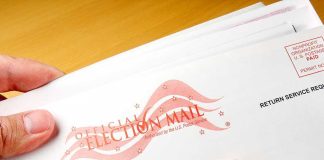
The mechanics are almost boringly simple, which is precisely why they scaled so fast. A gang member, or a crew working together, files a fraudulent tax return claiming pandemic-era credits, submits an unemployment insurance claim using a stolen identity, or applies for a Paycheck Protection Program loan through a shell entity with inflated payroll figures. Verification at the point of application was minimal by design — the programs were built for speed during a national emergency, not for scrutiny. The San Diego County District Attorney’s office indicted 17 defendants from four rival street gangs for filing fraudulent returns claiming more than $2.2 million in COVID relief credits, money prosecutors said funded “drugs, guns, diamonds and ultimately fund their gang lives”.
That case is not an outlier. The FBI’s Los Angeles field office charged four defendants in what it called the largest known COVID tax-credit fraud scheme yet identified, worth $93 million. In Chicago, street gangs including the Traveling Vice Lords and the Wild 100s exploited PPP and other relief programs to buy weapons and narcotics, according to Sun-Times reporting tied to Justice Department enforcement data. The IRS’s own “Operation Fraud Street Mafia” resulted in nine arrests tied to drug trafficking and more than $550 million in attempted tax fraud, including a scheme allegedly run in part from inside a state prison. The pattern across these cases is consistent: minimal verification, stolen or synthetic identities, and proceeds that flow directly into the existing cash economy of gang life — weapons, vehicles, jewelry, bail money.
The Historical Arc: From Medicare Schemes to Pandemic-Scale Exploitation
This is not a new phenomenon accelerated by COVID; it is an old criminal instinct that pandemic relief simply supercharged. ABC News reported as early as 2010 that armed gangs nationwide were arming themselves specifically to protect Medicare fraud operations, describing healthcare fraud as a violent-crime predicate more than a decade before anyone had heard of PPP loans. California’s Attorney General announced the indictment of 32 members and associates of the Long Beach Crips in an identity-theft and tax-fraud scheme that stole more than $3.3 million and attempted to steal over $11 million, years before the pandemic created an even larger attack surface. What changed in 2020 was scale and speed: trillions of dollars moved through federal programs with eligibility rules relaxed to get cash to households and small businesses fast, and the SBA Office of Inspector General has since estimated more than $200 billion in suspected fraudulent pandemic loans and grants. Gangs did not invent benefit fraud; they simply recognized, faster than regulators did, that the pandemic had turned a niche criminal specialty into a mass-market opportunity.
Where the Evidence Is Solid — and Where It Runs Thin
The individual prosecutions are not in serious dispute. Indictments, grand jury findings, and Justice Department press releases document specific defendants, specific dollar amounts, and specific gang affiliations, from the Bronx’s “Shiesty 66” bank-fraud network, which the Secret Service says netted more than $10 million, to a Brooklyn “Ninedee” gang member sentenced to 145 months for a COVID-era scheme. What the public record does not yet establish is proportion. No agency has published a data study coding gang-linked fraud against total gang revenue, so claims that taxpayer fraud is now a primary gang financing mechanism nationally outrun what the case files alone can prove; drugs, robbery, and extortion likely still dominate most gangs’ books, and the loudest headline figures — hundreds of billions in suspected pandemic fraud — are not shown to be gang-attributable in any fixed proportion.
The causal chain from fraud dollars to specific violent acts is also thinner than prosecutorial language suggests. Press releases describe money funding “gang life” or buying guns in general terms, but rarely trace a dollar from a fraudulent return to a specific shooting or racketeering count in the same document. And the most politically charged extension of this claim — that Minnesota welfare fraud proceeds reached the Somali terrorist group Al-Shabaab, an allegation pressed in a House Ways and Means Committee letter and amplified in subsequent reporting — has been directly examined by federal investigators, who told CBS Minnesota they found no evidence supporting the terrorism-financing claim, even as the underlying welfare fraud itself, involving roughly $1 billion and dozens of convictions, is well documented. That is an important distinction: the fraud is real and prosecuted; the terrorism-funding pipeline remains, on the current record, unproven.
Federal Response: From Prosecutions to a Standing Task Force
Washington has treated the scale of pandemic-era losses as reason enough to institutionalize fraud enforcement rather than handle it case by case. In March 2026 the White House established a Task Force to Eliminate Fraud, directing agencies to use all available resources to close eligibility loopholes across federal benefit programs. The Department of Labor’s Inspector General has since framed its enforcement work explicitly around that task force, with officials stating publicly that fraud “is fueling violent crime, corruption, and gang activity across the United States,” and pointing to a New York case in which more than 40 gang members were sentenced for racketeering after investigators found their operation had been funded in part by COVID unemployment fraud. The rhetoric has sharpened accordingly — inspectors general now describe benefit fraud not as a compliance failure but as a public-safety threat, a framing that carries real enforcement consequences but also invites the kind of political amplification that can blur distinct fraud categories — tax fraud, unemployment fraud, Medicare fraud, welfare fraud — into a single undifferentiated narrative.
Federal investigators are intensifying efforts to combat fraud targeting taxpayer-funded benefit programs, warning that stolen public funds are increasingly being used to finance violent crime and gang activity.
— One America News (@OANN) July 25, 2026
What This Means for Taxpayers and Policymakers
The lesson here is not that every dollar of pandemic largesse ended up in a gang’s pocket — it did not — but that speed-over-verification program design is a standing invitation to organized criminal actors who move faster than bureaucracies. Every relief program built again for a future emergency will face the same tension between rapid disbursement and fraud screening, and the gang-fraud cases of 2020–2026 are the clearest evidence yet of what happens when that tension resolves toward speed. The honest conclusion, grounded in the documented cases rather than the loudest estimates, is that taxpayer fraud has become a real and recurring gang revenue stream — proven in dozens of prosecutions — even though its overall share of gang financing, and its reach into terrorist financing specifically, remains considerably less settled than the headlines suggest.
Sources:
youtube.com, hoodline.com, oag.ca.gov, cbsnews.com, whitehouse.gov, danewscenter.com, abcnews.com, ice.gov, chicago.suntimes.com