The most instructive fact about the Kenmore Air seaplane accident near Sucia Island isn’t that it happened — floatplanes operating in the San Juan Islands fly thousands of short hops a year in conditions that leave little room for error — it’s that every one of the 11 people aboard walked, swam, or was carried away from an aircraft that burned to the waterline within minutes of stopping.
Key Points
- A Kenmore Air de Havilland DHC-3 Otter carrying 10 passengers and one pilot made an emergency water landing in Shallow Bay near Sucia Island, Washington, and caught fire shortly after touchdown.
- All 11 people aboard were accounted for; several sustained serious injuries, including head trauma, broken bones, and lacerations, with one passenger in critical condition.
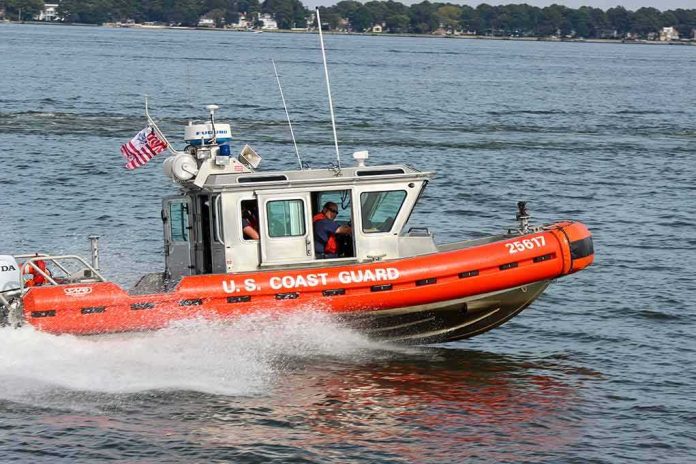
- A coordinated U.S. Coast Guard, Navy, and Canadian rescue response — aided by a civilian boater — reached survivors before the fire consumed the aircraft.
- The National Transportation Safety Board opened a formal investigation into the cause; Kenmore Air grounded its fleet the following day.
- The episode sits inside a decades-long, well-documented pattern of seaplane accidents in which pilot decision-making, not mechanical failure, is the leading contributing factor.
What Happened in Shallow Bay
The aircraft, operating as Kenmore Air Flight 140, departed Lake Union in Seattle at roughly 4:30 p.m. bound for Roche Harbor, a routine scenic and shuttle run the airline has flown for decades between Seattle and the San Juan Islands. Around 5:15 p.m., the pilot put the Otter down in Shallow Bay near Sucia Island — a maneuver the Coast Guard classified as an emergency landing rather than a controlled arrival. The aircraft came to rest against the shoreline rocks. Passengers evacuated before the plane’s engine ignited, and the fuselage was largely destroyed by fire, a sequence corroborated across multiple independent video accounts from bystanders on nearby boats and shore.
Rescue arrived fast because the region is unusually well covered by mutual-aid infrastructure. Coast Guard Sector Puget Sound logged the initial distress report at 5:25 p.m. and immediately launched search-and-rescue assets, broadcasting an urgent marine notice that pulled in Navy helicopters, Orcas Island Fire and Rescue, the San Juan County Sheriff’s Office, and Canadian responders from across the nearby border. A civilian boater helped two survivors reach safety directly; others swam to Sucia Island itself, a state marine park with no permanent population. San Juan County Sheriff Eric Peter framed the response bluntly: preservation of life was the only objective that mattered in the first hour, and it was met.
The Human Toll and the Medical Picture
Survival was universal; injury was not trivial. Reporting converged on a consistent casualty picture: one passenger in critical condition, plus others with head injuries, broken bones, and lacerations severe enough to require hospitalization. Six patients were transported to PeaceHealth St. Joseph Medical Center in Bellingham, four to PeaceHealth Peace Island Medical Center in Friday Harbor, and the pilot was evaluated separately at Skagit Valley Hospital. Three patients remained hospitalized as of the following afternoon, according to a Kenmore Air spokesperson. That spread of injury — consistent with sudden deceleration on water contact followed by a scramble to exit a burning airframe — is typical of survivable water-impact accidents in small aircraft, where the danger shifts from the impact itself to the seconds immediately after it.
Kenmore Air, which bills itself as the largest seaplane operator in the country, canceled its full Friday flight schedule out of Lake Union, citing its obligation to support “passengers, our pilot and their families” and to cooperate fully with investigators. That grounding was voluntary and precautionary rather than regulator-imposed, but it reflects a standard industry response: a fleet-wide pause after a fatal-potential accident lets an operator preserve wreckage, brief crews, and avoid flying before any systemic cause — weather protocol, maintenance issue, pilot procedure — is ruled in or out.
Why Seaplanes Burn After They Stop
An emergency water landing and a post-landing fire are mechanically distinct events, and conflating them misses what investigators actually need to explain. A floatplane like the Otter carries its fuel in wing tanks feeding a radial or turbine engine mounted ahead of the cabin; a hard or off-profile water contact can rupture fuel lines, crack a tank, or drive fuel toward a hot engine and exhaust manifold. Because floatplanes lack the crash-absorbing structure of a runway-landing aircraft and often come to rest against rock or shoal rather than open water, the risk of a fuel-fed fire after touchdown is a known hazard in seaplane operations, distinct from — and often more dangerous than — the landing itself. That is consistent with survivor accounts here: the aircraft reached the shoreline, occupants evacuated, and only then did the engine area ignite.
Weather, Pilot Decision, and the Open Question
Coast Guard and sheriff’s office statements in the immediate aftermath noted no adverse weather at the time of the landing, but meteorological data reviewed separately told a different story: radar showed thunderstorm cells with lightning, downbursts, and microbursts active over the San Juan Islands around 5 p.m., with one broadcast meteorologist tracing the instability to the remnants of a tropical weather system moving through the region. That gap between the on-scene assessment and the radar record is the genuine open question in this event — not whether people survived, which is settled, but whether localized convective weather forced the pilot’s hand. Modern aircraft tolerate lightning strikes reasonably well; the more hazardous combination for a light floatplane is the turbulence, wind shear, and sudden visibility loss that accompany a microburst, precisely the conditions radar showed nearby.
The National Transportation Safety Board, which leads civil aviation accident investigations in the United States, opened its inquiry within a day, with wreckage recovery and cause determination expected to take months rather than days — the norm for NTSB investigations, which typically produce a preliminary report quickly but a final probable-cause finding much later. Until that finding is published, any explanation of why the pilot chose an emergency water landing at that location remains informed speculation, however well-supported by the weather data.
A Kenmore Air seaplane carrying 11 people crashed near Sucia Island, Washington, and caught fire following an emergency water landing.
Everyone aboard survived and was rescued, though several people were injured, including one critically.#washington #aviation #breakingnews #news pic.twitter.com/P5aLLF7I2H— Join 30s (@join30s) July 25, 2026
Context: Seaplanes Carry Real, Well-Quantified Risk
This accident is not an isolated data point in an otherwise pristine safety record. Federal accident data covering 2008 through 2022 recorded 406 seaplane accidents nationwide, and pilot error — specifically loss of aircraft control and poor in-flight decision-making — was identified as the leading contributing factor across that dataset, ahead of mechanical failure. Kenmore Air itself has been through this before: a 2016 floatplane accident near Cattle Pass ended with all aboard rescued by a passing fishing boat and no definitive cause ever established. The pattern across both incidents is the same one that defines seaplane risk broadly: short, low-altitude flights over water in a region prone to sudden marine weather shifts, flown by operators whose safety record over decades is otherwise strong, but whose margin for error in adverse conditions is thinner than that of conventional runway aviation.
For an industry that depends on public confidence — floatplanes are a signature way to reach the San Juan Islands, Alaska’s coastal communities, and similar water-access destinations — the durable lesson of this event is less about blame than about resilience. The rescue architecture worked exactly as designed: rapid multi-agency response, cross-border cooperation, and bystanders willing to act. The open investigative question is whether the decision to land, and the equipment and protocol surrounding it, can be tightened enough that outcomes like this one keep depending less on luck and more on procedure.
Sources:
tmz.com, youtube.com, instagram.com, cnn.com, reuters.com