
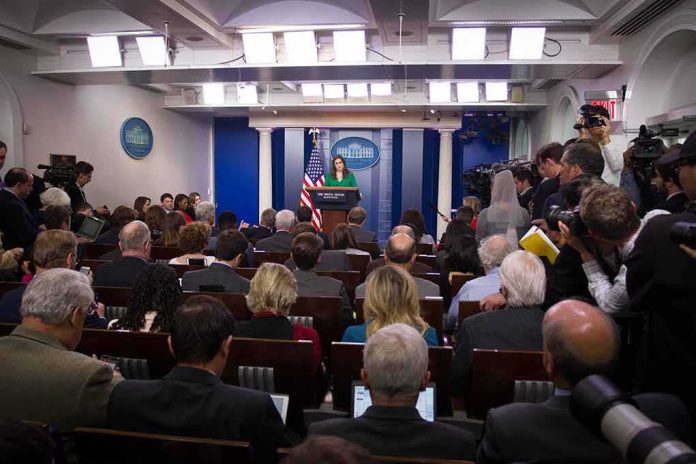
The rescheduled White House Correspondents’ Dinner crystallized a long‑running struggle over who gets to define “truth” in American politics: a president using a comedic roast to hammer the press, and media institutions insisting the same performance proves why they must stand as a check on him.
Key Points
- President Trump’s WHCD speech blended praise for law enforcement and resilience after an assassination attempt with sustained attacks on journalists and Democratic rivals.
- Press coverage overwhelmingly framed the address as a rambling, insult‑heavy performance that undermined the dinner’s press‑freedom symbolism, rather than a fact‑based critique of media conduct.
- The evidence record shows detailed, concrete claims about security upgrades and public events, but media accounts largely reacted to tone — insults, jabs, and the “Trump Derangement Syndrome” refrain — instead of systematically testing those claims.
- The clash over this speech fits a decade‑long pattern: Trump portrays the press as biased and dependent on him for relevance, while many outlets present his rhetoric as a norm‑breaking threat to watchdog journalism.
What Trump Actually Did at the Rescheduled WHCD
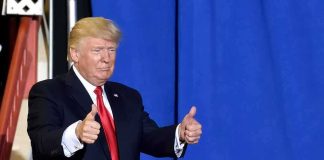
To understand why the Associated Press and other outlets reacted so sharply, you have to start with what Trump used the podium for. The dinner itself was a redo; the April event at the Washington Hilton ended almost as it began when a gunman opened fire outside the ballroom in what authorities described as an assassination attempt against the president and senior officials. In the July speech at the Waldorf Astoria, Trump leaned heavily into that trauma, calling the earlier attack “an assault on our democracy itself” and praising figures such as Secret Service Officer Victor Gonzalez, who was shot while confronting the assailant.
From there, Trump pivoted to a tour of what he framed as concrete achievements. He spent surprising time on security infrastructure, touting a new military‑grade White House ballroom with bulletproof glass designed to withstand rifle fire, a sprawling underground complex of rooms, and upgraded defenses he said would protect future presidents. He claimed the project was ahead of schedule and under budget, and wove in a narrative of patriotic resolve — America would not let political violence shut down its civic rituals.
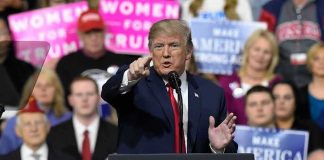
But the speech was not a policy briefing. It was a roast. Across roughly an hour, Trump mixed these serious notes with sharp personal shots at Democrats, media figures, and cultural targets, reprising material familiar from his rallies and social media presence. He mocked Illinois Governor J.B. Pritzker’s weight, savaged California Governor Gavin Newsom’s competence, dragged Ilhan Omar as “low IQ,” and again leaned on his “Pocahontas” riff about Elizabeth Warren’s ancestry.[NZbve_7sl2w transcript] He labeled cable and network outlets “fake news,” told the room it contained “the largest group of Trump Derangement Syndrome people ever put together,” and joked that journalists’ careers had been “saved” because he chose not to deliver an even harsher speech after the April shooting.
How the Press Framed the Speech
Major outlets did not treat this as a substantive critique of their work; they treated it as confirmation of a problem. The Associated Press, local affiliates carrying its copy, and international papers described the address as “rambling,” “vicious,” and jammed with “insults, potshots and crude jokes.” The Guardian emphasized his long record of attacking the press and presented the night as one more entry in a pattern of deriding coverage as “fake news” even while paying the press a cursory compliment for doing an “amazing job.”
Television segments with journalists in the room were harsher still. One panel described the atmosphere as feeling “like a hostage situation,” with reporters sitting through an hour of direct attacks while Trump wore a “Trump 2028” hat and toyed with the idea of a fourth term. Cohen’s commentary videos argued that Trump used the dinner — historically a celebration of the First Amendment — as a platform to undermine the free press and normalize authoritarian rhetoric, pointing to concurrent subpoenas against New York Times reporters and tightened Pentagon access as evidence that his jokes were backed by real legal pressure.[CFIyAIftZcI transcript]
The central media claim is not that every factual assertion in the speech was wrong; rather, that the performance’s overall thrust was hostile to the idea of a free, independent press and that its tone — ridiculing personal appearance, questioning intelligence, and recycling chant‑ready insults — was inconsistent with the dinner’s tradition of mutual, if sharp, comedic needling.
The Missing Piece: Claim‑by‑Claim Fact Checking
What the public record does not yet provide is a granular verdict on the factual content embedded in Trump’s jabs. Coverage quotes him announcing “I won three times” and calling the 2020 election “rigged,” mocking specific journalists and governors, and touting rapid construction of security facilities and crime reductions in Washington, D.C.[0L8zMywEK6Y transcript] But with the notable exception of his election claims, most write‑ups stop at description. They do not walk line by line through whether crime has in fact fallen by the percentages he cites, whether the ballroom’s specifications match procurement documents, or whether the economic figures he deploys — such as a claimed $35 billion hit to Bud Light’s market cap after a controversial ad — accurately track market data.[0L8zMywEK6Y transcript]
This absence matters if you want to answer the narrow question, “Were his criticisms of the media and rivals valid?” Without a full official transcript of the July speech in the search record, and without paired datasets testing each assertion, you can confidently say the tone was abrasive and often personal. You can say his election‑related statements contradict certified results and court rulings. But you cannot, from these sources alone, validate or falsify each claim about CNN’s ratings, individual reporters’ awards, specific governors’ policies, or the precise performance of Washington crime statistics.
In that sense, the Associated Press and similar outlets reacted to the rhetoric — the derision of “Trump Derangement Syndrome,” the repeated accusation that the media would be “broke” without him — more than they engaged the empirical details of his self‑praise or criticism. Their coverage is about norms, not numerators.
The WHCD as a Proxy Battle Over Legitimacy
Pull back, and the controversy over this particular speech slots into a broader, well‑documented trajectory. Since the 2016 campaign, Trump has turned “fake news” into a core political brand, repeatedly portraying major outlets as corrupt, elitist, or outright enemies of the people. That hostility spilled directly into the WHCD tradition: he skipped the dinner in 2017, the first president in 36 years to do so, after weeks of escalating attacks on the press. In his absence, speakers such as Bob Woodward and Carl Bernstein used the dais to defend the media’s role and to rebut his framing head‑on, emphasizing that “the media is not fake.”
When Trump finally agreed to attend — in part after learning this year’s event would not feature a comedian roasting him — the dinner had already become a stage on which the press and presidency perform their clashing self‑images. To the WHCA and many journalists, the evening is an insider ritual that nonetheless symbolizes press freedom: scholarships for young reporters, speeches about the First Amendment’s 250th anniversary, and explicit reminders, via a James Madison avatar, that “the government doesn’t get to shut the press up, not when it’s wrong, not when it’s annoying, and not when it’s asking uncomfortable questions.”
To Trump and his allies, the same ballroom is an arena to demonstrate that those self‑styled guardians of truth are biased, hostile, and in their view deserving of ridicule. Hence the emphasis on ratings, the claim that networks “depend on him” for relevance, and the assertion that the April attack proved his political opponents are unpatriotic “leakers” willing to endanger democracy.[CFIyAIftZcI transcript] The WHCD becomes less a charity gala and more a televised contest over who speaks for the public.
Insults, Humor, and the Question of “Validity”
When you put both sides of the record together, you see two different standards for what counts as “valid criticism.” Trump’s defenders point out that presidents, including Barack Obama, have used WHCD stages to needle rivals and the press; they argue that Trump’s barbs — however sharp — sit within that comedic tradition, especially against institutions that have misreported or shown bias. They underscore that the July speech included substantive praise for law enforcement, acknowledgement of the press’s accountability role, and concrete descriptions of security policy and public events, not just pure invective.
His critics, especially within the press, focus on method and motive. For them, criticism grounded in evidence — exposing specific errors, showing misquotes, correcting data — is fair game, even healthy. By contrast, calling a governor a “fat pig,” mocking DNA heritage or physical appearance, announcing a “fourth term” in defiance of constitutional limits, and painting journalists as the “largest group of Trump Derangement Syndrome people ever assembled” read as attempts to delegitimize scrutiny rather than to improve it.
The available coverage and commentary do not supply a complete factual audit of every sentence in Trump’s speech; they do make clear that much of what drew attention was not his description of a bulletproof ballroom or a UFC fight on the South Lawn, but his willingness to use an event dedicated to press freedom as a stage to taunt and threaten the press. Whether one finds that satisfying, dangerous, or darkly funny is largely a matter of political temperament.
Trump roasts his own Cabinet member during WHCD speech: 'He's a piece of work' https://t.co/nzm0PZ1B6T
— BARB59 / CANADA 🇺🇦 #FvckTrump #DemCast (@ABrosnikoff) July 25, 2026
Why This Episode Will Outlast the News Cycle
The July WHCD speech will not be remembered for its jokes; most outlets agree many of them fell flat. It will endure because it distills a deeper conflict that is not going away: a president who insists that a hostile media has misled the country about him, and institutions that insist that a president who attacks them so relentlessly proves exactly why they must keep their distance.
For citizens who care about both accountable government and reliable information, the lesson is not to treat either side as sacred. It is to separate tone from truth. Trump’s roast tells you a great deal about his posture toward critics and his confidence in his own record. The coverage tells you a great deal about the press’s sensitivity to attacks and its tendency to emphasize spectacle over systematic verification. Neither is the whole picture. The only way to get that is the harder work Side B’s “opportunities” outline: line‑item fact checking of claims, cross‑checking against documents and data, and a willingness to hold both presidents and their detractors to the same empirical standard.
Sources:
nbcnews.com, presidency.ucsb.edu, youtube.com, obamawhitehouse.archives.gov, govinfo.gov, theguardian.com, ntd.com, democrats.senate.gov, whec.com, thehill.com, nytimes.com, theglobeandmail.com