When a president says he has “no interest” in meeting an adversary, the real story is almost never about a closed door; it is about how, and on what terms, he wants that door to open.
At a Glance
- Trump’s “no interest in meeting” language on Iran is explicit, conditional, and tied to Tehran’s behavior, not to a permanent ban on talks.
- The remarks sit inside an active war and negotiation track in which indirect talks, draft accords, and back-channel claims continued.
- Iranian officials publicly rejected direct meetings while leaving indirect channels open, reinforcing the picture of tactical standoffs rather than final rupture.
- Media coverage, built on repeated quotations without a released transcript, tends to flatten conditional language into categorical headlines.
- The episode fits a decades‑long U.S. pattern: engagement with hostile states framed as conditional leverage, with pressure and diplomacy running in parallel.
Trump’s Statement: What “No Interest” Actually Meant
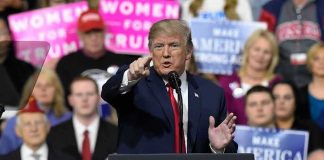
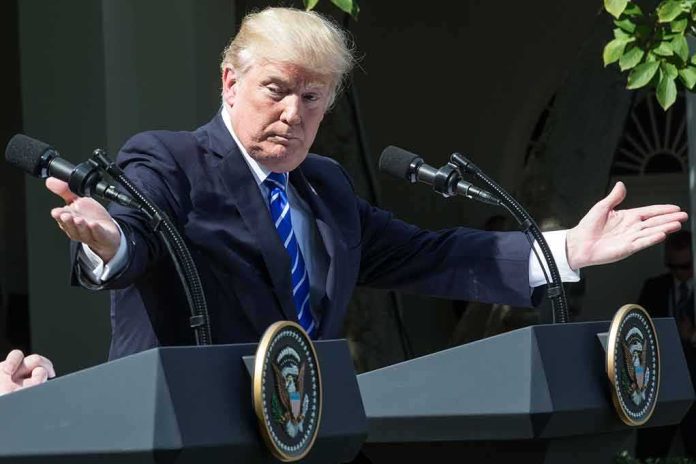
Pressed by reporters in the Oval Office after his meeting with Lebanese President Joseph Aoun, Donald Trump answered a familiar question: was he prepared to sit down with Iran to end the war. In the quote that ricocheted across outlets, he replied, “They want to desperately meet, and until they’re ready to meet in a meaningful way, we have no interest in meeting.” That form of words matters. It is not a doctrinal veto on diplomacy; it is a conditioned refusal, explicitly tied to the quality of talks he believes Tehran is offering. The subject of “no interest” is the kind of meeting available at that moment, not the concept of talks as such.
Contemporaneous reporting is remarkably convergent. The Washington Times, Anadolu Agency and other wire-style coverage all carry the same structure: Trump asserts that Iran is “desperate” to meet, insists they are “getting decimated” on the battlefield, and then says the United States will not sit down until Iran is ready for “meaningful” nuclear or ceasefire talks. This is consistent with his earlier posture. Weeks before, NPR and Reuters quoted him declaring a ceasefire “over” and saying he did not want to “engage with Tehran” under the then-current terms, even as an interim understanding and memorandum of agreement remained on the table.
What the record does not show is a formal, written policy that rules out future talks or denies the existence of indirect channels. The “no interest” formulation is transactional and time-bound: a signal to negotiators that the president will not bless the optics of a high-profile meeting until substantive concessions or behavioral change are in reach.
War, Pressure, and a Moving Negotiation Track
To understand why Trump framed Iran as “desperately” seeking a meeting while publicly declining to grant one, you have to place the remarks inside the active war diplomacy of mid‑2026. This was not a static standoff; it was a cycle of missile and drone attacks, retaliatory strikes, collapsed talks, and constantly re‑advertised deadlines.
In April, U.S.–Iran peace talks in Islamabad had already broken down, with the U.S. military moving toward a blockade of Iranian ports and Trump threatening to shut the Strait of Hormuz unless Iran abandoned nuclear ambitions. By June, he was simultaneously telling Reuters and NPR that talks were still “on track” and that he had not heard any formal suspension from Iran, even as each side traded attacks. At one point he went so far as to announce, via social media and interviews, that Iran had requested a meeting in Doha and that it would occur on a specific date; Iranian negotiator Kazem Gharibabadi immediately denied that any such session had been scheduled.
This pattern—claim of imminent meeting, counterclaim of denial—is central. Trump was selling a narrative of leverage: Iran was nearing capitulation, there were “major points of agreement,” and the United States could afford to take its time. Iran’s public position, by contrast, emphasized rejection of direct talks and skepticism about American intentions, while quietly working through intermediaries on ceasefire parameters. When viewed against that backdrop, “no interest in meeting” reads as a bargaining move: the president refusing to grant what he says Tehran wants (the optics of a presidential meeting) until he sees the substance he wants.
Direct vs. Indirect Channels: Conditional Refusal, Ongoing Contact
One of the reasons this episode is easy to misread is that the public conversation tends to collapse all forms of diplomatic contact into a binary: talks or no talks. The underlying record is more textured. Trump repeatedly describes phone discussions and contacts with high-ranking Iranian figures, claims “very good and productive” talks, and touts “major points of agreement” on the central demand that Iran never obtain a nuclear weapon. In some accounts, he identifies envoys like Steve Witkoff and Jared Kushner as leading these engagements on the U.S. side.
Iranian officials, for their part, draw a sharp distinction between indirect and direct negotiation. CNN, PBS and regional outlets have reported Iranian statements that they rejected Trump’s request for direct nuclear talks even while leaving indirect channels open through intermediaries and technical teams implementing draft memoranda. This split language—no direct meeting, ongoing indirect talks—tracks closely with the president’s Oval Office posture. Saying he has “no interest” in a meeting until Iran is ready for “meaningful” talks is entirely compatible with continuing lower-level and back-channel communications focused on testing the boundaries of a possible accord.
That coexistence of rhetorical refusal and practical engagement is not unique to this administration or this conflict. It is close to the mainstream of U.S. practice with hostile states. Expert backgrounders from the Council on Foreign Relations and others note that negotiations with adversarial regimes often proceed in tiers: leaders insist on preconditions or “real” talks in public, while professional diplomats probe for openings, exchange draft texts, and manage crises privately. Trump’s Iran war posture fits that model, even if the personalized, combative phrasing makes it more glaring.
Media Compression and the Problem of a Single Quote
Almost every account of Trump’s July 21 remarks rests on the same short passage: Iran “desperately” wants to meet; they are “getting decimated”; the U.S. has “no interest in meeting” until talks are “meaningful.” So far, no official White House transcript of that gaggle is in the public record. Instead, syndicated and live-blog outlets replay the quote in different packages, often with war footage or casualty tallies as backdrop.
That repetition has consequences. In a fast-moving conflict environment, editors gravitate toward declarative headlines—“Trump says U.S. has ‘no interest’ in Iran talks for now”—even when the underlying language is explicitly conditional. The nuance that matters most to policy, the “until they’re ready” clause, is easy to lose in a four-word headline. Over time, this can harden perception into a categorical view: the president closed the door. The underlying reporting, however, situates the quote amid continued discussion of possible agreements, ceasefires, and “final determinations” that had not yet been made.
This is not to suggest bad faith by reporters; they were covering a war in real time with limited access to primary documents and heavy reliance on pool sprays and social media posts. It is to emphasize that a single, vivid presidential line—especially one tailored for impact—should be read as part of a broader process, not as a standalone doctrine. Without a released transcript, we are reconstructing intent from convergent accounts, not parsing an authoritative document.
How This Fits the Broader U.S.–Iran Playbook
Trump’s stance is easier to interpret when you recognize the longer arc of how Washington manages adversarial relationships, particularly with Iran. For decades, U.S. policy toward Tehran has oscillated between pressure, isolation, and episodic engagement. The Carnegie Endowment, CFR, and other analysts have described a structural pattern: hostile states like Iran are treated as “adversaries” subject to sanctions, military brinkmanship, and legal designations, yet are periodically engaged when American interests require some form of deal.
In that landscape, insisting that talks be “meaningful” and refusing a meeting to preserve leverage is almost orthodox. The Obama administration, for example, signaled openness to meeting Iranian leaders while making clear that substantive preparatory talks were needed and that enrichment constraints had to be addressed. Previous administrations refused embassy-level contact or full normalization while relying on European intermediaries to broker nuclear accords.
What is distinctive in Trump’s case is less the structure than the style. He puts the leverage language in stark personal terms—Iran is “negotiating on fumes,” they have “no chance” of getting a nuclear weapon, they are being “knocked to hell”—and wraps tactical decisions about meetings in public threats about finishing the job militarily. He also, unusually, advertises purported Iranian desperation to meet, even as Iranian officials publicly deny such requests. That pushes the usual dance of pressure and engagement into a more theatrical register, but the underlying moves are familiar: withhold leader-level optics, press military and economic advantage, and leave just enough room for a deal that can be claimed as victory.
Where the Evidence Is Strong—and Where It Isn’t
On the core factual question—did Trump say he had “no interest” in meeting Iran at that point, and was that statement conditional—the evidence is solid. Multiple outlets captured the same language independently, in real time, and the phrase appears in more than one context, including a heated exchange with a reporter where he repeats the “desperately want to meet” line and the “meaningful way” precondition. There is no surfaced counter-evidence showing that he expressed interest in an immediate meeting that day, nor any formal correction from the White House.
The limits of the record lie elsewhere. We do not yet have an official transcript or audio to test the fullness of the quotation—for instance, whether he referenced future talks in the same gaggle or added qualifiers that were not widely reported. Nor do we have internal decision memos or schedules showing precisely which meeting proposals crossed his desk and how he disposed of them. What we can see, from Reuters, NPR and others, is a pattern of continued indirect negotiation and process language about possible agreements even as he publicly downplayed, or expressed boredom with, the talks themselves.
Those gaps matter if you are trying to reconstruct legal commitments or narrow policy doctrine. They matter less for the interpretive question at hand: whether “no interest in meeting” should be read as a durable policy of non-engagement or as a situational bargaining posture. Taken together—the conditional phrasing, the ongoing talks, the indirect channels, and the broader U.S. playbook with hostile states—the weight of the evidence supports the latter.
Why This Distinction Matters Going Forward
For a reader trying to understand U.S.–Iran dynamics beyond the day’s headline, the distinction between categorical refusal and conditional engagement is not semantic; it shapes everything from war termination scenarios to alliance management. A president who has truly renounced meetings forecloses leader-level diplomacy as an off-ramp. A president who withholds meetings pending “meaningful” talks preserves that off-ramp, but tries to ensure that when it comes, it does so on his terms.
This episode shows how easily public discourse can elide that difference. It also shows that, despite heated rhetoric, the structural incentives pushing U.S. leaders toward some form of engagement with adversaries remain. Trade routes, energy prices, alliance cohesion, and war costs all tug toward negotiated understandings, even when domestic politics push toward maximal toughness. In that context, “no interest in meeting” is best understood not as a rejection of diplomacy, but as a tool within it—a way of signaling that the currency of a presidential meeting will not be spent on talks that the United States judges to be merely performative.
Lebanon's president is meeting with President Donald Trump on Tuesday to wrap up a four-day visit to Washington, in a bid for long-term calm after months of war at home between Israel and the Iran-backed Hezbollah militant group. https://t.co/sXBRusCq9y
— Spectrum News 13 (@MyNews13) July 21, 2026
Sources:
youtube.com, townhall.com, socialnews.xyz, washingtontimes.com, aa.com.tr, bbc.com, cbsnews.com, nbcnews.com, dw.com, npr.org, reuters.com, nytimes.com, pbs.org, cnbc.com, ynetnews.com, cnn.com, kcra.com, english.aawsat.com, rferl.org, internationalaffairs.org.au, cfr.org