

On a small Adriatic island off Albania’s coast, a luxury resort proposal has crystallized a much larger struggle: whether post‑communist states can pursue high‑end tourism and foreign capital without sacrificing protected ecosystems, public land, and democratic accountability.
Key Points
- A Kushner‑linked plan to turn Sazan Island and nearby protected wetlands into a mega‑resort has triggered Albania’s largest protest wave in years.
- Environmental groups warn the project would damage the Vjosa–Narta protected landscape, a crucial habitat for flamingos, sea turtles, and other migratory species.
- The government’s use of “strategic investor” status and a 2024 law allowing five‑star hotels in protected areas has fuelled anger over secrecy, land deals, and alleged corruption.
- The confrontation has evolved into the so‑called Flamingo Revolution, a broader movement demanding an end to construction in protected zones and deeper anti‑corruption reforms.
From Eco‑Resort Vision to Mass Revolt
The Sazan Island resort plan began, at least on paper, as a symbol of Albania’s ambition to rebrand itself as a high‑end Mediterranean destination. Backed by investors linked to Jared Kushner and Ivanka Trump, the proposal envisages a €1.4 billion investment to transform a decommissioned military island and adjacent coastline into luxury hotels, villas, and tourism infrastructure. In late 2024 and January 2025, the Albanian government granted preliminary approval and “strategic investor” status to the project, allocating around 562 hectares, including about 45 hectares slated for direct development.
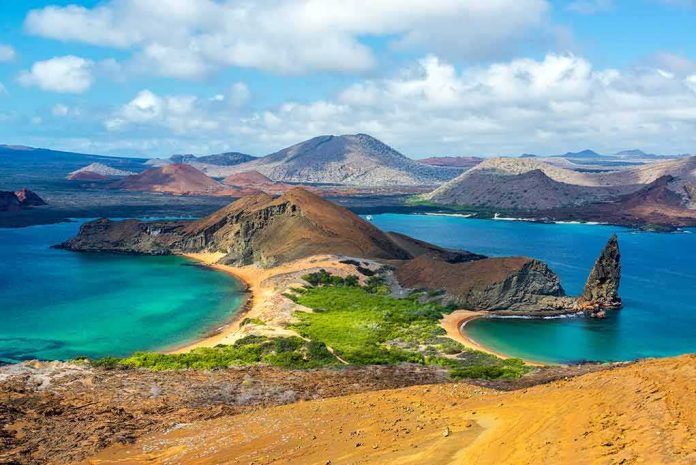
What catalyzed resistance was not merely the resort’s opulence but its location. Sazan lies just offshore from the Vjosa–Narta delta and the Narta Lagoon, a protected landscape of dunes, lagoons, wetlands, and shallow seas that conservationists regard as one of Europe’s key migration corridors for hundreds of bird species and more than 70 endangered animals. When bulldozers and excavators appeared on the beaches near Zvërnec and Pishë Poro–Narta to clear forest clusters and ancient dunes, local residents and environmental groups concluded that a line had been crossed.
Protests started at the coastal construction sites in late May, with demonstrators clashing with private security after barbed wire went up and beach access was blocked. Within days, the movement spread to Tirana and other cities, with thousands marching for weeks, chanting “Cancel the project,” “Albania is not for sale,” and demanding Prime Minister Edi Rama’s resignation. ACLED data show that this wave produced the highest number of demonstrations in a single month since October 2025, marking the country’s most significant protest mobilization in years.
What Makes Sazan and Vjosa–Narta Environmentally Unique
To understand why the resort has become a red line, it helps to look closely at the ecology of Sazan and the adjoining coast. For decades, Sazan was a restricted military zone, left largely untouched even as Albania’s other coastal areas saw piecemeal development. The surrounding seas and wetlands form part of the Narta Protected Area and the broader Vjosa–Narta protected landscape, recognized for its high ecological importance.
The Narta Lagoon and nearby Zvërnec peninsula serve as nesting and feeding grounds for flamingos, herons, and a wide range of migratory birds moving along the Adriatic flyway; the area also includes key habitats for endangered Mediterranean monk seals and sea turtles, as well as underwater meadows of Posidonia oceanica, a seagrass critical for marine biodiversity and carbon storage. Conservationists argue that large‑scale tourism infrastructure—roads, docks, hotel complexes, sanitation and wastewater systems, heavy ship traffic, and night‑time light pollution—would fragment habitats, disrupt bird migration, erode dunes, and degrade water quality far beyond the footprints of individual buildings.
Over 40 environmental organizations from 28 countries signed a joint letter to the Albanian government in January, warning that the resort’s planned interventions over 45 hectares on Sazan and associated coastal works raised “serious concerns” for biodiversity and conflicted with Albania’s commitments under the EU accession process. The letter, echoed by MedAlliance for Wetlands and Albanian NGO PPNEA, frames the project as not just locally damaging but as emblematic of a broader failure to align development with European environmental norms.
Strategic Investors, Law 21/2024, and the Erosion of Safeguards
Ecological concerns have fused with institutional ones because of how the project was approved. In 2024, Albania adopted Law 21/2024, allowing the construction of five‑star hotels “anywhere in the country,” including in areas previously designated as protected. The Sazan plan was fast‑tracked through a “strategic investor” framework that gives favored projects streamlined access to land, tax exemptions, and infrastructure commitments while sidelining ordinary environmental impact assessments and public consultations.
Local activists and conservationists interviewed by CBS News and others describe a process marked by opacity: no prior public hearings, no widely shared environmental studies, and sudden appearance of heavy machinery in a conservation zone. One PPNEA officer reported that the first phase of site works had already destroyed at least one sea turtle nest. In parallel, filings reviewed by journalists indicate that entities involved in land acquisition, such as Sazan Real Estate Development and Albania Land Development, were structured through shell companies registered in the Netherlands and initially formed in Qatar, clouding transparency around ultimate ownership and funding sources.
This combination—rewritten environmental law, discretionary strategic investor privileges, and convoluted corporate structures—has made the resort controversy a touchstone for broader fears about state capture, corruption, and foreign influence in Albania’s development model. It is not unusual, in post‑communist Balkan contexts, for such projects to become symbols of a perceived oligarchic elite using legal tweaks to privatize public assets and ecosystems for offshore capital.
From Environmental Dispute to Flamingo Revolution
As protests spread, their focus widened from the resort itself to systemic governance. The wave has been popularly dubbed the Flamingo Revolution, after the pink flamingos inhabiting the Vjosa–Narta wetlands and the cardboard flamingo cutouts carried by demonstrators in Tirana. Protest slogans and resolutions now demand not only cancellation or radical review of the Sazan and Zvërnec contracts, but also a ban on construction in all protected areas, repeal or overhaul of the strategic‑investor framework, and wide‑ranging anti‑corruption investigations by SPAK, Albania’s special anti‑corruption prosecutor’s office.
The movement is notably cross‑cutting. Environmental NGOs stand alongside students, former landowners contesting property alienation, and citizens angered by low wages and perceived democratic backsliding. Many protesters also criticize opposition figures like Sali Berisha, portraying both the government and major opposition as components of the same entrenched establishment. Internationally, members of the European Parliament and EU institutions have expressed concern, urging Albania to halt construction in protected zones and highlighting possible misalignment with EU accession expectations.
State response has been mixed. On one hand, Prime Minister Rama insists the project will proceed and touts potential economic benefits: thousands of jobs, billions in foreign investment, and an upgraded tourism profile for a country with one of Europe’s lowest GDP per capita levels. On the other hand, as protests intensified, SPAK opened a sweeping investigation into land acquisition and property fraud, freezing accounts of companies tied to the resort finances and prompting a temporary withdrawal of bulldozers and excavators from at least one contested site.
Economic Promise vs. Ecological and Democratic Costs
Supporters of the resort argue that Albania cannot afford to turn away major investment. The Sazan scheme is part of a broader vision of coastal tourism upgrades in the Vlora region, with total project values cited around €4–4.7 billion. Government filings and investor statements emphasize job creation—possibly up to 1,000 positions during construction and operation—along with tax revenues, international marketing, and infrastructure improvements such as roads and utilities ostensibly funded or catalyzed by the project.
Critics counter that these projections are both uncertain and incomplete. They point out that under the current arrangements the state has pledged to provide key infrastructure—water, sewage, electricity—effectively subsidizing private luxury development with public funds. They question whether jobs created will be stable, well‑paid, and accessible to local communities, or largely seasonal and low‑wage. More fundamentally, they argue that any short‑term economic gains may be outweighed by irreversible damage to ecosystems that underpin fisheries, traditional livelihoods, and nature‑based tourism, as well as by erosion of public trust in institutions that appear to bend legal safeguards for well‑connected investors.
Environmental NGOs have gone further, asserting in legal arguments that the project breaches both Albanian environmental statutes and European instruments such as Natura 2000, the EU’s network of protected sites. These claims remain to be adjudicated, but they underscore the stakes: if Albania is seen to facilitate large‑scale construction in sensitive zones through bespoke legal changes, its path toward EU integration could become more politically complicated, even if formally the country is not yet bound by all EU environmental directives.
A Pattern Across the Post‑Communist Balkans
The Sazan conflict does not stand alone. Across the Balkans, governments have repeatedly used “strategic investor” frameworks to fast‑track foreign‑backed tourism, energy, and real estate projects in coastal or rural areas, often overriding local opposition and environmental review. In Albania itself, ACLED data and independent reporting show earlier waves of protest over mining, oil, and other resort developments, with similar complaints about secrecy, land dispossession, and disregard for public consultation.
What makes Sazan distinctive is the convergence of several factors: a globally recognizable investor family, an ecologically sensitive site with strong symbolic resonance, a legal change explicitly opening protected areas to development, and an electorate already frustrated by perceived corruption and inequality. Together they have transformed a land‑use dispute into a national referendum of sorts on the country’s development trajectory: should Albania’s comparative advantage be its “untouched” nature, or its willingness to host mega‑resorts and speculative real estate backed by offshore capital?
What Comes Next
At the time of writing, the resort’s future hinges on three intertwined processes. First, the SPAK anti‑corruption investigations into land deals and property titles must run their course, potentially validating or refuting allegations of fraud and money laundering around the project’s financing. Second, the government faces a strategic choice: double down on the current tourism model and legal framework, risking prolonged unrest, or reopen environmental assessments and public consultation, possibly scaling back or relocating elements of the project.
Third, investors themselves must decide whether they can provide credible environmental and social guarantees—backed by independent science and transparent contracts—that satisfy both Albanian law and EU‑aligned expectations. In practice, that would mean binding limits on construction footprint, rigorous protection of habitats, genuine benefit sharing with local communities, and a willingness to adjust plans based on ecological evidence rather than branding considerations.
Whatever outcome emerges, Sazan Island has already changed Albania. It has revealed how quickly a seemingly technical decision about hotel zoning in a protected area can ignite a mass movement, and how environmental protection, land justice, and anti‑corruption are no longer separate conversations but facets of the same public demand: that the country’s natural wealth and legal system serve citizens first, rather than being leveraged quietly for the dreams of distant investors.
🚨🇦🇱LIVE: Police attack protesters after they threw eggs at the cars of MPs and government ministers in Tirana, Albania
⚡️The protests against Albania's political establishment are a continuation of the movement opposing the land grab, the sale of Sazan Island to Kushner, and… pic.twitter.com/NsQYSJq7WJ
— Anonymous TV 🇺🇦 (@YourAnonTV) July 2, 2026
Sources:
feedpress.me, medallianceforwetlands.org, en.wikipedia.org, instagram.com, aljazeera.com, facebook.com, ort.org, npr.org, acleddata.com, youtube.com, reddit.com