

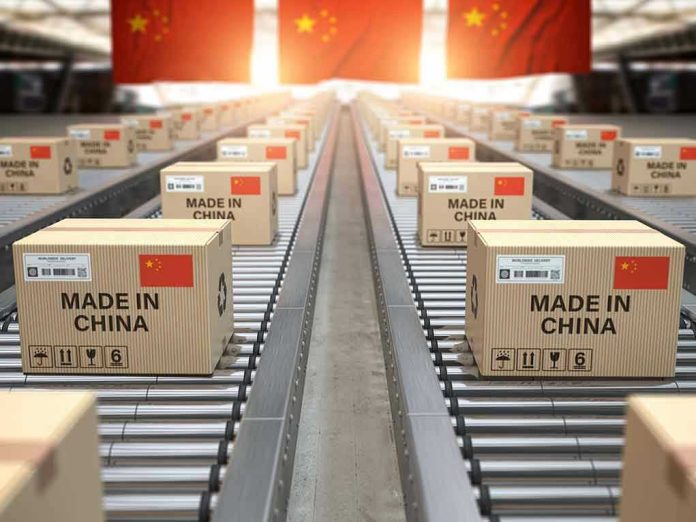
China is arming Iran with the critical materials and intelligence needed to produce hundreds of ballistic missiles, creating a dangerous alliance that could drag America into direct military confrontation with Beijing if Chinese-supplied weapons strike U.S. forces.
Story Snapshot
- U.S. intelligence confirms Chinese ships have delivered sodium perchlorate to Iran, enough to fuel production of up to 700 ballistic missiles
- Chinese analytics firms provide Iran with AI-driven intelligence on U.S. military movements, including carrier deployments and aircraft positions
- Security experts warn that Iranian strikes on American assets using Chinese-supplied weapons could transform U.S.-China relations overnight from competition to direct conflict
- The dual-track support system gives China plausible deniability while fundamentally altering the Middle East power balance against American interests
Beijing’s Backdoor Military Supply Chain
U.S. intelligence agencies have tracked multiple Chinese vessels delivering sodium perchlorate, a critical chemical compound used in solid-fuel rocket production, to Iranian ports. Intelligence estimates indicate the shipments contain sufficient material to manufacture hundreds of ballistic missiles for Tehran’s military forces. This chemical supply chain operates alongside Russia’s separate arms deliveries, creating a multi-sourced support network that reduces Iran’s vulnerability to any single supplier relationship. The arrangement allows China to maintain strategic partnership with Iran while avoiding the international scrutiny that comes with direct weapons transfers.
Intelligence Pipeline Fuels Iranian Targeting Capabilities
Chinese-linked analytics companies have developed sophisticated AI-driven capabilities to package and sell detailed surveillance data on U.S. military movements to Iran’s military and political leadership. These intelligence products include tracking of American carrier deployments, aircraft buildups, and other force positioning information derived from open-source data fusion. The targeting support effectively boosts Tehran’s situational awareness of U.S. military operations in the region, providing Iran with capabilities that previously required sophisticated spy networks or satellite systems. This intelligence sharing represents a form of military assistance that operates in legal gray zones while delivering substantial tactical advantages.
Fragile Ceasefire Masks Escalation Risk
The China-Iran support relationship continues despite ongoing Middle East ceasefire negotiations, with U.S. intelligence maintaining close monitoring of weapons flows and chemical shipments. Security analysts characterize China’s assistance as comprehensive military support that includes “everything except for combat troops.” Gordon Chang of the Gatestone Institute argues this level of involvement should prompt consideration of Beijing as an enemy combatant in regional conflicts. The primary concern centers on rapid escalation potential: if Iranian weapons strike U.S. naval assets or regional bases, the strategic competition between Washington and Beijing could transform immediately into direct military confrontation.
Advanced Weapons Systems Threaten Naval Forces
Expert analysis suggests advanced Chinese weapons may already be integrated into Iran’s arsenal, including supersonic missiles capable of targeting American aircraft carriers. U.S. military planners have expressed specific concern about these enhanced capabilities, particularly given China’s development of what the Pentagon characterizes as the world’s leading hypersonic arsenal. The threat extends beyond individual weapons systems to encompass the strategic vulnerability created when U.S. forces face opponents equipped with Chinese technology and intelligence support. This combination of material supply and targeting data creates multiplicative effects that fundamentally alter regional military calculations.
Strategic Implications for American Power
The China-Iran nexus establishes a precedent for Beijing’s indirect military involvement in conflicts where American interests are at stake, potentially serving as a model for supporting other U.S. adversaries through similar mechanisms. The arrangement deepens strategic vulnerabilities for Washington on multiple fronts: operational threats to deployed forces, escalation risks with a nuclear-armed China, and potential disruption of global trade through the Strait of Hormuz if regional conflicts intensify. Regional allies including Israel are reassessing defense strategies in response to Iran’s enhanced capabilities. This represents a fundamental shift in Middle Eastern power dynamics, with China positioned as a critical player shaping battlefield outcomes without deploying combat troops or accepting direct accountability for military actions.
Sources:
Chinese missiles targeting US Navy could trigger overnight war shift, expert warns – Fox Business
The U.S. Military’s Biggest Fear: A Hypersonic Weapons Gap – 19FortyFive
Ayatollah’s arsenal vs American firepower: Iran’s top 4 threats and how we fight back – Fox News
War on Iran cripples US arsenal, deepens China dependence – Al Mayadeen