

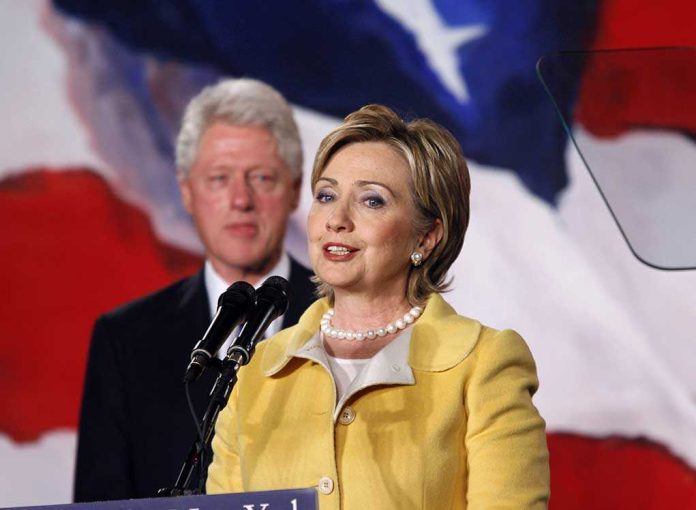
Bill and Hillary Clinton caved to congressional pressure just hours before facing contempt charges, agreeing to testify in the Epstein sex trafficking probe under President Trump’s watchful Justice Department.
Story Snapshot
- Clintons defied bipartisan subpoenas for months, uniquely skipping depositions while others complied.
- Sudden reversal on February 2, 2026, averts House contempt vote scheduled for Wednesday.
- Probe uncovers elite ties to Epstein’s network, demanding accountability for past DOJ failures.
- Chairman Comer secures live testimony after rejecting weak written statements from Clintons.
- Victims and patriots gain hope for justice amid Trump’s America First oversight push.
Clintons’ Defiance Meets Bipartisan Pushback
House Oversight Subcommittee approved subpoenas for Bill and Hillary Clinton on July 23, 2025, targeting their Epstein connections alongside former AGs and FBI directors. The bipartisan voice vote directed Chairman James Comer to demand depositions on federal mishandling of Epstein’s case. Clintons offered written declarations from October 2025, but the Committee rejected them repeatedly, insisting on in-person questioning. This defiance stood out as the only outright refusal among ten targets. Republicans and Democrats united to expose elite protections in sex trafficking networks.
Escalation to Contempt and Last-Minute Fold
Negotiations collapsed by December 10, 2025, with the Committee holding firm on live testimony. On January 13, 2026, both Clintons skipped scheduled depositions, submitting rejected declarations. The Oversight Committee then approved bipartisan contempt resolutions in January. With a vote looming Wednesday under Trump’s Justice Department, the Clintons agreed February 2 to appear on mutually agreeable dates. An Oversight aide confirmed the deal, halting enforcement. This reversal spotlights accountability pressures on former elites.
Epstein’s Elite Network and Clinton Ties
Jeffrey Epstein built relationships with power brokers like Bill Clinton to dodge scrutiny, including multiple flights on his plane and pre-2000s social events documented in unsealed files. No criminal accusations exist, but the probe seeks firsthand insights into influence operations. Ghislaine Maxwell’s 2021 conviction and Epstein’s 2019 suicide underscore prior leniency, like his 2008 plea deal. The Republican-led House post-2024 elections drives reforms against such impunity, protecting victims and reinforcing oversight.
Clintons claimed minimal unique knowledge, yet Committee documents dismissed this, asserting their direct interactions warrant scrutiny. Precedents like Hunter Biden and Steve Bannon contempt cases guide proceedings.
Implications for Justice and Reforms
Depositions now await scheduling, advancing the probe with other officials like Comey and Holder. Short-term, contempt fades, but long-term insights could fuel anti-trafficking laws and ethics rules. Epstein victims, with names redacted, stand to benefit from exposing protections. Politically, it highlights GOP commitments to draining the swamp, countering past Democratic DOJ lapses. Trump’s administration bolsters this push for sovereignty and rule of law.
Key Stakeholders Driving Accountability
Chairman James Comer leads with support from Reps. Scott Perry, Andy Biggs, and even Democrats like Summer Lee. Clintons’ attorney David Kendall negotiated, but GOP majority wields subpoena power. Trump’s prospective Justice Department loomed as a defiance risk. This bipartisan effort prioritizes trafficking survivors over elite status, aligning with conservative demands for transparency and limited government favoritism.
Sources:
Bill and Hillary Clinton Now Agree to Testify Before Congress
House Oversight Committee Contempt Resolution PDF