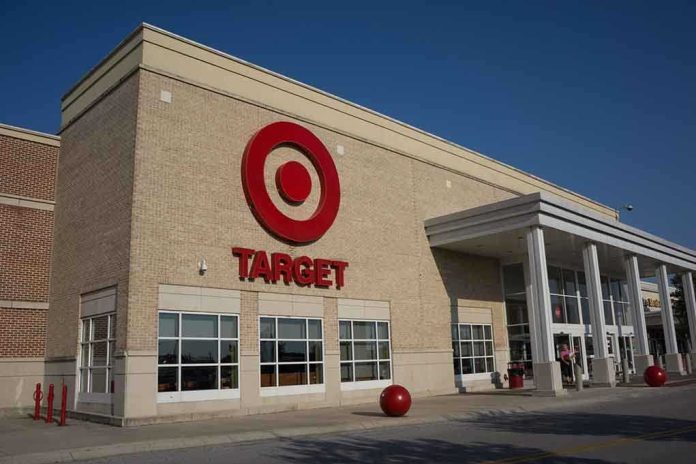
Target shoppers are now discovering that the same item can cost more at the checkout counter than on the retailer’s own app, sparking viral accusations that the company deliberately exploits customers who don’t think to check their phones while shopping.
Story Snapshot
- Target customer finds identical items priced higher in-store than on Target’s own app for same-store pickup
- Viral social media post accuses retailer of “sneaky tactics” assuming “consumers are stupid”
- Target ended competitor price matching in July 2025 while keeping internal price adjustments
- Company reported declining sales of $600 million year-over-year as policy changes anger customers
The Price Gap That Sparked Outrage
A Target shopper’s routine trip turned into a viral consumer advocacy moment when they discovered the same product carried different price tags depending on how they planned to buy it. The item cost more at the physical shelf than through the Target app for pickup at the identical store location. This wasn’t a competitor comparison or a special online promotion, but the same retailer charging different amounts for the same product at the same location.
The discovery prompted an angry social media post characterizing the practice as deliberate deception. The customer’s frustration centered on Target’s apparent assumption that shoppers wouldn’t bother checking digital prices while physically browsing aisles. This sentiment resonated widely, tapping into growing consumer suspicion about corporate pricing transparency and the complexity of modern retail strategies.
Target’s Quiet Policy Revolution
The timing of this incident coincides with Target’s most significant pricing policy shift in over a decade. In July 2025, the retailer quietly ended its Price Match Guarantee that had allowed customers to request lower prices when competitors like Amazon or Walmart offered better deals. Target launched this policy in 2013 as a cornerstone of its value proposition, promising to match competitor prices on identical items.
The company now only matches prices within its own ecosystem, meaning Target.com versus in-store prices or between different Target locations. Target justified the change by claiming customers “overwhelmingly price match Target and not other retailers,” framing the reduction in consumer-friendly policies as a response to customer feedback. However, internal employee communications reveal concern about forcing cashiers to explain why Target charges different amounts for identical products based solely on purchase method.
Financial Pressures Drive Policy Changes
Target’s pricing policy changes arrive amid significant financial headwinds. The company reported first-quarter 2025 revenue of $23.8 billion, down from $24.5 billion the previous year, representing a $700 million decline. Store traffic dropped as the retailer faced boycotts and political backlash from multiple directions, creating pressure to protect profit margins through policy adjustments.
Reddit posts from Target employees describe mounting frustration with customers who discover app-versus-shelf price discrepancies. One widely shared employee complaint stated: “It irritates the hell out of me that I have to check prices in the app to make sure I’m not getting screwed while shopping in the store.” Workers worry the new policies force them to defend pricing strategies they don’t control while dealing with increasingly angry customers.
The Bigger Picture of Retail Deception
This Target controversy reflects broader consumer anger about corporate pricing practices that seem designed to extract maximum revenue from inattentive shoppers. The incident joins growing complaints about shrinkflation, junk fees, and dynamic pricing that collectively erode trust between retailers and customers. When companies create systems requiring constant vigilance to avoid overpaying, they signal that extracting extra profit matters more than transparent dealings.
The accusation that retailers “assume consumers are stupid” strikes at a fundamental question about corporate responsibility versus buyer awareness. While Target technically allows price matching between its own channels, requiring customers to actively discover and request adjustments places the burden on shoppers rather than ensuring consistent pricing. This approach may generate short-term revenue but risks long-term reputation damage as social media amplifies every discovered discrepancy.
Sources:
ABC News – Target to end longtime price-matching policy
New York Family – Target ends price matching policy
Target Help – Price Match Guarantee