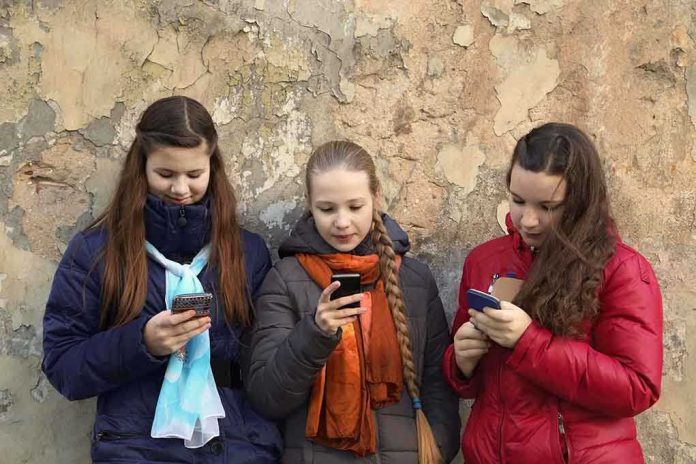
Sweden is reversing years of woke digital education policies and banning mobile phones in schools after discovering screens made students distracted, mentally unstable, and academically weaker than their peers worldwide.
Story Snapshot
- Swedish government proposes nationwide mobile phone ban in primary and middle schools starting August 2026
- Sweden abandoning failed 2017 “digitalisation” strategy that replaced textbooks with tablets after student performance collapsed
- Swedish students spend nearly seven hours daily on screens outside school, showing greater digital distraction than OECD averages
- 80 percent of schools already banned phones independently before government stepped in with uniform policy
Sweden Admits Digital Education Experiment Failed
The Swedish government announced plans to ban mobile phones in primary and middle schools nationwide, marking a dramatic reversal of its 2017 “digitalisation” strategy that flooded classrooms with tablets and laptops. Education Minister Simona Mohamsson stated the ban would “decrease distractions in the classroom” and called it “a win for both teaching and mental health.” The policy awaits parliamentary approval for August 2026 implementation, covering students in grades one through nine and extending to after-school care facilities.
Government Data Reveals Alarming Screen Addiction
Swedish middle school students spend an average of almost seven hours daily on screens, not including screen time during school hours, according to government data. Studies cited by the government show Swedish students are distracted by digital tools in the classroom to a greater extent than students in the OECD on average. This screen addiction represents a failure of progressive policies that prioritized trendy digital solutions over proven traditional learning methods. The government’s own research exposes how the educational establishment sacrificed student wellbeing for technological experimentation.
Schools Already Rejected Failed Digital Policy
Before the government’s announcement, 80 percent of Swedish primary and middle schools had already implemented mobile phone bans at principals’ discretion, demonstrating educators recognized the problem before bureaucrats acknowledged it. Minister Mohamsson emphasized a nationwide ban was necessary to ensure all schools became mobile-free zones rather than relying on individual principal decisions. This grassroots rejection of digital distraction shows common sense prevailed at the local level while national policymakers clung to failed progressive education theories that prioritized screens over learning.
Digital Utopia Replaced Traditional Education With Failure
Sweden launched its national “digitalisation” strategy for nursery, primary, and middle schools in 2017, replacing textbooks and handwriting instruction with tablets and laptops across the education system. By 2023, Sweden began rolling back the digitalisation policy amid criticism over declining school performance, though progressives had invested heavily in this technology-forward approach. The reversal exposes how ideologically-driven education policies ignored centuries of proven teaching methods in favor of unproven digital fads that harmed student outcomes and mental health.
The ban could “help many parents in their struggle at home” to reduce screen time, Minister Mohamsson noted, acknowledging families have been fighting against the very digital addiction schools promoted. This policy shift represents a victory for common sense parenting and traditional values over progressive experimentation. American families watching similar digital failures in U.S. schools should demand accountability from administrators who prioritized trendy technology over educational fundamentals that actually prepare children for productive lives.
Sources:
Sweden plans to ban mobile phones in schools – NBC Right Now