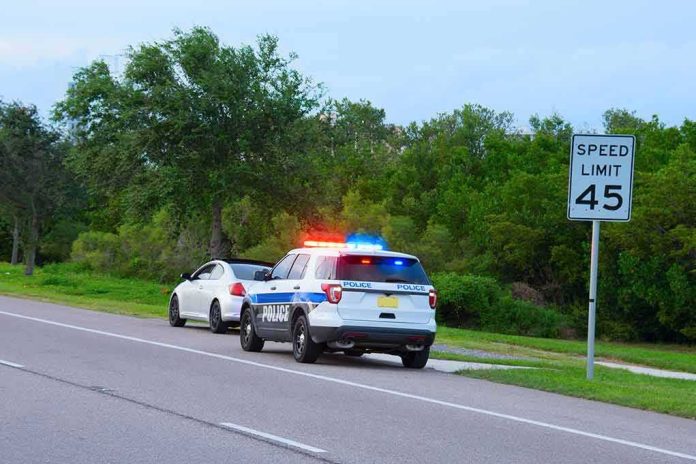
A routine traffic stop for speeding on a Florida highway turned into the rescue of a 16-year-old North Carolina girl who had been missing for a month, raising urgent questions about how a grown man could spirit a child across state lines with counterfeit cash and illegal drugs in tow.
Story Snapshot
- A 16-year-old North Carolina girl missing since mid-February was found during a traffic stop in Putnam County, Florida, riding as a passenger with 37-year-old Joshua Magraff
- The teen initially gave deputies false identification, and Magraff changed his story multiple times about their relationship—first claiming she was his cousin, then a friend, then insisting he thought she was 19
- Deputies discovered nine counterfeit $100 bills, synthetic marijuana, marijuana, and drug paraphernalia during a vehicle search
- Magraff faces five charges including interference with child custody, contributing to delinquency of a minor, and possession of counterfeit currency
When a Speeding Violation Becomes a Child Recovery
Deputy Chewning spotted a vehicle flying down South US 17 near Crescent City on a Sunday evening. What began as a standard enforcement action for excessive speed transformed into something far more consequential when the passenger—a teenage girl—started providing inconsistent information. The deputy’s instincts proved sound. The girl had been reported missing by her mother back in North Carolina on February 16, and here she sat, roughly a month later, hundreds of miles from home with a man more than twice her age.
The Shifting Stories That Exposed the Truth
Magraff’s explanations crumbled under scrutiny. He first told deputies the girl was his cousin. Then she became a friend. Finally, he claimed he believed she was 19 years old—a convenient assertion that strains credibility given her mother confirmed she knew Magraff. The teen herself participated in the deception initially, offering false names and birthdates to deputies. These evasive maneuvers created immediate welfare concerns that prompted investigators to dig deeper. Once separated from Magraff and placed in Deputy Chewning’s patrol car, the girl eventually revealed her true identity.
What Deputies Found Inside the Vehicle
The vehicle search painted a disturbing picture of Magraff’s activities and priorities. Deputies pulled out nine counterfeit $100 bills—nearly a thousand dollars in fake currency. They also found synthetic marijuana, marijuana, and drug paraphernalia scattered throughout the vehicle. This wasn’t simply a man giving a teenager a ride. The evidence suggests a pattern of criminal behavior with a vulnerable minor caught in the middle. The items recovered speak to both financial crimes and drug possession, compounding the serious nature of taking a 16-year-old across state lines without parental consent.
The Charges and What They Reveal About Intent
Prosecutors charged Magraff with five distinct offenses: interference with child custody, synthetic marijuana possession, possession of counterfeit currency, contributing to the delinquency of a minor, and possession of drug paraphernalia. The interference charge addresses the fundamental violation—removing a minor from parental custody without authority. Contributing to delinquency recognizes the harm caused by exposing a child to adult criminal activity. Together, these charges reflect both the immediate violations and the broader danger Magraff posed. Authorities held him on $9,000 bond at Putnam County Jail, a relatively modest amount given the seriousness of the allegations.
How Routine Enforcement Saves Lives
This case demonstrates why traffic enforcement matters beyond revenue generation or highway safety statistics. A deputy paying attention to speed violations inadvertently intercepted a missing child and removed her from a potentially dangerous situation. Had that vehicle continued unimpeded down US 17, the girl might have remained missing indefinitely. The mother had already endured a month of uncertainty and fear. Law enforcement’s willingness to investigate suspicious behavior during a routine stop—rather than simply writing a ticket and moving on—made the difference between continued victimization and recovery.
The Uncomfortable Questions About Access and Trust
The mother’s confirmation that she knew Magraff adds a troubling dimension to this case. How did a 37-year-old man gain sufficient access to a 16-year-old girl to facilitate her disappearance? What conversations or manipulations preceded their cross-country journey? These questions matter because most child predators aren’t strangers lurking in shadows—they’re acquaintances, family friends, or relatives who exploit existing trust and access. Parents face the impossible task of distinguishing between safe adults in their children’s lives and those who pose hidden dangers. This case won’t provide easy answers, but it reinforces the need for vigilance even with familiar faces.
The teen was safely recovered and contact was made with her mother. The immediate crisis ended with a phone call home and reunion with family. Yet the longer-term implications remain uncertain. What trauma did this month away from home inflict? What support services will she need to process whatever occurred during her time with Magraff? The criminal justice system will address Magraff’s accountability through prosecution, but the girl’s path forward involves family support, possible counseling, and rebuilding the security that was shattered when she disappeared. Her recovery represents a success for law enforcement, but only the beginning of healing for her family.
Sources:
Action News Jax – Missing North Carolina teen found during Putnam County traffic stop, deputies say
Country Herald – Putnam County, FL: Missing NC teen found in US 17 traffic stop
WLOS – Traffic stop leads to child abduction arrest, missing Florida teen found in North Carolina