

Wartime militaries do not “buy” soldiers with a single number; they assemble layered compensation systems that move as the labor market, battlefield losses, and politics demand—Russia’s package for Ukraine is a textbook case of that federated, adaptive design.
The Short Version
- Russia’s enlistment pay is a stack: a federal bonus, regional top-ups, and a high monthly salary, plus perks like tax and debt relief.
- Moscow’s headline “$22,000” is a regional add-on; total first-year cash pay for many recruits runs into multiple millions of rubles.
- The offers are dynamic: regions raise, cut, and reintroduce bonuses as budgets and recruiting pressure shift.
- Cross-country comparisons are easy to sensationalize and hard to standardize; the like-for-like unit is first-year total compensation, not one-time cash.
What Russia Is Actually Paying For a Signature
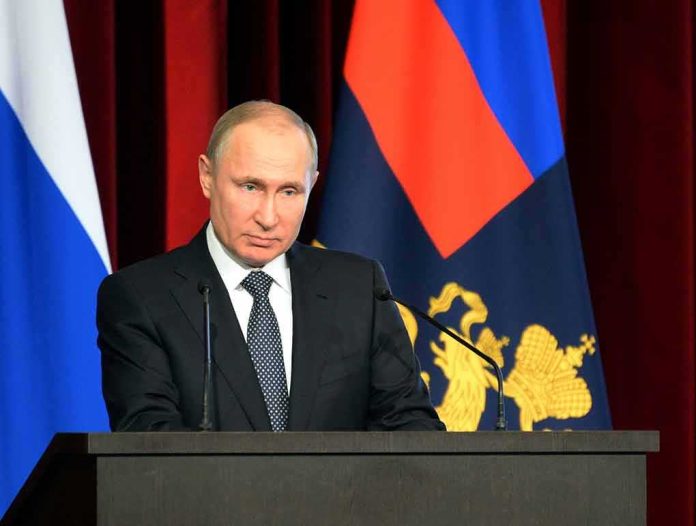
The federal spine is straightforward: President Vladimir Putin doubled the federal sign-on bonus for volunteer contract soldiers to 400,000 rubles in mid-2024 and anchored a baseline salary near 190,000 rubles per month. That decision alone put first-year cash compensation—bonus plus wages—around 3.25 million rubles for a typical recruit, before any regional sweeteners or allowances are counted. The federal offer is not the end of the story; it is the minimum on which governors and city halls build. The Moscow city package became the symbol of this layering because officials advertised an additional 1.9 million rubles up front—roughly the “$22,000” that ricocheted through headlines—stacked on top of the federal 400,000, and paired it with elevated monthly earnings that lifted modeled first-year pay beyond five million rubles in some promotional materials.
Elsewhere, regional top-ups have repeatedly hit seven figures. BBC reporting traced offers to 3.4 million rubles in Tyumen, with BBC Russian describing a landscape in which many regions paid more than 1 million rubles and a meaningful share paid 2 million rubles or more to new kontraktniki. The logic is not uniform generosity; it is market segmentation under pressure. Border-adjacent oblasts and high-casualty regions tend to escalate fastest, while wealthier jurisdictions like Moscow simply outbid the rest. These payments are reinforced by a broader benefit set—tax exemptions, debt relief, and other administrative advantages—which recruiting officials present alongside cash to lower the perceived cost of enlisting.
How the Federated Incentive Machine Works
Think of Russia’s system as a budgetary ladder. The federal rung sets the legal baseline and a guaranteed pot of money per new contract. Regional rungs—governors, municipalities, even state firms—add discretionary payments to meet headcount targets, with the discretion constrained not by doctrine but by cash flow and politics. When Moscow raised the federal floor in 2024, many regions followed with their own increases; when budgets tightened or targets looked within reach, some cut back incentives, only to restore them later as losses and outflows reopened the gap. This cyclicality—raise, cut, reintroduce—is not a contradiction; it is what a wartime labor market under fiscal strain looks like. The Bell’s synthesis captured it crisply: dozens of regions raised payments, some to three million rubles, with a typical volunteer now receiving the federal 400,000 plus a region-specific add-on.
Monthly pay is the other half of the mechanism. A baseline near 190,000 rubles per month—materially above median civilian wages—changes the first-year arithmetic dramatically, which is why serious comparisons use total first-year cash value (sign-on bonus plus 12 months’ salary) rather than fixation on the upfront check alone. In Moscow’s own marketing, the combined effect of a large city bonus and higher take-home monthly pay produced first-year scenarios measured in several million rubles—numbers designed to compete not with abstract patriotism but with the opportunity cost of civilian work and the risk premium of combat.
Marketing, Messaging, and the Demand for Men
Recruiting campaigns have been overt and professionalized. BBC analysis described a sustained marketing push—online placements, billboards, recruiter outreach—built around cash inducements and life-admin perks, all framed as an attainable step-change in household income and debt relief rather than a sacrificial duty. Associated Press reporting placed those inducements in the wider bundle: tax exemptions, debt relief, and privileges that matter in a country where bureaucratic friction is itself a cost. The message is consistent with the structure: Russia is not dangling a single windfall; it is selling a package of income, one-time cash, and practical advantages that aim to outweigh the risk calculus for men of military age.
This is not a static or purely technocratic exercise. The incentive escalator tracks the war’s human and economic toll. Independent outlets have tied the richest packages to periods of higher losses and manpower pressure; when the pipeline sags, the money rises, sometimes quickly, and when the near-term numbers stabilize, treasuries retrench—until the next shortfall. The net is a moving target that rewards close reading of dates and jurisdictions: what was true in one oblast last quarter may not be true today, and vice versa.
Where Comparisons Go Wrong—and How to Do Them Right
Two analytical mistakes dominate public debate. The first is cherry-picking one-time bonuses across countries while ignoring monthly pay and purchasing power. The like-for-like unit is first-year total compensation adjusted for local prices, not a headline check. On Russia’s side, reliable reporting provides enough components to do that arithmetic with reasonable bounds: federal bonus, region-specific top-ups, and a federal salary floor. The second mistake is collapsing non-cash inducements into the same bucket as cash without distinguishing their marginal value. Debt relief and tax exemptions matter, but they convert into household utility unevenly; good analysis separates guaranteed cash from contingent or administrative benefits, then prices the latter conservatively.
What about Ukraine and the United States? The record set here is asymmetric: we have granular Russia-side numbers and only fragments for the others. Reuters has described a Ukrainian youth-recruitment package with a one-time cash bonus around one million hryvnia, monthly wages up to roughly $2,900, mortgage support, and a coveted one-year mobilization exemption after service—a meaningful total value, but not yet standardized against Russia’s in a single framework. On U.S. naval recruiting, the cited material confirms the existence of fluctuating bonuses by specialty and term of enlistment but does not supply authoritative, current dollar figures or tables to test the claim that the Navy reaches “$140,000” in a directly comparable way. Without official U.S. schedules and contract addenda, any numerical juxtaposition is conjectural rather than analytic.
What the Numbers Mean for Policy and for Households
For Russian policymakers, cash is doing real work. Raising the federal floor to 400,000 rubles and signaling tolerance for million-ruble regional supplements priced in a risk premium that makes military service competitive with civilian options for men without elite credentials. That price is fiscally heavy. Regions with narrow tax bases face hard trade-offs; their cuts and reversals, documented across cycles, reflect those constraints as much as any change in strategic intent. For households, the calculus is stark: a sign-on bundle of one to three million rubles plus a salary many multiples of local median pay can erase debts, finance a home improvement, or support extended family. The cost is the hazard rate of combat—a trade not reducible to spreadsheets, which is why states layer cash with administrative favors and status perks to sweeten an inherently asymmetric bargain.
For analysts and readers, the discipline is simple. Treat recruitment pay as a system, not a number. Use first-year total compensation as the base unit; add non-cash benefits as a separate line with conservative valuations; and, when comparing countries, match categories tightly: upfront cash, monthly base pay, mission or hazard bonuses if they are guaranteed, and only then tax and debt benefits. Where data are thin—as they are here for U.S. Navy tables—say so plainly and avoid numerically precise comparisons that the record does not support.
The Bottom Line
Russia’s wartime recruitment pay is not an outlier because of a single headline figure; it is notable because the state built a federated, cash-forward system that can be dialed up or down quickly to meet manpower targets. The federal 400,000-ruble bonus, a salary near 190,000 rubles per month, and regionally variable top-ups—sometimes in the two-to-three-million-ruble range—form a package that, in many places, pushes first-year cash into the multimillion-ruble band. That is a deliberate design choice under battlefield and demographic pressure. Comparing it responsibly to Ukraine’s or America’s recruiting economics requires equivalent, current, and primary data from those systems; until then, the right claim is the narrow one the evidence clearly supports: Russia has made cash the centerpiece of a dynamic, regionally amplified recruitment machine—and it works the way wartime labor markets usually do.
Sources:
19fortyfive.com, rferl.org, novayagazeta.eu, themoscowtimes.com, cnn.com, meduza.io, spiegel.de