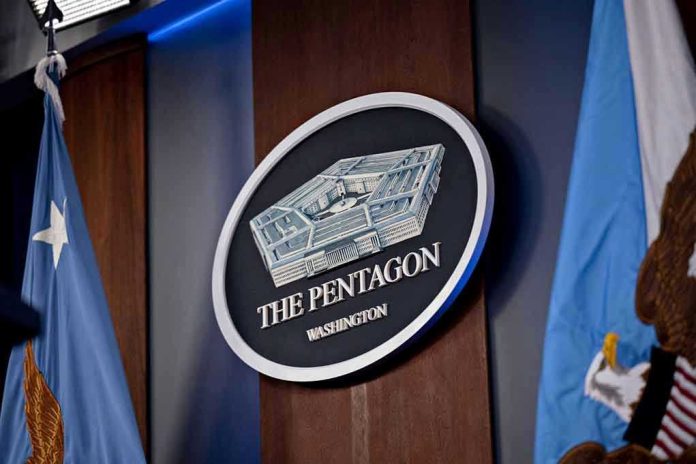
The Pentagon’s reported request for $200 billion to continue fighting Iran marks a stunning financial commitment to a war that has already killed more than 2,000 people in just three weeks—a conflict that escalated faster and deadlier than anyone predicted.
Story Snapshot
- Pentagon seeks $200 billion in additional funding as the 2026 Iran War enters its twentieth day with no ceasefire in sight
- Operation Epic Fury began February 28 with joint US-Israel strikes that killed Supreme Leader Ali Khamenei and triggered massive retaliations
- Over 2,000 deaths reported across Iran, Lebanon, and Israel; oil prices spiked 40 percent as strikes hit critical infrastructure
- Three US aircraft carriers now deployed in the largest Middle East military buildup since the 2003 Iraq invasion
- Iran’s missile arsenal depleted to roughly 1,000 remaining projectiles after waves of retaliatory strikes against US bases and Israeli targets
How a Decapitation Strike Ignited Direct War
The Trump administration launched Operation Epic Fury on February 28, 2026, after weeks of telegraphing its intentions. Approximately 900 airstrikes targeted Iranian military installations, air defenses, missile sites, and leadership compounds. The operation achieved its most dramatic objective when it killed Supreme Leader Ali Khamenei during a meeting that Israeli intelligence had pinpointed. Netanyahu personally tipped off Trump about Khamenei’s location just days before the assault. Dozens of Iranian officials died alongside the supreme leader. Trump ordered the strikes from Air Force One, culminating a month-long military buildup that saw three carrier strike groups positioned in the region.
Iran’s response came within hours. Operation True Promise IV unleashed hundreds of missiles and drones against US military bases across the Middle East, striking facilities in Qatar, Bahrain, and other regional outposts. Israel absorbed additional volleys. The speed and scale of Iran’s retaliation demonstrated that despite the loss of its supreme leader, the Islamic Revolutionary Guard Corps retained command-and-control capabilities. Saudi Arabia’s crown prince condemned the Iranian strikes as cowardly and vowed his kingdom would respond if attacked. The UK positioned HMS Prince of Wales on standby, signaling allied commitment to the American-led operation.
The Financial Reckoning Arrives
Defense Secretary Pete Hegseth’s request for an additional $200 billion represents an extraordinary escalation of financial commitment. The figure dwarfs initial cost projections and reflects the reality that this direct conflict with Iran differs fundamentally from decades of proxy warfare. American taxpayers absorbed the expense of Afghanistan and Iraq over many years; this request concentrates massive spending into weeks. Congress faces a decision that will define both the war’s trajectory and domestic political consequences. The request comes as Trump weighs whether to deploy ground troops, a decision that would transform the conflict from an air campaign into a full-scale invasion requiring even greater resources.
The economic ripples extend beyond Pentagon budgets. Oil prices jumped 40 percent after US forces struck Kharg Island on March 14, hitting 90 military sites while deliberately sparing oil infrastructure. Trump characterized this restraint as acting “for decency,” but the strikes still spooked global energy markets. The Strait of Hormuz remains a chokepoint that could shut down a fifth of the world’s oil supply if Iran attempts to close it. Hundreds of thousands of travelers found themselves stranded as airports from Dubai to Tehran suspended operations. Lebanese civilians fled border regions as Hezbollah launched retaliatory strikes, creating a refugee crisis that neighboring states struggle to manage.
Regime Change and the Succession Question
Trump publicly inserted himself into Iran’s leadership succession on March 5, declaring he wanted input on Khamenei’s replacement and explicitly rejecting Mojtaba Khamenei, the late supreme leader’s son. This remarkable statement reveals the administration’s ambition extends beyond military objectives to fundamental regime transformation. The president previously promised Iranian protesters he would help them, a commitment he made after the regime killed an estimated 30,000 demonstrators in brutal crackdowns. Trump’s January 2 warning that he would intervene if protesters continued to die set the stage for Operation Epic Fury. The administration frames the war as supporting democratic aspirations, though critics note the devastating civilian toll.
Iranian President Pezeshkian announced March 7 that Iran would limit strikes to countries that originated attacks, though this pledge came after Iranian missiles hit Dubai. Ali Larijani rejected American negotiation overtures outright. Israel prevented the Assembly of Experts from convening to select Khamenei’s successor, demonstrating continued Israeli operations inside Iranian territory. The IRGC’s command structure adjusted rapidly despite leadership losses, maintaining retaliatory capabilities even as its missile inventory dwindled. The killing of a senior Kata’ib Hezbollah leader in Baghdad on March 14 showed US willingness to strike Iranian proxies across the region, not just inside Iran itself.
Strategic Implications and Conservative Principles
This conflict represents the deadliest direct US-Iran military engagement since the 1979 revolution that birthed the Islamic Republic. For five decades, Iran waged asymmetric warfare against America through proxies, killing nearly 1,000 Americans via Hezbollah, Iraqi militias, and other terrorist groups. The Washington Times documented this 50-year timeline of terror, noting that Iran’s “Death to America” rhetoric translated into sustained violence against US interests. Trump’s decision to confront Iran directly rather than continuing the Obama-era appeasement approach of the JCPOA nuclear deal aligns with conservative principles that strength deters aggression and that evil regimes understand only force.
The 2025 12-Day War had already debilitated Iranian air defenses and struck nuclear facilities at Fordow and Natanz, setting conditions for Operation Epic Fury. That earlier conflict demonstrated Israel’s capability to penetrate Iranian airspace, intelligence that proved crucial when targeting Khamenei. The current war’s timing during renewed nuclear negotiations suggests the administration assessed diplomacy as futile while Iran advanced toward weapons capability. Whether the $200 billion investment achieves regime change or merely degrades Iranian military power for a generation remains the central question. American voters will render judgment on that cost-benefit calculation, but the immediate reality shows a Middle Eastern order transformed by three weeks of unprecedented violence.
Sources:
2026 Iran Conflict – Britannica
War US-Israel vs Iran Timeline 2026 – EISMENA
Iran’s 50-year war on America: Timeline of terror comes next – The Washington Times