When political insiders insist they “learned” about a leader’s decline only after a catastrophic public moment, they are usually trying to describe a real boundary: the difference between noticing campaign underperformance and concluding cognitive impairment. Nancy Pelosi’s recent explanations live squarely on that fault line.
The Short Version
- Pelosi says the tipping point in assessing Joe Biden’s decline was his widely panned debate performance; before that, she frames her concerns as about polling and campaign execution, not fitness.
- Her own record complicates the “we only learned then” line: she pressed Biden on polling, urged him to publicize a cognitive test, and engaged him privately as concerns mounted.
- Pelosi’s praise for Gavin Newsom is conspicuous but noncommittal; it reads as strategic positioning within succession politics, even if not a formal endorsement.
- This episode follows a familiar political pattern in which post-crisis narratives recast pre-crisis worries as tactical rather than diagnostic.
What Pelosi actually said—and what that does and doesn’t prove
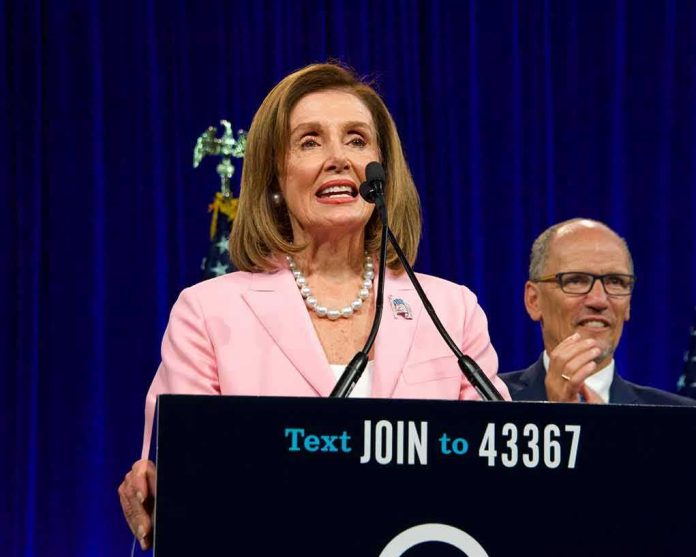
At a Sacramento forum, Pelosi described the debate as the moment “we learned,” adding that those who already knew of Biden’s decline “should have acted.” That is a clear attempt to draw a line between ordinary campaign turbulence and a visible, disqualifying event. In the same appearance, she acknowledged having raised concerns with Biden about polling and campaign performance before the blowup, and she said she asked whether there was a “better campaign to win the White House.” Those statements, taken together, establish two facts: she did not publicly allege impairment before the debate, and she was privately pressing on viability beforehand.
There is also a narrower but telling data point: Pelosi has said she urged Biden to release results of a cognitive test to reassure voters. That is not the posture of someone with zero concern; it is the posture of someone trying to settle an anxiety that had already become salient to the electorate. Advising a test is not proof she believed there was clinical decline, but it does contradict any implication of total unawareness prior to the debate.
Campaign weakness versus cognitive impairment: the boundary insiders try to hold
Veteran party leaders frequently distinguish between problems they consider fixable—message, money, travel, staffing—and problems they consider terminal: health, scandal, legal exposure. The distinction is not pedantic; it is how they justify staying in the fight without declaring a nominee unfit. Pelosi hewed to that template, repeatedly casting her pre-debate worry as “about the campaign, not the candidate.” That framing is consistent with her posture in early July 2024, when she called it legitimate to ask whether Biden’s poor debate performance was a one-off “episode” or the sign of a “condition” and suggested transparency could resolve the question.
After the debate turned the “episode or condition” question into the campaign’s central fact, Pelosi’s conduct shifted into crisis-management mode: conversations with Biden about repercussions, pressure calibrated around viability and down-ballot risk, and public rhetoric aimed at preserving his legacy even as she prodded toward withdrawal. None of that disproves her contention that she did not reach a fitness judgment earlier; it does show that the line she is drawing—campaign versus cognition—became impossible to maintain once the performance collapse made the diagnostic question unavoidable.
The record that cuts against a pure ignorance claim
Three parts of the documentary trail complicate Pelosi’s “we learned then” formulation. First, her prior private warnings to Biden on polling and campaign execution predate the debate and are a matter of public record; those conversations show sustained engagement with viability, not a reactive posture. Second, asking Biden to publicize a cognitive test is inconsistent with total ignorance; at minimum, it acknowledges that concerns about capacity had enough salience to warrant medical reassurance. Third, her own charge that people who knew “should have acted” implies that serious concerns were circulating—family, staff, and allied officials were contending with warning signs before the debate, even if Pelosi places herself outside that circle. None of these facts proves she believed Biden was cognitively impaired prior to the debate; they do make the “we learned” line more compressed than it sounds.
Equally important is what the record does not contain: contemporaneous medical records, staff memos to Pelosi, or sworn testimony that she had direct knowledge of impairment before July 2024. The strongest counterpoints to her narrative are inferential, not documentary—a reality that both limits the indictment and explains why her explanation can persist without being falsified by hard proof.
Praise for Gavin Newsom: compliment, signal, or both?
Pelosi’s remarks about Governor Gavin Newsom—“hardworking,” “responsible,” “extraordinarily talented”—landed in a political environment primed to read every adjective as succession signaling. She declined to name a preferred future nominee and urged observers to wait for formal announcements; yet she elevated Newsom while withholding a commitment. That pattern is classic elite positioning: build a bench, keep options open, and flatter plausible contenders without triggering intra-party backlash. There is no documentary evidence that her praise was coordinated with Newsom’s team; as such, motive claims remain plausible but unproven.
The context matters. Pelosi is not a bystander; she is a prolific fundraiser and enduring power center. Compliments from her do more than reflect personal esteem; they set expectations and organize donors’ attention. In that light, the safest reading is the most conventional one: she was framing the party’s future landscape while refusing to pre-endorse—a move that keeps maximum leverage with minimal cost.
Why this episode feels familiar—and why it still matters
Post-crisis revisionism is a feature of presidential politics, not a bug. After a public collapse—debate fiasco, health scare, scandal—insiders are accused of having known and staying quiet. They respond by saying their worries were about winnability, not fitness, until the dam broke. The press and partisan media then slice quotes to fit priors. Pelosi’s path through this cycle is textbook: pre-crisis viability talk, a call for transparency (including the notion of a cognitive test), a post-crisis push to exit couched in the language of legacy and party stewardship, and finally a forward-looking nod to potential successors.
This is not merely about adjudicating one politician’s candor. It is about how modern parties manage risk with aging leaders, how they communicate uncertainty to voters, and how they balance loyalty with accountability when warning signs accumulate. Voters reasonably ask for earlier clarity; party elites instinctively buy time. That tension will recur, because the structural incentives that produced it—24/7 media cycles, incumbent advantage, donor nervous systems wired for risk aversion—are not going away.
What a fair assessment looks like
On the available record, Pelosi’s claim that the debate was the decisive “learning” moment is contestable but not disproven. The counterevidence shows preexisting concern about viability and optics, and a willingness to seek medical reassurance by urging a public cognitive test; it does not show she had hard proof of impairment before the debate. Her subsequent statement that people who knew “should have acted” is an implicit acknowledgment that someone did know earlier—just not, in her telling, her. Readers can reasonably judge that line-drawing as convenient. It is also a line many political professionals, across parties, have attempted to hold under similar pressures.
As for Newsom, the plainest reading is strategic flattery within a succession conversation, not a covert endorsement. Praising a prominent governor’s competence while avoiding commitments is how a power broker keeps doors open and contenders close. Until evidence surfaces of deliberate coordination or a private push on his behalf, the cleaner conclusion is that her remarks are political positioning with plausible deniability attached.
The durable lessons for voters
Two takeaways will travel to future cycles. First, when leaders or their allies invite medical transparency to “settle” capacity questions, it is a sign the issue is already past the rumor stage; it merits public scrutiny then, not later. Second, when a party elder praises an obvious successor while swearing neutrality, assume signaling until proven otherwise, but do not invent a memo that isn’t there. Skepticism and restraint can coexist. The next time a campaign asks you to separate “strategy” concerns from “fitness” concerns, ask for the evidence behind both—and when it was first acknowledged inside the building. That is the boundary where accountability lives.
Sources:
redstate.com, politico.com, sacbee.com, washingtonexaminer.com, nytimes.com, theguardian.com, foxnews.com