

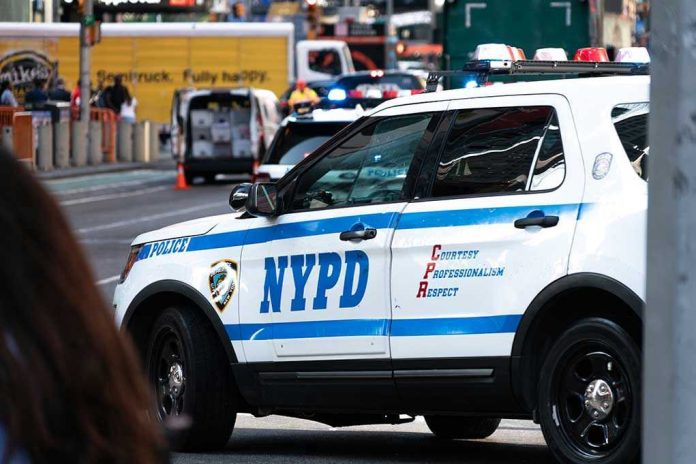
A Queens kitchen knife, a hospital bed, and a mayor’s demand to drop charges have turned one split-second police shooting into a citywide test of common sense.
Quick Take
- NYPD shot 22-year-old Jabez Chakraborty four times after he advanced with a kitchen knife during a family-requested mental health transport in Briarwood, Queens.
- A grand jury later indicted Chakraborty for first-degree attempted assault and weapon possession while he remained hospitalized, with bail set at $50,000.
- Mayor Zohran Mamdani urged prosecutors to drop the case and prioritize treatment, setting up a public clash with Queens DA Melinda Katz.
- Bodycam footage and witness accounts drive competing narratives: de-escalation failure versus an immediate edged-weapon threat.
The Call Was for Help, Not a Raid, and That’s Why the Details Matter
The 911 call on January 26, 2026 came from inside the family, not from a stranger on the sidewalk. Chakraborty’s sister asked for involuntary transport because he had lunged at relatives with a kitchen knife. That single fact undercuts the easy story that “police arrived and chaos happened.” Family members wanted safety and medical intervention; the problem is that New York’s default “medical intervention” often arrives wearing a badge and body armor.
Officers entered the home in Briarwood, Queens, and bodycam accounts describe Chakraborty grabbing the knife and advancing despite repeated commands to drop it. Prosecutors later cited more than eight commands. One officer fired four shots, hitting Chakraborty in the abdomen, chest, and groin. Those injuries put him in critical condition at Jamaica Hospital. The open question haunting the case is whether a mental health crisis call can ever stay “medical” once a knife appears in close quarters.
Bodycam, Distance, and the Brutal Geometry of an Edged Weapon
Police training treats a knife differently from a lot of the public imagination. A blade does not need a trigger pull, and at short distances the timeline collapses into fractions of a second. Accounts in the reporting describe Chakraborty changing his grip and pushing forward, even through a doorway barrier. That detail matters: barriers buy time, but only if the subject stops. Once forward motion continues, officers must decide quickly: retreat, wrestle, or shoot.
Calls for de-escalation often assume two luxuries that don’t always exist in a cramped home: space and time. De-escalation works best when officers can create distance, communicate, and wait out adrenaline. A narrow hallway and a determined advance compress options. Conservative common sense starts here: the public has a right to expect officers to protect innocent people, including themselves, when a lethal threat advances. Compassion cannot require a cop to absorb a stab wound to prove empathy.
Charging a Man in an ICU Feels Ugly, but Prosecutors See a Different Problem
A grand jury indicted Chakraborty on February 13, 2026, charging first-degree attempted assault and fourth-degree criminal possession of a weapon, with bail set at $50,000. Reporting describes him sobbing in a hospital bed as charges were read. The visual is powerful, and it is designed to be. Prosecutors, though, focus on the alleged act: advancing with a knife toward officers after commands to stop. From that viewpoint, the hospital tubes change sympathy, not elements of the offense.
Queens DA Melinda Katz operates independently from City Hall, and that independence is a feature, not a bug. The mayor sets policy priorities; the district attorney weighs evidence, public safety, and precedent. If prosecutors start treating “mental health crisis” as a blanket exemption from accountability for violent acts, they incentivize dangerous ambiguity. Families calling for help need to know responders can stop immediate threats. The uncomfortable truth: declining to charge can also signal that some victims matter less when the suspect has a diagnosis.
Mamdani’s Intervention Turns a Legal Case Into a Referendum on City Governance
Mayor Zohran Mamdani visited Chakraborty and called for dropping charges, removing handcuffs, and prioritizing treatment. The reporting also describes a shift in tone: early public gratitude toward first responders, followed by sharper criticism of police protocols after meeting with the family and as the political temperature rose. That evolution reads like a mayor caught between two constituencies: reform activists who want non-police crisis response, and everyday New Yorkers who want clear consequences when someone charges with a knife.
Mamdani’s argument has moral weight: schizophrenia can distort reality, and a person in psychosis needs medical care. The weakness is practical: a city cannot run on intentions alone. Treatment-first systems still require a backstop when someone becomes violent. Conservative values recognize human dignity while insisting government perform its first duty: protect the public. A mayor publicly pressuring a DA to drop charges risks turning prosecution into politics. If the standard becomes “high-profile sympathy equals immunity,” the system breaks for everyone else.
The Real Policy Choice Hiding Behind the Outrage: Who Shows Up First
New York leans on the NYPD because alternatives remain limited. The reporting points to a system where a significant share of mental health 911 calls lead to police involvement, and where programs like B-HEARD divert only a portion of calls to clinicians. The city keeps relearning the same lesson: when families face a loved one spiraling, they dial 911 because that is what exists. Then they get a patrol response built for danger, not diagnosis.
Scaling civilian clinician teams could reduce these knife-edge encounters, but it will not erase them. Even the best clinicians cannot safely manage every call without security when weapons enter the scene. The smartest reform is not “no police,” it is “right responder, right time,” with clear protocols for handoff when risk spikes. That requires money, staffing, and blunt honesty about tradeoffs. New Yorkers deserve a system that doesn’t force families to choose between “do nothing” and “send armed officers into my living room.”
What Comes Next Will Signal Whether New York Can Balance Mercy and Order
Chakraborty remains hospitalized and faces serious exposure if convicted. Mamdani will keep pushing mental health-first infrastructure, and Katz will keep pointing to the alleged knife advance as the core fact. The city’s larger test is whether leaders can hold two truths at once: mental illness is real and deserves treatment, and violent actions still endanger people. A functional system doesn’t pick one truth for applause; it builds procedures that honor both, before the next 911 call detonates into another headline.
Expect this case to echo in every debate over police budgets, crisis response pilots, and prosecutorial discretion. The public will argue about the number of commands, the seconds between them, and the meaning of “charged.” Those details matter, but the deeper question matters more: will New York invest in a response that prevents families from needing an armed intervention in the first place, while still backing officers and victims when danger becomes immediate?
Sources:
Mamdani shifts tone on NYPD shooting
Queens man shot by NYPD during mental health call charged
NYC Mayor Mamdani urges dropping attempted murder charges in psychotic episode case