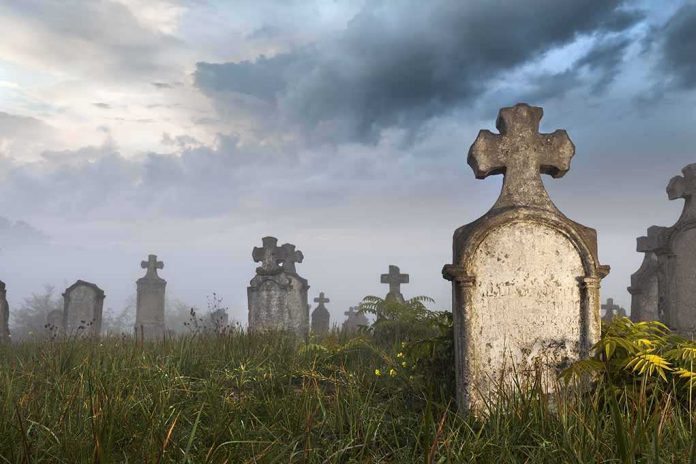
Over 100 human skulls and other remains were found in a Pennsylvania man’s home, highlighting a sinister web of grave robbing and illegal body part trafficking.
Story Snapshot
- Pennsylvania man accused of grave robbing and trafficking in human remains.
- Over 100 skulls discovered in his home, linked to a multi-state network.
- Involvement with Harvard Medical School’s cadaver theft scheme.
- Case exposes systemic gaps in cemetery oversight and body donation programs.
A Sinister Discovery in Pennsylvania
A shocking discovery unearthed over 100 human skulls in a Pennsylvania man’s home in 2023. The man, accused of desecrating cemeteries, allegedly stole remains and purchased others through a multi-state black market network. This network reportedly involved individuals from Harvard Medical School’s Anatomical Gift Program, highlighting serious institutional vulnerabilities. The case has stirred public outrage and raised questions about the security of human remains within both cemeteries and medical institutions.
The Pennsylvania man’s fascination with human remains began years before the discovery. Leveraging online marketplaces and collectors’ communities, he allegedly acquired numerous skulls and body parts. This macabre collection included remains from both cemeteries and donated cadavers meant for medical research. As law enforcement delved deeper, the investigation expanded to encompass a broader, interstate trafficking network, raising alarms about the integrity of human remains management across state lines.
A Multi-State Trafficking Network
Investigators believe the Pennsylvania man was not acting alone. The case has revealed a tangled web of co-conspirators across several states, including Massachusetts and Arkansas. These individuals allegedly stole and sold cadavers and funeral home remains, feeding a gruesome collector market. The Pennsylvania suspect reportedly purchased many of his skulls and body parts through this network, further implicating him in a broader scheme that exploited both the living and the dead.
The case’s connections to Harvard Medical School have intensified public scrutiny. The theft of cadavers donated for educational purposes not only undermines trust in medical institutions but also highlights the need for stricter oversight. As investigations continue, the scandal underscores the critical need for comprehensive reforms in how human remains are tracked and safeguarded.
Institutional Failures and Public Outrage
The Pennsylvania man’s arrest has exposed significant gaps in cemetery oversight and body donation programs. With over 100 skulls found in a single home, the scale of the crime is unprecedented. The case has sparked moral outrage, particularly among families who entrusted the remains of their loved ones to reputable institutions. The desecration of graves and the diversion of medical cadavers raise serious questions about the security protocols in place to protect human remains.
Law enforcement officials have emphasized the heinous nature of the crimes, condemning the disrespect shown to the deceased and their families. As the investigation unfolds, the case serves as a stark reminder of the need for robust legal frameworks and institutional accountability. The public’s trust in medical donation programs and cemetery management hangs in the balance, highlighting the urgent need for systemic change.