

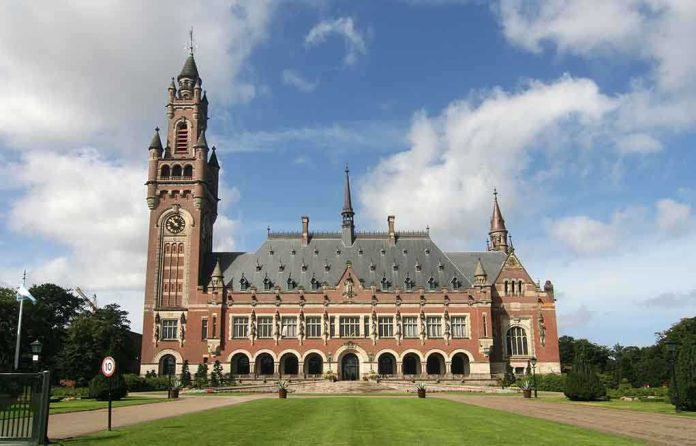
A Dutch court just told a transgender American that fear of persecution back home doesn’t automatically unlock Europe’s door, setting a precedent that could slam shut asylum hopes for dozens more fleeing post-Trump policies.
Story Snapshot
- Amsterdam court rejected 28-year-old Veronica Clifford-Arnold’s asylum bid on August 21, 2025, despite credible claims of death threats and medical care denial in San Francisco
- The Netherlands classified the United States as a safe country in September 2024, before Trump’s January 2025 inauguration and subsequent policy changes
- At least 29 Americans, mostly transgender individuals, have filed similar asylum requests in the Netherlands following the 2025 administration shift
- Dutch authorities found Clifford-Arnold’s fears credible but ruled her circumstances didn’t meet the legal threshold for refugee status
- The ruling establishes a high bar for Western asylum seekers and may influence European Union policy on U.S. LGBTQ claims
When Safe Country Designations Collide With Political Reality
The timing reveals everything wrong with this asylum rejection. Dutch authorities assessed America as safe for all populations in September 2024, locking in that designation for two years regardless of what happened next. Three months later, Trump took office and transgender Americans began reporting systematic healthcare denials, escalating street harassment, and credible death threats. Yet the September assessment stands untouched, creating an absurd bureaucratic reality where acknowledged dangers don’t matter because paperwork predates them. Clifford-Arnold’s lawyers argued doctors refused to treat her ruptured appendix based on her transgender status, a potentially lethal scenario the court accepted as truthful but not severe enough.
The Dutch Immigration and Naturalization Service didn’t dispute Clifford-Arnold’s claims about threats in San Francisco or medical discrimination. They simply declared these credible dangers insufficient to prove the U.S. government failed to protect her or that her ability to exist was fundamentally limited. This logic demands asylum seekers prove not just danger but state-enabled extermination, a threshold so high it renders the process nearly meaningless for anyone from a functioning democracy. The IND’s position essentially argues that unless America officially sanctions persecution, individual experiences of life-threatening discrimination remain personal problems, not refugee crises.
The Flood Netherlands Didn’t Expect
Clifford-Arnold assumed she’d be alone in seeking European refuge from American policies. She discovered 29 other Americans, and counting, pursuing identical asylum paths through Dutch courts. Approximately 50 U.S. transgender individuals contacted Dutch authorities within one month of Trump’s inauguration, transforming what might have been an isolated case into a pattern that challenges fundamental assumptions about Western migration flows. Asylum systems developed primarily for people escaping non-Western authoritarian regimes now face applicants from America, forcing uncomfortable questions about whether Europeans will grant protection that implicitly criticizes a NATO ally and cultural peer.
The economic and political calculations weigh heavily against approval. Dutch taxpayers fund asylum processing and support, costs that generate public backlash when applicants come from wealthy democracies rather than war zones. Granting asylum to Americans fleeing transgender persecution sends diplomatic signals the Netherlands appears unwilling to transmit, effectively declaring the United States unsafe for vulnerable populations. European nations already grapple with immigration controversies and rising costs. Adding Americans to refugee rolls would fuel political firestorms while setting precedents that could open floodgates for other Western asylum seekers claiming persecution based on changing policies rather than systemic state violence.
Legal Thresholds Versus Lived Terror
Asylum law requires more than feeling unsafe, a distinction lawyers defending the Dutch government emphasized repeatedly. Applicants must demonstrate their home government cannot or will not protect them from persecution severe enough to fundamentally limit their existence. Clifford-Arnold’s legal team presented evidence of doctors refusing emergency care, street attackers targeting her openly, and death threats creating constant fear. The court acknowledged these facts yet ruled they fell short of the legal standard because America remains a functioning state with laws against discrimination, regardless of whether those laws protect transgender individuals effectively in practice.
This creates an impossible catch-22 for LGBTQ Americans seeking refuge. They must prove systematic persecution while courts point to anti-discrimination statutes as evidence of protection, even when those statutes fail in application. The September 2024 safe country assessment becomes an insurmountable barrier, freezing asylum policy in a pre-Trump reality while applicants navigate post-Trump dangers. Advocates argue this renders the reassessment timeline unacceptable for people facing immediate threats, but Dutch authorities show no inclination to revisit their designation ahead of schedule. The message to transgender Americans considering asylum in the Netherlands is clear: your fear is credible, your danger is real, but our bureaucracy matters more than your safety.
Precedent That Echoes Across Europe
This ruling doesn’t just affect Clifford-Arnold or the 29 Americans currently pursuing Dutch asylum. It establishes legal reasoning that other European Union nations will cite when rejecting similar claims, creating a unified barrier against Western asylum seekers regardless of individual circumstances. The decision reinforces that asylum exists for people fleeing failed states and authoritarian regimes, not citizens of democracies experiencing policy shifts, however dangerous those shifts become for vulnerable populations. European courts may reference this case for years when dismissing American LGBTQ asylum requests, turning Clifford-Arnold’s rejection into binding precedent that transcends Dutch borders.
The broader implications reshape how we understand refugee protection in an era where persecution doesn’t require totalitarian governments or civil war. Transgender Americans face healthcare denial that can prove fatal, violence that goes unprosecuted, and systemic discrimination that international human rights frameworks theoretically prohibit. Yet asylum law, designed for Cold War realities and developing world crises, struggles to accommodate persecution within wealthy democracies. The Dutch court’s ruling suggests that framework won’t adapt, leaving LGBTQ individuals in Western nations without international protection options regardless of how severe their circumstances become. Europe apparently will criticize American policies rhetorically while refusing tangible sanctuary to those policies endanger.
Sources:
Dutch Court Rejects US Transgender Asylum Bid Amid UK Hotel Row
Court to rule on Netherlands’ rejecting asylum request of American trans woman
Dutch court denies U.S. trans woman asylum on basis of her gender identity