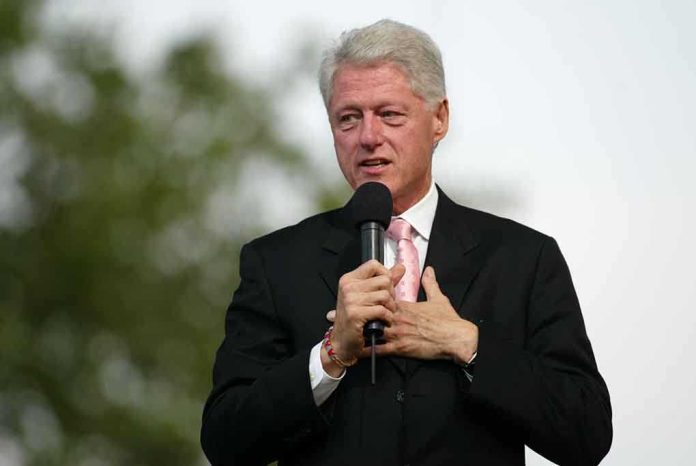
Bill Clinton’s demand for the immediate release of all remaining Epstein files exposes what appears to be a deliberate stall tactic by the DOJ, raising serious questions about who or what the Trump administration is protecting.
Story Highlights
- Clinton demands full release of all Epstein documents, claiming DOJ is protecting “someone or something”
- Trump administration missed legal deadline, releasing only initial batch while withholding hundreds of thousands of documents
- Congressional Republicans and Democrats unite in criticism of delayed release violating transparency law
- Initial release included compromising photos of Clinton on Epstein’s jet and in hot tub with unidentified women
Clinton Challenges DOJ’s Selective Release Strategy
Former President Bill Clinton directly confronted the Justice Department’s handling of Epstein document disclosure, demanding immediate release of all materials mentioning his name or containing his photographs. Clinton’s spokesperson Angel Ureña stated the phased release approach suggests intentional protection of unnamed individuals, declaring “We need no such protection.” This unprecedented move positions Clinton as demanding transparency rather than seeking to hide information, a strategic reversal that puts pressure squarely on the Trump administration’s DOJ.
Trump Administration Violates Congressional Mandate
The Epstein Files Transparency Act required the DOJ to release all documents by December 20, 2025, yet Deputy Attorney General Todd Blanche announced a phased release spanning weeks instead of immediate full disclosure. Representatives Thomas Massie and Ro Khanna, the bill’s bipartisan sponsors, emphasized the law’s unambiguous requirement for “all” files to be released by the deadline. This selective compliance undermines congressional authority and raises legitimate concerns about executive branch accountability to legislative mandates.
Bipartisan Congressional Opposition Emerges
Senator Ron Wyden characterized the delayed release as “a violation of the law and a continuation of this administration’s coverup on behalf of a bunch of pedophiles and sex traffickers.” Both Republican and Democratic lawmakers expressed frustration with the DOJ’s failure to comply with the clear statutory deadline. House Oversight Committee Chairman James Comer has issued subpoenas to both Bill and Hillary Clinton, demonstrating that congressional oversight will proceed regardless of DOJ cooperation.
The administration’s approach creates unnecessary suspicion about what additional information remains hidden. If the government has nothing to conceal, immediate full disclosure would serve both transparency and justice for Epstein’s victims. Instead, the phased approach fuels speculation about protected individuals and undermines public trust in government accountability.
Constitutional Concerns About Executive Overreach
The DOJ’s defiance of a clear congressional mandate represents troubling executive branch overreach that conservatives should reject regardless of party affiliation. When government agencies selectively comply with transparency laws, they erode the constitutional separation of powers that protects American democracy. The hundreds of thousands of remaining documents may contain information vital to understanding the full scope of Epstein’s criminal network and ensuring justice for victims.
This situation demands immediate corrective action from President Trump to ensure his administration upholds the rule of law. Full transparency serves conservative principles of limited government accountability and protects constitutional governance from bureaucratic manipulation that could benefit any political faction seeking to hide uncomfortable truths.
Sources:
Clinton demands full Epstein files release, says Trump administration is hiding something
Epstein files released 2025 – CBS News Live Updates