
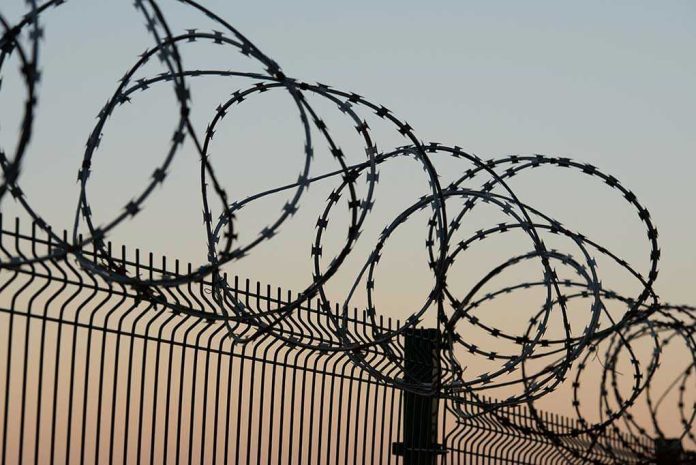
A federal judge just forced Immigration and Customs Enforcement to unlock its doors to Catholic clergy, ruling that detained migrants have a constitutional right to receive sacraments behind the barbed wire of a Chicago-area detention center.
Story Snapshot
- U.S. District Judge Robert W. Gettleman ordered ICE to grant clergy access to the Broadview detention facility after the Coalition for Spiritual and Public Leadership sued for religious freedom violations
- Catholic priests washed the feet of shackled detainees on Holy Thursday and distributed Communion during Ash Wednesday and Easter, marking the first pastoral visits in months
- The court found ICE’s blanket denial of clergy access violated the Religious Freedom Restoration Act and the First Amendment
- Judge Gettleman ruled that reasonable security measures could accommodate religious visits without compromising facility operations
- The case establishes potential precedent for clergy access at federal immigration detention centers nationwide
When Security Concerns Collide With Sacred Rights
The Coalition for Spiritual and Public Leadership had conducted regular ministry visits to detained migrants at the Broadview ICE processing facility for years. Then the access stopped. Beginning in October 2025, clergy found themselves repeatedly turned away from the facility located approximately 12.5 miles west of downtown Chicago. The organization filed suit in November 2025, challenging what they characterized as a violation of fundamental religious freedoms. The timing was particularly significant, as the lockdown occurred during Lent, one of the most spiritually important seasons in the Catholic calendar.
The Constitutional Battleground Takes Shape
Judge Gettleman issued his first preliminary injunction on February 12, 2026, granting access for Ash Wednesday services six days later. The ruling hinged on the Religious Freedom Restoration Act and the First Amendment, legal protections that exist precisely to prevent government agencies from substantially burdening religious exercise. The court rejected ICE’s security justifications, finding them insufficient to justify a complete prohibition. On February 18, clergy successfully entered the facility to administer ashes and Communion, breaking months of enforced spiritual isolation for detained Catholics.
Holy Week Behind Detention Walls
The judge issued a second injunction on March 31, 2026, specifically permitting Easter Triduum visits. What transpired on Holy Thursday, April 3, reveals the human dimension behind the legal abstractions. Father Juan Vargas knelt to wash the feet of detainees wearing shackles, handcuffs, and ankle chains. Sister Alicia Gutierrez distributed Communion. Fathers David Inczauskis and Paul Joseph Keller provided pastoral care to fourteen detained migrants while approximately fifty Catholics gathered outside for prayer and the Rosary. Michael Okinczyc-Cruz, CSPL’s executive director, described the experience as profoundly moving and stirring.
What The Ruling Actually Means For Religious Liberty
Judge Gettleman’s reasoning establishes several critical principles. Federal agencies cannot use blanket security concerns to categorically exclude clergy when reasonable accommodations exist. The court explicitly stated that RFRA protects religious practices regardless of whether the government considers them essential. The ruling also recognizes organizational religious practice as constitutionally protected activity, not merely individual worship. This matters because it affirms that faith communities have rights to minister to vulnerable populations as an exercise of their collective religious identity.
The Government’s Position Crumbles Under Scrutiny
ICE’s defense rested on security protocols and operational concerns. The court found these arguments unconvincing. Judge Gettleman determined that the government substantially burdened the plaintiffs’ religious exercise through complete denial of access, and that reasonable security measures could accommodate clergy visits without creating undue hardship. The judge went further, stating that allowing pastoral care would actually improve conditions for those detained at Broadview. The implication is clear: security concerns, while legitimate, cannot serve as blanket justifications for constitutional violations when alternatives exist.
A Pattern Emerging Across Multiple States
The Broadview case is not isolated. Clergy access to immigrant detainees has emerged as a contentious issue in multiple states, including Illinois and Minnesota, suggesting a broader pattern of religious access disputes at ICE facilities nationwide. The judicial victories in Chicago may embolden similar challenges elsewhere. Federal detention centers operate under the same constitutional framework, meaning Judge Gettleman’s reasoning could apply to facilities across the country. The April 7 status hearing will determine the framework for regular, sustained clergy access going forward.
Where Security And Spirituality Must Coexist
The court directed both parties to meet regarding safety and security protocols and to schedule future ministry visits. Both sides are working to establish a regular schedule for visits and prayer outside the facility within view of detainees. This negotiated approach acknowledges legitimate security interests while protecting constitutional rights. The Broadview facility had previously allowed such visits for years before the crackdown, demonstrating that accommodation is practically feasible. The question was never whether security and religious access could coexist, but whether the government would be required to make them coexist.
Sources:
CSPL Action – Holy Thursday Broadview Media Coverage
OSV News – Federal judge orders Catholic group be let into ICE facility on Ash Wednesday
Washington Times – Judge orders ICE to let clergy minister to migrants in detention in Chicago area