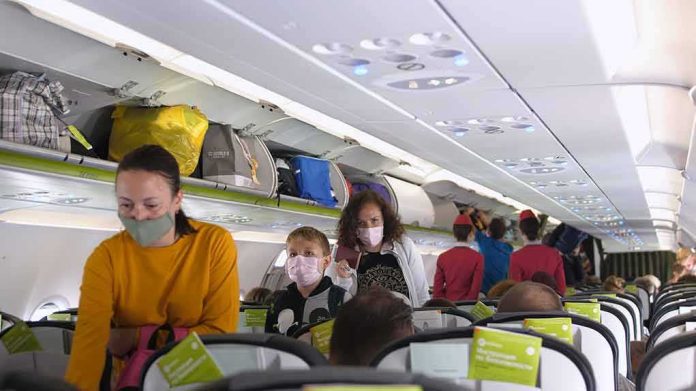
Jetstar’s new carry-on policy matters because it turns overhead-bin space into a priced product, not a default entitlement: the fare still includes a small under-seat item, but larger cabin bags move into a paid bundle with priority boarding attached.
Key Points
- Jetstar will keep one free under-seat item in the base fare, while charging for a larger bag in the overhead locker.
- The paid product, called Priority Carry-on, bundles overhead-bin access with priority boarding.
- The change begins in February 2027 and is priced by route, starting at A$25 and rising as high as A$52.
- The controversy is less about whether the airline may do this than about how airlines now monetize scarce cabin space by unbundling services once treated as standard.
What Jetstar Changed, and Why the Headline Is So Explosive
Jetstar is not eliminating carry-on baggage; it is redrawing the line between what every passenger gets for free and what becomes optional and paid. From February 2027, the airline’s base economy allowance will be a small under-seat item, while a larger bag stored in the overhead locker will require a purchase through Priority Carry-on, Jetstar’s new add-on product. That product starts at A$25 on shorter routes and can reach A$52 on longer ones, according to Jetstar’s own materials and contemporaneous reporting.
The reason the policy drew immediate backlash is simple: “paying for the overhead bin” is the most blunt way to describe a more complicated fare redesign. The airline says the bundled add-on includes both a second cabin bag and priority boarding, and that distinction matters. Jetstar is not selling mere access to a plastic compartment; it is selling a package built around scarce cabin capacity and boarding position. Still, the public will naturally hear a fee for something that used to feel like part of ordinary flying.
https://www.youtube.com/watch?v=JYsJkMniR5A
How the New Cabin-Baggage Model Works
Under the new rules, the free allowance is smaller but cleaner: one item that fits beneath the seat, such as a backpack, handbag, or laptop bag, remains included in the fare. Anything larger and intended for the overhead locker shifts into Priority Carry-on, which allows a bigger bag up to 56 x 36 x 23 cm and 10 kg. Reporting also notes that Jetstar is scrapping its old 7 kg hand-luggage limit and replacing staff weighing at the gate with a size-and-product model.
That change is not just cosmetic. A weight-based system polices total cabin load; a size-based system reserves the overhead bin for customers who buy into a more explicit product tier. In practical terms, Jetstar is separating “small personal item,” “standard cabin bag,” and “priority boarding” into different commercial categories rather than treating them as one bundle. That is the core of the controversy, because it changes the passenger experience from a uniform allowance to a segmented one.
The airline also says availability is limited and encourages advance purchase, which is classic airline revenue management. When a finite resource is scarce, airlines increasingly sell it the way they sell seats: by route, by demand, and by product tier. Overhead space is scarce in a crowded cabin, and the right to board early has real operational value because it increases the odds that a passenger’s bag will actually fit overhead.
Why Airlines Unbundle These Things
Jetstar’s policy fits a broader airline pattern: unbundle the fare, then sell back the pieces passengers value most. That logic has already transformed checked baggage, seat selection, and boarding priority across the industry, especially among low-cost carriers. The commercial case is straightforward. If one price must serve everyone, the airline leaves money on the table from travelers who need more room, care about convenience, or want certainty. By splitting the product, the airline can extract extra revenue from those use cases without raising the base fare as aggressively for everyone else.
That does not mean every such charge is equally transparent or equally well justified. What the public evidence shows is a policy and a price, not a disclosed cost model. Jetstar has explained what the bundle includes, but not provided a public accounting that ties the fee directly to incremental overhead-bin costs, staffing costs, or boarding-time savings. In other words, the airline has described the product architecture; it has not opened its books on how the fee was calculated.
That gap is why critics can so easily frame the move as a revenue grab. Bloomberg described the change as part of a broader industry shift toward monetizing nearly every aspect of the flight experience, and that framing has political force because it rings true to passengers who have watched carriers carve up once-standard inclusions into separate add-ons. Jetstar may be packaging a scarce service, but the consumer instinct is to ask why a cabin bag that used to fit under a 7 kg allowance now requires a separate charge.
2 PM Top-of-the-Hour News
Primary voters in five states went to the polls yesterday and WWNN's Stacy Lyn reports there was a major upset in Michigan.: “Progressive Democrat Abdul El Sayyed defeated four-term Congresswoman Haley Stevens. Money in your Medicare. A win for the… pic.twitter.com/MExvI96BXR
— Worldwide News Network (@WorldwideNNX) August 5, 2026
What Is Clear, What Is Not, and What the Debate Really Turns On
What is clear is the structure of the new offer. What is included for free is plainly smaller; what is paid for is plainly larger and comes with priority boarding; and the price is plainly route-based rather than flat. What is not clear, from the public record available here, is the full fare-rule language, the refund logic, or any internal capacity study showing why the charge is set where it is. Those omissions do not make the policy illegitimate. They do, however, leave the company defending a product design without the kind of detailed rationale that tends to quiet consumer anger.
The real dispute is not whether an airline may price scarce overhead space. It is whether Jetstar has drawn the line in a way passengers will regard as fair. On one side, the carrier can say the base fare still includes a free under-seat item and that customers who need more space can choose a bundled premium option. On the other, critics can point out that the bundle mixes two distinct benefits — overhead space and priority boarding — while the published materials do not show how much of the fee corresponds to each part. That makes the policy look less like a clean operational charge and more like a revenue optimization exercise.
That perception matters because airline pricing lives and dies by trust. When passengers believe a fee reflects a real, bounded service, they tolerate it more readily; when they believe the fee is simply a way to reclaim something once included, resentment hardens quickly. Jetstar has been explicit about the mechanics, and the mechanics are easy to understand. The harder question is whether passengers will accept them as a fair trade — and that will depend less on the airline’s labels than on the lived experience of boarding, bin space, and what travelers think an economy ticket ought to buy.
Sources:
feedpress.me, abc.net.au, travelerstoday.com, livenowfox.com, jetstar.com, timeout.com, thepricer.org, youtube.com, bloomberg.com, theguardian.com