The Senate is now the last roadblock between voters and a hard, simple rule: only U.S. citizens should be able to register and cast a ballot in American elections.
Story Snapshot
- The House passed the SAVE America Act on February 11, 2026, sending a sweeping election-integrity package to the Senate.
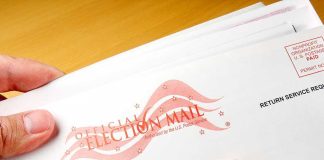
- The bill would require documentary proof of U.S. citizenship for voter registration and photo ID for voting, including for mail ballots.
- President Trump and House Republicans argue the measure restores public confidence and targets vulnerabilities tied to mail voting.
- Senate Democrats and voting-rights groups warn the requirements could disenfranchise eligible citizens who lack ready documentation.
What the SAVE America Act would change for voter registration
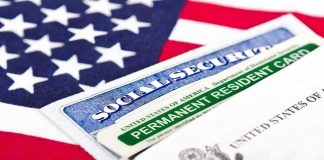
The SAVE America Act would standardize a tougher federal approach to voter eligibility by requiring documentary proof of U.S. citizenship—such as a passport or birth certificate—to register to vote, along with photo identification requirements for voting, including mail ballots. Supporters frame the policy as a direct answer to public doubts about election integrity heading into the 2026 midterms and the 2028 cycle, while critics focus on the burden placed on lawful voters.
The bill’s scope goes beyond many familiar state voter-ID debates because it applies not only to first-time registrants but also to certain updates to registration records. Some analyses also highlight that provisions affecting mail voting and the mechanics of registration could reshape how states process applications, especially if a voter registers by mail or online and later must appear in person to present documents. Those operational details are a central reason the proposal has become a Senate flashpoint.
How Republicans and the White House are selling the case
President Trump and Republican lawmakers have promoted the SAVE Act as a “commonsense” reform aimed at ensuring only citizens vote and reducing the risk of improper ballots entering the system. The White House argument leans heavily on public opinion, citing polling that shows broad support for voter identification and related safeguards. The pro-SAVE messaging also points to concerns raised by researchers and commissions about vulnerabilities associated with mail voting compared with in-person voting.
Republicans also emphasize that even if proven fraud cases are rare, tight elections and low trust can make prevention measures politically and culturally important. From a limited-government perspective, supporters argue clear eligibility checks are a basic function of election administration, comparable to identity verification in everyday life. At the same time, the research record presented in the debate does not uniformly document widespread non-citizen voting; much of the argument is about risk, perception, and prevention.
What Democrats and voting-rights groups say could break
Senators Mark Warner and Tim Kaine have publicly opposed the bill, arguing it could disenfranchise millions of eligible Americans, including large numbers of Virginians who may not have passports and may not have immediate access to required paperwork. Voting-rights organizations echo that concern, describing the measure as a “show papers” regime that could hit certain lawful voters harder—such as elderly citizens, low-income voters, and women whose names have changed—if their documents are missing or inconsistent.
Critics also argue the legislation responds to claims of widespread election problems that were not borne out by post-2020 audits and court outcomes. That criticism matters for policy design: if the underlying problem is limited, opponents say the country risks building an enforcement-heavy system that creates new errors and bureaucratic choke points. The bill’s practical impact, in their view, could be fewer eligible voters successfully registered—not because they are ineligible, but because compliance is complicated.
The implementation dilemma: verification tools, penalties, and state capacity
Analyses of the SAVE Act highlight implementation hazards that could matter even to voters who support strict citizenship rules in principle. The bill would push more verification into front-end processing and, in some versions, direct states to use the Department of Homeland Security’s SAVE tool for checks. Critics argue that data mismatches and administrative bottlenecks could trigger delays or wrongful rejections, while election offices—already strained—could face higher workload and legal exposure.
Another friction point is enforcement: proposals described in the research include criminal penalties that could increase risk for election officials and poll workers. Neutral explainers warn that ambiguous compliance rules, especially around mail and online registration, can produce inconsistent enforcement across states and invite litigation. For conservative voters who want clean elections without empowering a sprawling federal bureaucracy, the key question is whether the Senate can refine the bill to protect both ballot integrity and lawful access.
Where the fight goes next in the Senate
The House vote put the SAVE America Act on a fast track politically, but Senate passage remains uncertain amid unified Democratic opposition and procedural hurdles. The immediate debate is not simply “ID or no ID”; it is whether Congress can craft a national citizenship-verification standard that is workable in the real world, minimizes erroneous denials, and avoids turning election offices into targets. With elections approaching, both sides are positioning the bill as a defining test of what “election integrity” means.
Based on the research available, the strongest factual takeaway is that the bill’s goals—citizenship-only voting and higher confidence—are broadly popular in concept, while the bill’s specific mechanics could impose real burdens on some eligible citizens. That tension is exactly why this fight is headed for a Senate showdown: Republicans are pressing for uniform national rules, and Democrats are pressing the burden-of-proof argument that the cure could be worse than the disease unless the implementation details are narrowed and clarified.
Sources:
Warner, Kaine Slam SAVE America Act as Voter Suppression Measure that Could Disenfranchise Millions
SAVE America Act “Saves No One”: Voter Suppression Bill Explained
The SAVE America Act Is the Most Popular Election Reform in Decades
New SAVE Act Bills Would Still Block Millions of Americans From Voting
Five Things to Know About the SAVE Act