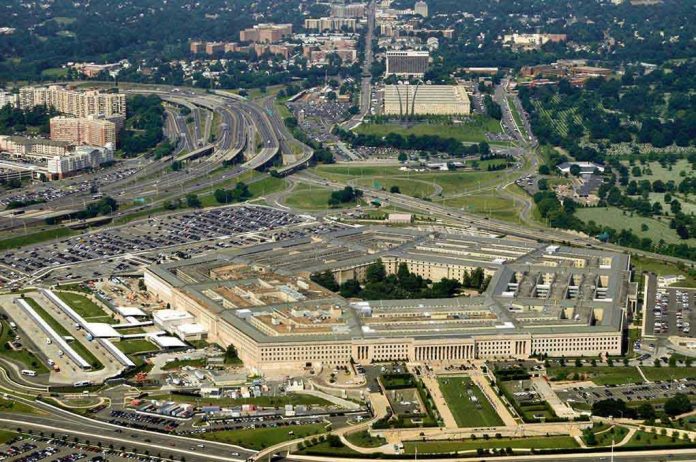
Pentagon Pete Hegseth’s controversial “kill them all” order throws the U.S. military’s legal peril into sharp relief.
Story Snapshot
- Pete Hegseth ordered deadly military strikes in the Caribbean targeting suspected drug smugglers.
- All individuals aboard a vessel were killed, raising legal and ethical questions.
- International bodies question the legality of these extrajudicial actions.
- U.S. military operations in the region have increased, drawing significant controversy.
Controversial Military Orders in the Caribbean
On September 2, 2025, a U.S. military strike off the coast of Trinidad resulted in the deaths of all individuals aboard a suspected drug-smuggling vessel. This operation, initiated by Defense Secretary Pete Hegseth’s directive to “kill everybody,” has sparked a heated debate about its legality and ethical implications. The elite SEAL Team 6 executed the operation, which culminated in a second missile strike specifically targeting survivors who posed no immediate threat.
Pentagon Pete in Legal Peril Over ‘Kill Them All’ Orders https://t.co/Wmbh4xXIwp
— Believer (@raybyers1) November 28, 2025
The aftermath of the strike saw the cancellation of a scheduled congressional briefing, with Secretary of State Marco Rubio publicly supporting the aggressive approach. Despite official endorsements, the operation has faced criticism from various quarters, including legal experts and international bodies. The United Nations has condemned the strikes as “extrajudicial executions,” calling into question the U.S.’s adherence to international humanitarian law.
Escalation of Military Actions
This strike marked the beginning of a broader campaign in the Caribbean and eastern Pacific regions. Over 22 additional maritime strikes have been conducted since, resulting in the deaths of more than 70 suspected smugglers. Some officials have cast doubt on the legitimacy of these targets, suggesting that innocent civilians, including migrants and fishermen, may have been among the casualties. The U.S. has justified these operations as necessary to combat drug trafficking, citing the opioid crisis as a national security threat.
The broader geopolitical context cannot be ignored. Tensions between the United States and Venezuela have been cited as potential motivations for these operations, with some analysts suggesting that the true aim may be regime change rather than purely counternarcotics objectives.
International and Domestic Repercussions
The strikes have drawn international condemnation, with UN human rights experts labeling them as violations of international law. The U.S.’s aggressive military posture in international waters has raised concerns about the erosion of established legal norms and the dangerous precedent set by extrajudicial killings. Domestically, the operations have become a point of contention, with the Senate twice failing to pass resolutions limiting President Trump’s authority for military action.
"Pentagon Pete in Legal Peril Over ‘Kill Them All' Orders" – The Daily Beast #SmartNews https://t.co/vsaeO6t9S7
— Dedrick Harris (@Har20678Harris) November 29, 2025
Defense Secretary Hegseth and other administration officials continue to defend the strikes, asserting the need for decisive action against drug traffickers. However, the lack of transparency and the omission of unedited footage of the operations have fueled ongoing debates about accountability and oversight.
Legal and Ethical Implications
The legal ramifications of Hegseth’s orders are profound. Law experts argue that the use of lethal force against non-imminent threats without due process constitutes a breach of international law. The “kill them all” directive has drawn comparisons to recognized war crimes, prompting calls for an investigation into the operations. The potential for legal jeopardy extends to U.S. military personnel involved in the strikes, raising questions about the chain of command and the enforcement of lawful orders.
The strikes also have significant implications for U.S. foreign policy and its relationships with regional partners. Countries like Trinidad and Tobago and the Dominican Republic, which have facilitated U.S. operations, face criticism for their involvement. As the international community grapples with the fallout, the long-term impact on global security norms remains uncertain.