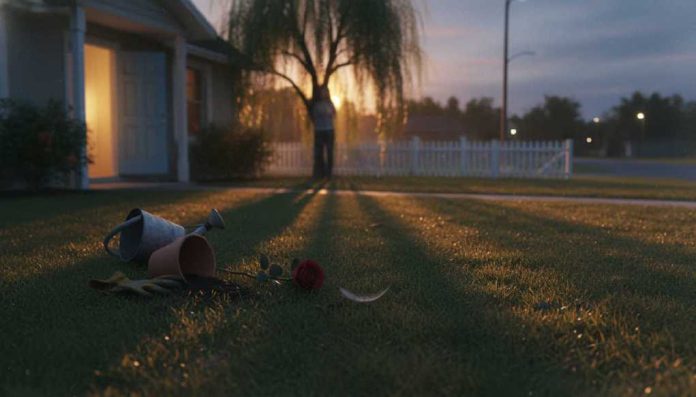
A child can vanish in the time it takes to check a stove burner, and the difference between 5:24 p.m. and “around 8” can decide whether a whole county searches the right place or the wrong one.
Quick Take
- Eleven-year-old Avianna disappeared from a backyard on N CR 1700 near Shallowater in Lubbock County on March 1, 2026.
- Investigators refined the timeline using camera footage, placing her last seen at about 5:24 p.m., with a missing report around 6:10 p.m.
- The Lubbock County Sheriff’s Office leads the case with Texas DPS support, using helicopters, camera systems, and standard missing-person protocols.
- Authorities said she did not qualify for a statewide AMBER Alert and indicated the case fit a runaway profile rather than a confirmed abduction.
A backyard in rural Lubbock County becomes the last known “address”
Avianna, 11, disappeared from her backyard in the 3900 block of N CR 1700 near Shallowater, north of Lubbock. Early public descriptions mattered because rural searches hinge on speed and specificity: she stands about 4 feet tall, weighs roughly 60–70 pounds, and has been described with brown or dirty-blonde hair. Reports described her clothing as a white or pink shirt, burgundy sweatpants, and blue sandals.
That clothing detail reads like a simple checklist until you picture the terrain: roadside ditches, open fields, long driveways, and fences that don’t show well after sunset. Blue sandals limit how far a child can walk without injury. A small frame disappears behind a mesquite line or a barn shadow fast. When law enforcement asks the public to look, they’re asking you to notice what you’d normally ignore.
The timeline whiplash: why “last seen” must be nailed down fast
Initial chatter put Avianna last seen around 8 p.m., a time that would push searchers into darkness and widen the “possible travel distance” circle. Investigators later refined the timeline using camera footage, placing her in the backyard at about 5:24 p.m., with a missing report coming in around 6:10 p.m. That shift shrinks uncertainty and forces a hard question: what happened in that narrow window?
Conservative common sense says facts beat feelings, and a timestamp beats rumor every time. A verified camera time changes how deputies prioritize roads, culverts, and neighbor-to-neighbor canvassing. It also changes which witnesses matter most. People remember a child they saw at dusk differently than a child they might have seen in full daylight. Getting the clock right can mean the difference between a usable tip and a vague hunch.
Runaway assumption versus abduction reality: what the public should hear
Authorities indicated Avianna may have left on foot and treated the situation under runaway or missing-person protocols rather than a confirmed kidnapping. That classification isn’t a moral judgment; it’s a tactical posture based on the evidence available at the moment. The public, though, often hears “runaway” as “lower risk,” and that’s where cases go sideways. An 11-year-old on foot in rural country faces risks even without a predator.
Parents over 40 know the old rule: kids don’t need a villain for trouble to find them. Exposure, dehydration, animals, traffic, and panic are enough. If she left intending to cool off for an hour, the clock still punishes delay. If she left to meet someone, the situation changes again. The point of a BOLO isn’t to prove a theory; it’s to create fast, clean leads that can be verified.
Why no AMBER Alert can still be the right call—and still feel wrong
The Sheriff’s Office said Avianna did not meet the qualifications for a statewide AMBER Alert, while emphasizing they were using all available resources, including helicopters and camera systems, and working with Texas DPS. That statement frustrates the public because people treat AMBER like a “most wanted” button. In reality, AMBER programs typically require specific criteria, often tied to credible evidence of abduction and identifying information.
From a conservative public-safety perspective, strict criteria make sense. If alerts fire for every missing-child report, the public tunes them out and the system loses punch when a confirmed abduction happens. The tradeoff is emotional: a community hears “no AMBER” and worries the case won’t get oxygen. That’s why local BOLOs matter. They can flood the right area with attention without burning statewide credibility.
What actually helps: tips that investigators can use, not just worry
Searches in places like Shallowater succeed when people report specifics that can be checked: a direction of travel, a time, a vehicle that doesn’t belong, a person walking where nobody walks, a gate left open, a camera that caught movement, a store sighting with a receipt timestamp. Law enforcement also benefits from “negative tips” when they’re precise: “I reviewed my doorbell camera from 5 to 7 and saw no one.”
The Lubbock County Sheriff’s Office requested public tips through official channels, including phone and an app. That matters because tips scatter fast on neighborhood pages, and the rumor mill can sabotage a case by sending volunteers to trample potential evidence. Americans like to help, and they should, but discipline helps more than drama. Give a clean timeline, stick to what you saw, and let investigators connect dots.
For the rest of the community, the uncomfortable lesson is simple: camera coverage, lighting, and routine check-ins aren’t paranoia; they’re the modern equivalent of a good lock and a watchful neighbor. When a child disappears from a backyard, the story isn’t only about one family. It’s about how fast a quiet road can turn into a search grid—and how a single accurate detail can pull everyone back out of the dark.
Sources:
BOLO: Police Seek Tips on Missing 11-Year-Old Girl Who Vanished from Backyard